Home Blog Page 318

Adopting an Eco-centric Perspective Over an Egocentric one ~ Become the Tipping Point, Part 1

0

“Nature is not mute; it is man who is deaf.” –Terence McKenna

In his book The Tipping Point: How Little Things Can Make a Big Difference, Malcom Gladwell defined a tipping point as “a moment of critical mass, a threshold, a boiling point.” As it stands, we have over seven billion “little things that can make a big difference” walking around on this planet, each with the power to become a tiny tipping point of their own. Indeed, with the power to change the world. But, like Confucius said, “Those who move mountains begin by carrying away small stones.” This article will focus on the difference between the Ecocentric and Ego-centric perspective.

The ego-centric perspective is based upon self-bias on the micro level, one-right-way dogma on the cultural level, and human-bias on the macro level. This is the type of perspective that has been entrenched within the human condition, and the way it governs itself, for arguably the last two thousand years. Its method is simple but unhealthy: conquer, control, consume, destroy, and repeat.

It does this over and over again, on both micro (individual) and macro (cultural) levels, leaving nothing but burnt-out husks in its wake – be those husks people or land, it matters little to the all-consuming “mine, mine, mine” baby-whine of the egocentric machine. It suckles slowly, but it’s a slow meaningless death. In the end, this unsustainable perspective chokes on the world and then consumes itself. It’s inevitable. Nothing that consumes more than its environment can produce can sustain itself.
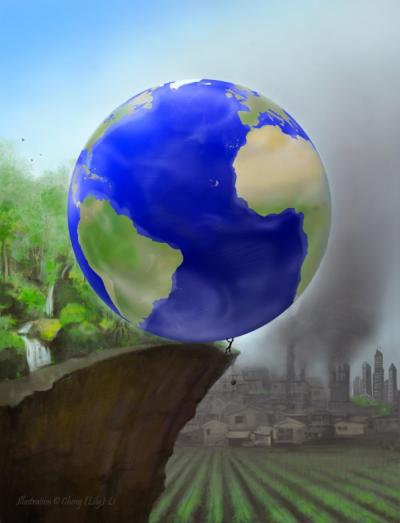
earth tipping point
Atlas

The ego-centric perspective is immature and adolescent, suffering from a plethora of insecurities, anxieties, and neurosis. Unfortunately, our society is grossly egocentric.  It is built upon military aggression, the control and exploitation of nature’s resources, and an entitled sense of national security that ignores the needs of other species, other nations, and even our own future generations.

The egocentric society is exceptional at controlling the world up to a point –the point at which it seems to be destroying it. Like Bill Plotkin wrote, “The egocentric society cuts out its own heart and attempts to live without it.” And so it has become the antithesis of man as human animal, whereas nature-based man is the apotheosis. Instead of only using our vainglorious narcissistic faces as mirrors for each other, we need to once again learn how to use the entire cosmos as a reflection.

Now enter the ecocentric perspective. It is more difficult to recognize because of the 2,000 year enculturation of the egocentric perspective, but it is based upon healthiness on the micro level, empathy and tolerance on the cultural level, and holistic cultivation and interconnectedness on the macro level.

This is the type of perspective that focuses on wellbeing, moderation, and balance. Its method is simple and healthy: discover, open, free, create, and rebirth. It does this over and over, on both micro and macro levels, leaving a cultivated garden of balanced forces and healthy, sustainable reproduction in its wake. It gives slowly, but it’s a meaningful gift.

small acts
Small Acts

The eco-centric perspective is about thinking holistically; what deep ecologist Arne Naess calls the “ecological self” or what James Hillman calls “a psyche the size of the earth.” The general principle of the psyche is that the deeper we understand ourselves the more of the world we will be able to identify with.

As ecologist Gregory Bateson asserts, “Psyche is not a separate entity from nature, it is an aspect of nature.” The natural world acts like a mirror for our psyches, a screen on which we project our fears and anxieties. Raised, as most of us are, in the egocentric culture, we are typically unable to recognize the connection between nature and psyche.

This is usually because of years and years of nature deprivation. When we deprive ourselves of nature we also deprive ourselves of a healthy psyche. This deprivation creates an unhealthy schism between the two, where psyche becomes psychosis and nature becomes anti-nature. And so our vision of ourselves and our reality becomes warped, and the dissociation between human nature and the “sacred other” occurs.

At the end of the day, a nation that favors competition over cooperation, taking over sharing and hoarding over gifting, approaches spiritual death. When profit is valued over people, money over meaning and entitlement over justice, we have given into the great lie of the ego: that everything is separate and not connected.

What we need is to put the “eco” back into economy. The primary goal should be a healthy process, not a good quarterly statement. This will require immense courage. Part two of Becoming the Tipping Point will go into adopting a courage-based lifestyle over a fear-based one.
Image Source:

The Tipping Point
Atlas
Small Acts

Pleasure and Pain – A Saga of the Human Mind

Leonardo_da_Vinci_pleasure_and_pain_androgyn_corpus_with_two_heads
Leonardo Da Vinci Allegory of Pain and Pleasure

“Pleasure is regarded as pain because of it’s being mixed up with pain; and pleasure (accompanied by pain) is called pain in the same manner as honey mixed with poison is called poison.” – Nyaya Bhasya (Nyaya Sutras written by Aksapada Gautama in the 2nd century CE.)

Pleasure and Pain are the two existential qualities of the soul. Human life, for most of us, is reminisced in terms of pleasure and pain, but what triggers these emotions will differ from human to human.

Naiyayika, a non-Buddhist school of eternalism, states that pain is, actually, positive in nature. One can feel its strength in the experience of pain. The desiring and craving nature of human beings is the sole reason for the felt pain. When the wants are satisfied, a feeling of pleasure is experienced.

In Nyaya Darsana, the Hindu school of thought, the definition of pain is given, as Bhadhana laksanam duhkam, that means the characteristic of the pain is to obstruct. In other words, disagreeability causes pain. We seek comfort in agreeableness. Everything that opposes the mind is pain, and everything that is opposite of this is pleasure. The motivation behind any action is directly connected to it being pleasant or painful.

Pleasure and pain, says Prasastapada, can be with reference to the past as well as to the future objects. Past objects are remembered as objects of pleasure and this brings about present-day pleasure. The pleasure here is in remembrance, so also the pain.

With regard to the future objects, pleasure is produced by reflection. Even when there is neither object of pleasure nor memory of such an object, the Nyaya Bhasya says, wise men feel pleasure, “Because of their knowledge, the peaceful nature of their minds.” Knowledge here means the knowledge of the self, and peaceful nature of the mind means the control of the senses and the consequent tranquility.

Carl Jung on painIccha (desire) and dvesa (loathing) are the psychological states of mind directly influenced by pleasure and pain. Humans affinity with fulfillment of desire always holds a priority in the mind. The failure in achieving that state of mind leads to Krodha (anger). One has to keep in mind that anger is the first reaction to aversion. Jung gives the pain pleasure scheme as the basis for all emotive activity.

The one that leads to peace is Prayatna (attempt). Attempt to understand the circumstances instead of reassuring the mind with temporary reasons. The facilitator of the attempting mind is Dhairya (patience) that comes with peace. Without being in peace, you cannot be patient. Patience comes with understanding your own emotions in the larger scheme of the universe.

If you are experiencing anger today, ask yourself, will you continue to be angry tomorrow or two years later?

Will you be mourning in pain in the subsequent years? All the answers lie within you and to get in touch with thyself one needs to be still. One needs to recognize that spiritual pleasures are eternal and valuable than worldly pleasures. After a considerable amount of time, in fact, the pleasures of this world become painful in the light of higher spiritual pleasures. We all with time learn to demolish the temporariness related to materialistic happiness by replacing the need to possess with the need to experience.

Spiritual pleasure is a self-inculcating journey. As you unfold the layers of pain and pleasure and reach that point where everything is governed by the plan of your own thoughts rather than external provocations, you begin to walk on the path of spiritual happiness.

Spiritual happiness is looking at ever-changing waves of the ocean yet knowing that the ocean deep down is always calm and poised. Realize the power of the self to connect with the cosmic energies that lies within you.

The idea is not to be ecstatic and joyful always but to learn to seek growth and strength in the pain experienced.

Crossing into the Mysteries of the Cocoon

“In times of suffering, when you feel abandoned, perhaps even annihilated, there is occurring –at levels deeper than your pain– the entry of the sacred, the possibility of redemption. Wounding opens the doors of our sensibility to a larger reality, which is blocked to our habituated and conditioned point of view.” ~ Jean Houston

There are moments in life when we are wounded so deeply that it changes us forever, where we die and are reborn. We abandon our old home to set out for a new one. We cross a bridge into the unknown and there’s no going back. It’s a time of transformation, a threshold that links our past self with our future self.

In whatever way we go about it, going through this threshold is a metamorphosis, a soul initiation. At every threshold we lose aspects of our self, but we also gain new aspects. Like a caterpillar loses its caterpillar-nature but gains its butterfly-nature.

Cocoon 2 by nailone

Just as the forming butterfly cannot return to being a caterpillar, an awakening human cannot return to being asleep, for we have lost our way in the vastness of the cocoon and our wounds have been opened.

Caught in the throes of an existential threshold, a death-rebirth metamorphosis, what Rollo May called “a Time of Destiny,” our pupal phase has come to an end.

The cocoon is a place where mistakes can become lessons and missteps can become stepping stones. It’s a place where we learn how to recycle fear into courage and discover hope in the depths of despair.

Like Rumi said, “When there’s no sign of hope in the desert, so much hope still lives inside despair. Heart, don’t kill that hope.” But are we ready to emerge as adults, as wiser versions of ourselves? Are we ready to shed our old clumsy armor for new vulnerable skin?

Beneath the mask of who-we-thought-we-were, is a being who understands that each question is an act of astonishment and an overcoming of fear.

Bridging the gap, walking the path, crossing into the mystery of the cocoon, is not an act of “being” with an answer, but of “becoming” within a question. It’s about the open-ended creative expression of a person, whose truth-as-value has trumped their truth-as-certitude.

But what a profound and terrifying duty has falls upon us, the transforming human. It’s in the cocoon where the Ego meets the Soul. It’s in the cocoon where the Hero meets the Shadow. Here, time is no longer linear, but vast and infinite.

Our soul is stretched gossamer-like across eternity. Our previous form is dissolving even as our future form is beginning to gel. All the paths of our former life have merged into a single point: the end of our old way of being in the world.

Amazing Life Cycle of the Monarch Butterfly

We come to realize, and to accept, that this transformation will destroy us. And as we loosen our grip on our former identity, as we let go of the heaviness of the past, we are dropped into the snarling, unforgiving abyss; a place where we are shattered against truth, and lie broken and defeated in a dark womb of meaninglessness. The void has consumed us, and we have subsumed it.

But there is gold in this chaos. There is a spark somewhere in this unquenchable black. There is the distant flutter of a new heartbeat, like a newborn butterfly stretching its wings. “It is by going down into the abyss,” writes Joseph Campbell, “that we recover the treasures of life. Where you stumble, there lies your treasure.” Where we stumble, where we die a little death, there lies our spiritual boon, there lies providence.

frontal wings e1539703169610
frontal wings

All that we were has died, becoming the compost that our new self emerges from. We are ready to accept our transformation. We are no longer slaves to fate. We are now agents of destiny.

We project less, and see more clearly. Our new eyes see the big picture, using big mind instead of small mind to perceive reality. We have discovered an immense gratitude for the richness of life.

Everything has changed. The future is wide open. The cocoon lies cracked open and empty behind us.

And as we shake away the “caterpillar residue” of our past self, the sky opens up to shine its new light onto the dark city of our past, transforming it into a playground where we are now free to be the most authentic and creative version of ourselves. Amazingly, our frontal lobes open up wide, stretching out like wings. We are ready to fly.

Image Source:

Cocoon
Frontal Wings

You are “The One” and so is Everybody Else

21

“Make no mistake about it – enlightenment is a destructive process. It has nothing to do with becoming better or being happier. Enlightenment is the crumbling away of untruth. It’s seeing through the facade of pretense. It’s the complete eradication of everything we imagined to be true.” – Adyashanti

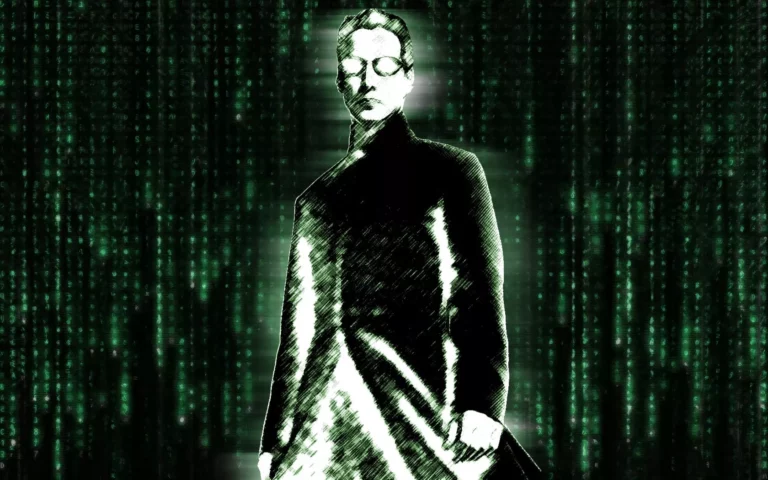
Imagine the current cultural paradigm is the Matrix. Imagine you are Neo on the brink of a paradigm shift, and I am Morpheus. “The Matrix is a system, Neo. That system is our enemy. But when you’re inside, you look around, what do you see?

Businessmen, teachers, lawyers, and carpenters; the very minds of the people we are trying to save. You have to understand, most of these people are not ready to be unplugged. And many of them are so inured, so hopelessly dependent upon the system, they will fight to protect it.”

It’s probably not too difficult to imagine. Like most people, I’m sure you’ve had that little voice in the back of your head whispering, “Something isn’t healthy about our culture’s way of living.” Some of us may not even have to imagine it at all, because it is all too apparent what the problem is. But we can’t do anything about it because we’re stuck in between. We’re in a double-bind, or a catch-22, of living for money on the Matrix-side and living for Truth on the Desert-of-the-Real-side.

Harley Swift Deer, a Native American teacher, says that each of us has a Survival Dance and a Sacred Dance, but the survival dance must come first. Choosing to be The One is no easy process. It requires a foundation of self-reliance: a survival dance. Once we’ve established a healthy platform for survival we can begin the risk-taking element of discovering our own authentic vocation: our sacred dance.

The tricky part is discerning a healthy survival dance from an unhealthy one. The “survival dance” that the Matrix has the majority of us locked into is a fundamentally unhealthy, unsustainable survival mechanism. It’s not even a dance. It’s a grind. So we first need to pry ourselves from the survival grind in order to discover a survival dance in order to discover our sacred dance.

But most people are so entrenched in the daily grind that they cannot even fathom a healthy survival dance, let alone a sacred dance, and nothing we can say or do will change their current worldview.

These people will fight, tooth and nail, unreasonably and emotionally, to keep intact the system that has bred them and made them fat, lazy and pseudo-happy. They will battle to the death to remain comfortable and inert.

blue red pill

They want their luxuries, the rest of the world be damned! They are locked into a herd mentality, a collective hallucination about the way things are “supposed to be” while forgetting the way things actually are.

Imagine a little further… Morpheus says, “This is your last chance. After this, there is no turning back. You take the blue pill – the story ends, you wake up in your bed and believe whatever you want to believe. You take the red pill – you stay in Wonderland, and I show you how deep the rabbit-hole goes.”

This is the eternal decision, the ultimate fork in the road, the existential crossroads. What do we choose? How should we continue? Do we choose the pain that comes with knowledge, or bliss that comes from ignorance?

If we choose the red pill, we learn things we may not be prepared for, and the Desert of the Real is a painful place. If we choose the blue pill, we get to remain comfortable in our bliss, but we’re also blinded by our ignorance. What to do?

If, as Aldous Huxley suggested, “Experience is not what happens to a man; it is what man does with what happens to him” then The Matrix represents the cultural conditioning that “happens” to us without our consent; while choosing to be The One is becoming a person who can do something with what happens to us. Experiencing the world in this way is seeing through the illusion of The Matrix and then acting in a way that transcends it.

Going down the rabbit hole is waking up to the preconditioning and enforcing our own will upon the original construct so as to create a new construct. When we choose to remain passive consumerists, we are surrendering our soul to The Matrix. When we choose to become The One, we are reclaiming our soul from The Matrix.

Doing so transforms our apathy into empathy, our passivity into proactivity, our preconditioning into reconditioning, and our herd-instinct into heroic-impulse. If enough of us choose to take the red pill, thereby choosing to become The One, then we may be able to tilt the balance back in favor of a healthy, sustainable world.

What makes a hero? - Matthew Winkler

At the end of the day, our old heroes are dead and gone. We are the New-heroes we’ve been waiting for. The wait is over. We have only to claim our place as New-hero, as The One, while helping as many people as possible to do the same. If we can do this, then we possibly might change the world for the better.

“In myths the hero is the one who conquers the dragon not the one who is devoured by it. And yet both have to deal with the same dragon. Also, he is no hero who never met the dragon, or who, if he once saw it, declared afterwards that he saw nothing. Equally, only one who has risked the fight with the dragon and is not overcome by it wins the hoard, the “treasure hard to attain.”

He alone has genuine claim to self-confidence, for he has faced the dark ground of his self and thereby has gained himself… He arrives at an inner certainty which makes him capable of self-reliance, and attained what the alchemists called the unio mentalis.” ~ C.G. Jung

Image Source:

The Matrix Neo

Four Steps toward Authentic Engagement

“The thing that is really hard and really amazing, is giving up on being perfect and beginning the work of becoming yourself.” ~ Anna Quindlen

1.) Relationship with Self

Authentic engagement begins first and foremost with self-worth. We’ve all been in those funks where we wonder why we feel so hollow, so black-and-white, so humdrum and boring, like all joy has been squeezed out of us. Somewhere between playful-child and responsible-adult we abandoned our self-worth.

It’s time we got it back. steps toward authentic engagementUnderneath all our layers, our holdouts, our thrashing about, our tossing and turning through a life half-lived, lies something magnificent and breathtakingly original, something profoundly alive just bursting with creativity. It’s our self-worth scratching at the cave walls we’ve left it in.

Reactivating self-worth leads to self-forgiveness which leads to self-love. And then we truly free ourselves to live a life of ecstatic abandon and joyful authenticity. Fate is just waiting for us to allow ourselves to be worthy. Destiny is calling our name, longing for us to heed the call of our own Hero’s Journey.

2.) Relationship with Others

“As we let our own light shine, we unconsciously give other people the right to do the same. As we are liberated from our fear, our presence automatically liberates others” – Marianne Williamson

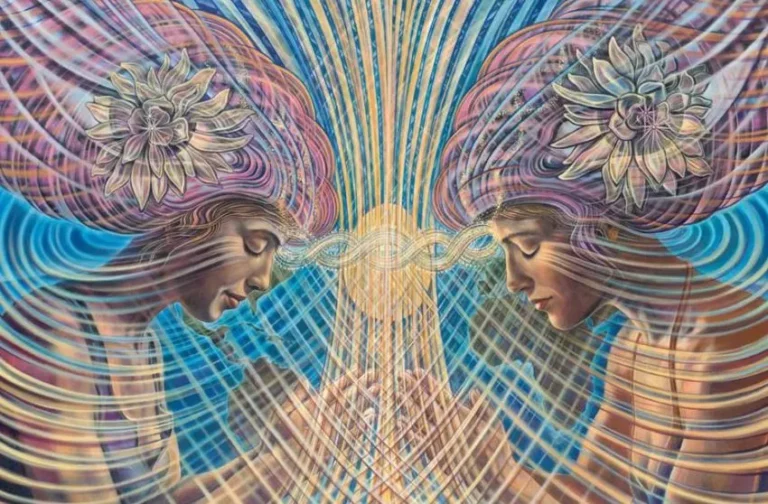
We are built for individual communion (We), not isolated individuality (Me). We can find temporarily solace in solitude, or get away from the rat-race to meditate, or lock ourselves up in our room to allow for creative incubation.

But our efforts will be fruitless if we don’t eventually relate to, and engage with, our fellow humans. We are social creatures, after all. We need each other, like a mirror needs something to reflect.

Authentic engagement with others is about finding someone, or a group of people, who inspire us. Whose purpose we’re aligned with, and who, through an exchange of passion and aliveness, cause us to become more passionate and alive.

Someone who inspires us to be the best possible version of ourselves, and makes us feel like anything is possible. When we want others to become more conscious of their lives, it is both in order not to become tyrants ourselves, and in order that new possibilities might be opened to the liberated conscious of others and through them to all humankind.

Like Simone De Beauvoir wrote, “To want existence, to want to disclose the world, and to want men to be free are one and the same will.”

3.) Relationship with the World

“You knock at the door of Reality. You shake your thought wings, loosen your shoulders, and open.” ~ Rumi

engage-with-the-worldIn a world where people are divided by sex, race, religion, patriotism, nationality, bipartisanship, and so-called borders, we need more people who are genuine with others and perspicuous with the way the world actually works, despite all the labels and cartoon-in-the-brain rhetoric.

We need people who are not bound by any specific creed, nation or state, but who subsumes them all and are free to create and destroy the many symbols and ideas that float around them, while moving freely and open-mindedly through their social environment.

If we would be authentic with our world we should be as resourceful and multi-layered as possible, cultivating a Renaissance spirit. The more abundant our intent, the more epic our presence will be. The more universal our love, the more authentic our journey will be.

We live in a melting pot of various cultures. Tolerance and respect go a long way. Open-mindedness to the world’s diversity of culture and ecology bolsters our authenticity while making it more likely that we will be able to adapt and overcome to whatever life throws at us.

Honest creative expression bridges the gap between Self and World. When we create from the depths of our soul for the ultimate benefit of the world, we are doing what we were born to do, what the universe designed us for: to bestow a gift that only we can give.

When we take on this role we are all at once the preeminent catalyst, the impossible bridge, and the primordial womb. We are creating diversity and bringing tonality to an otherwise atonal world.

Off Balance On Purpose: The Future of Engagement and Work-Life Balance: Dan Thurmon at TEDxPSU

4.) Relationship with Mystery

“Pay attention. Be astonished. Tell others.” ~ Mary Oliver

Stay ambitious. Stay foolish. Stay enchanted. But most of all, share your Awe.

The universe is a devastatingly mysterious place. The fact that we can even remotely understand it is mind-boggling. We: the improbable progeny of the human race; We: the implausible descendant of the naked ape.

As we blot out the sun with our impossible opposable thumbs, as our souls are torn between being both an animal and a god, we feel the gravity of the earth tug at our feet while the cataclysmic unpredictability of the universe threatens to destroy us.

How is it possible that we are possible? How can we not be daily astonished by the perplexing improbability of our own being, let alone our ability to question it? Perhaps part of any awakening into authentic engagement is realizing that there is much more that is possible than impossible.

And yet life is far too important to take it seriously, and too serious not to be sincere. Sometimes the most sincere thing we can do is laugh – joyous laughter, like a riot in the heart; the kind of laughter that shatters the glass house of our insecurities and launches us into a higher state of awareness.

That propels us into a higher state of awe, where what we don’t know trumps what we know and we are truly free to be curious and creative. That place where we are free to devote ourselves to the riddle of the human condition and to contribute our own verse to the mighty orchestra of the human leitmotif.

That place where we are intermittently self and other, tribe and culture, human and animal, earth and cosmos.

Image Source:

Limbic Resonance
Unique
Engage the World