Home Blog Page 173

8 Quotes from Classic Fiction Novels

0

“It’s like Tolstoy said. Happiness is an allegory, unhappiness a story.” ~ Haruki Murakami, Kafka on the Shore

Fiction can often seem like grasping at straws, trying desperately to possess some understanding of inexplicable forces. Is it a stepping stone to spirituality? Or a doorway to it? Can reading fiction ever be mindful? Or is it dirty escapism, distracting us from the moment where we might truly live?

Once you’ve remembered the meaning of life, why search for that meaning in the confused words of fiction… Or might we uncover our own truth through a protagonist’s search for theirs?

quotes from classic fiction novels

Here are 8 quotes from classic fiction novels to help you decide.

“Power is in tearing human minds to pieces and putting them together again in new shapes of your own choosing.” ~ George Orwell, 1984

There are just so many quotes from the brilliant 1984 it was hard to choose one, but this one sent a shiver down my spine so I knew it would hit the spot. Orwell does; through his painfully facetious rhetoric, what many social narrators struggle to do through direct analysis of political systems.

Through spinning his meta-fictional world of 1984, where Big Brother is watching you, always, he created an eerily accurate depiction of our modern world. And so everyone who hasn’t read it must educate themselves in this harrowing but brilliant modern classic, and anyone who has read it might want to leaf through it again.

“The darker the night, the brighter the stars, the deeper the grief, the closer is God!” ~ Fyodor Dostoyevsky, Crime and Punishment

The poet recognizes their life is an expression of the Whole, and that if they work on their skill they might be able to successfully capture some fragment of life. Did Dostoyevsky I wonder?

Despite not being from his existentialist novel, Notes From The Underground, this quote highlights how the ramblings of the stream of consciousness any writer employs, if done artfully, can tap in to the collective consciousness and uncover certain gems of truth.

It sounds as if it comes directly from the pen of Sufi mysticism, embedded in the heart of a novel.

“It is not down on any map; true places never are.” ~ Herman Melville, Moby-Dick; or The Whale

MTM0OTgwMDY1NjM2MTMzNTA3

The public’s love of 19th century call-to-adventure stories for all ages was captured by this classic, Moby Dick, a novel inspired by Melville’s own experiences at sea. Perhaps it was so memorable because of Melville’s main character, Captain Ahab and his obsessive quest to kill the white whale.

It’s not only this obsession that draws us to Ahab, but the monomaniacal extremes of his character that presents him as damned and fated to be dragged to the bottom of the sea.

Brutal, but very much a portrait of someone embracing life and making their mark and becoming a legend.

“He’s more myself than I am. Whatever our souls are made of, his and mine are the same.” ~ Emily Brontë, Wuthering Heights

catherine earnshaw linton profile

Again, what made Wuthering Heights stand out was this doomed fusion of souls; a fate of the outsider and anti-heroes of Victorian society.

Heathcliff’s life journey in particular reveals the shaping of an enemy, and how any society creates opposition through our unscrupulous prejudices and projections on to those who we perceive to be different from us.

They had been together for centuries, and not even Cathy’s desire to be normal could tear them apart. In fact, it may have been her desire to be normal that cursed them in the first place. For when we go against ourselves, we create a life of suffering.

“I took a deep breath and listened to the old brag of my heart. I am, I am, I am.” ~ Sylvia Plath, The Bell Jar

sylvia plath 12

When all else fails, when you come out of the other side of depression or trauma, sometimes simplicity is the final wrung of the ladder to pull yourself back in to daylight. I am, I am, I am could be likened to I am that I am, God’s response to Moses when asked for ‘his’ name or I am that; a non-dualistic theory of the self that can be found in Hinduism and a universal mantra for dissolving the false self.

Plath’s one novel presents this break down of the false self as it buckles under the pressures to succeed and deliver to the expectations around her.

Esther Greenwood mirrors Plath’s own descent into depression and, although Plath’s protagonist recovers, Plath committed suicide just one month after publication of this classic.

“Did it matter then, she asked herself, walking towards Bond Street, did it matter that she must inevitably cease completely? All this must go on without her; did she resent it; or did it not become consoling to believe that death ended absolutely?” ~ Virginia Woolf, Mrs. Dalloway

Mrs Dalloway, Virginia Woolf’s famous character contemplating death, inviting the reader to ponder their own. Woolf’s innovative style has been very much revered by critics and historians, precisely for her stream of consciousness flow that examines her character’s inner world and emotions in a real-time framework that allows us to enjoy a rare insight into ourselves and others.

“It was the best of times, it was the worst of times, it was the age of wisdom, it was the age of foolishness, it was the epoch of belief, it was the epoch of incredulity, it was the season of Light, it was the season of Darkness, it was the spring of hope, it was the winter of despair, we had everything before us, we had nothing before us” ~ Charles Dickens, A Tale Of Two Cities

MTI2NzE5OTAwMjQzNzMzMTIz

Everything has its pros and cons. A Tale of Two Cities is often thought of as Dicken’s best novel and this opening line is famous for both its length and brilliance.

This historical fiction parallels London, although it has been said that “Dickens lived in London. In his book A Tale of Two Cities, based on the French Revolution, we see that he really could not write a tale of two cities. He was a resident of just one city: London.” J. L Borges.

However, Dickens does champion the poor and attack the brutality of English law through his portrait of French ones. He is seen as a genius who has created some of the world’s best loved characters.

“The hand descended. Nearer and nearer it came. It touched the ends of his upstanding hair. He shrank down under it. It followed down after him, pressing more closely against him. Shrinking, almost shivering. He still managed to hold himself together. It was a torment, this hand that touched him and violated his instinct. He could not forget in a day all the evil that had been wrought him at the hands of men.” ~ Jack London, White Fang

Jack London’s allegorical novel of the animalistic and violent urges inherent within us and how they might be tamed with love and understanding. White fang, the hybrid wolf-dog becomes a victim of the assumptions placed upon his nature and acts them out, breeding more violence and suffering in the first half of his life.

“An allegory of humanity’s progression from nature to civilization,” (Tom Feller) White Fang is a must read for anyone exploring their own brand of inner civilization, it also being a heart-warming tale of love conquers all.

So many more could be added to this list; Hesse, Twain, Kafka, Hemingway… the list is endless, but I hope I might have reawakened your appreciation of some great works of fiction, and their place in the spiritual pocket or book of quotations.

Image Source

1984
Moby Dick
Plath
Dickens

The Spiral of Life: Why We Keep Coming Back to the Same Lessons Over and Over

0

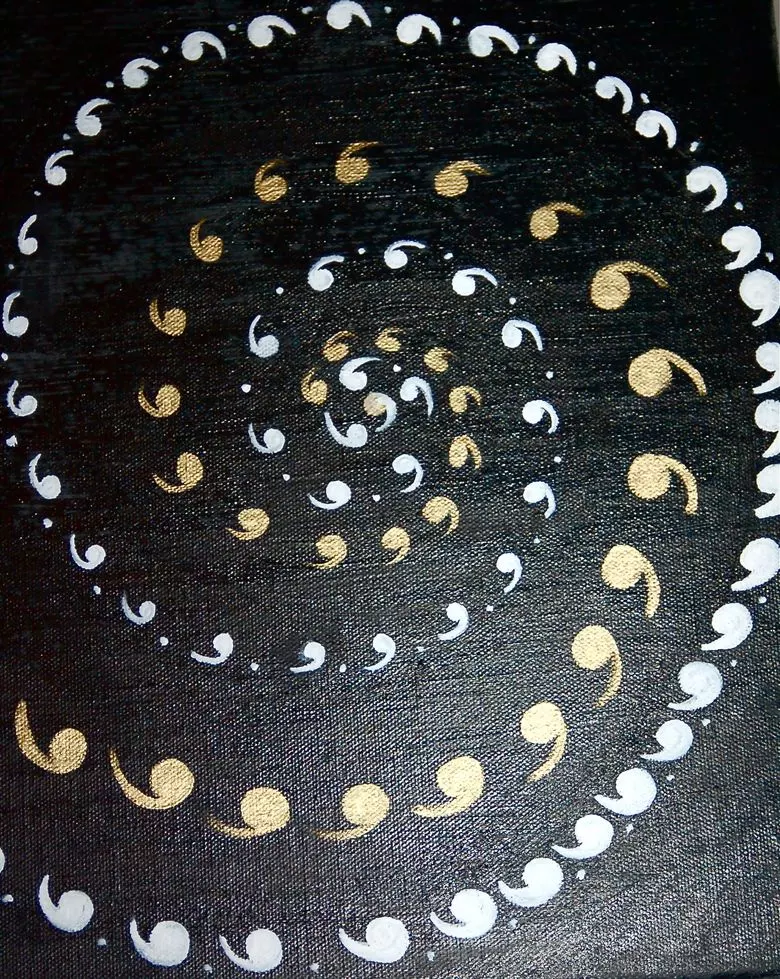
“The path isn’t a straight line; it’s a spiral. You continually come back to things you thought you understood and see deeper truths.” ~ Barry H. Gillespie

An evolving soul will often come back time and again to certain themes or lessons. The experience of having to revisit certain types of things is one that can be quite frustrating for anyone who is committed to their self-awareness process.

Because we often subconsciously see our awakening journey as a race to the finish line type of path, we may feel as though we don’t have to re-visit soul lessons that we think we have already pushed past. To come back to something we think we have already been through is seen as a setback in the eyes of our goal-oriented ego.spiralimage1

However, an expanded level of consciousness shows us that a linear process is not in fact the case. So why do so many people find themselves attracting the same types of people, places and things over and over?

Why is it that we find it in our hearts to forgive ourselves or others, only to find ourselves in a very similar situation months later, inciting the same anger we thought we had already healed?

Understanding the relationship between consciousness and ego

In order to understand this aspect of our spiritual process we must first understand the dynamics of an un-integrated ego and the awakening consciousness (our soul) that is beginning to rise within us. As our consciousness grows it begins to intermingle with the ‘intact’ ego and this is how confusion ensues.

Our ego knows that the light of our growing awareness means it’s ultimate demise, so it begins to grasp anything to stay alive. One of these desperate attempts to stay relevant, is the grasping on to spiritual ‘concepts’ and turning them into fear based belief systems that we can judge ourselves by.

The concept of achieving ‘perfection’ or of being completely ‘healed’ is one particular favorite of many spiritual seeker’s ego. Since the ego thrives in duality and judgment, the idea that we aren’t quite perfect, healed, enlightened enough or integrated enough is a belief that gives our ego a project to work on, thus giving it life.

spiritual awakening e1483547908898“Once I become more present, become more self-disciplined, meditate more, eat healthier, heal all my unhealed emotions, start doing positive affirmation more, then I’ll be perfect and healed and then I will never have to go through any of the things in my life that make me feel scared, vulnerable, less than, or out of control ever again,” the innocent ego thinks to itself.
However, this quest for a constant ‘to-do’ project to work on ultimately becomes just another attachment by our ego. In the latter stages of our spiritual journey, after most of our egoic tendencies have been healed and unraveled, our ego will give one last ditch effort to stay alive by giving us the illusion that we are ‘stuck’, or can’t get past something just to have a reason to blame ourselves or others, which ultimately prevents us from reclaiming our power and awakening our inner master.

Settle into the Nothingness

“Every soul innately yearns for stillness, for a space, a garden where we can till, sow, reap, and rest and by doing so come to a deeper place of self and our place in the universe. Silence is not an absence but a presence, not an emptiness but a repletion, a filling up.” ~ Anne Leclair

The enemy of the ego is unconditional acceptance. Acceptance (neutrality/non-judgment) resides in our inner silence and stillness (the nothingness) and this is where the ego fights and fights to stay away from at all costs.

Whatever situation you find yourself in time and time again, that frustrates you or gives you a reason to judge yourself and your life as “less than perfect”, is the indication that you are not giving yourself permission to be exactly as you are.

Maybe the situation is a long-held resentment towards a particular person that you can’t quite seem to lay to rest in your mind, or a self-defeating habit that keeps resurfacing over and over, whatever it is, just simply tell yourself, “It’s ok….” “It’s ok that I don’t know how to forgive so and so. It’s ok that I don’t know how to stop eating sugar. It’s ok that I don’t know how to stop judging myself for naturally arising feelings.”

Notice how once we let ourselves be ok to be however we naturally are, or to feel however we naturally do, our energy completely shifts into relaxation. The things we have spent the most time judging ourselves, ultimately become the weapons used by our ego in order to get it’s validation as ‘less than’ and force us into the energy of judgment.

These are the circumstances we find ourselves coming back to time and again, just to give us yet another opportunity to embrace authentic acceptance, which ultimately transcends the judgment and moves us out of the timeline in which similar situations need to manifest.spiralimage4

Healing will never take place from a standpoint of bullying ourselves into change, or shaming ourselves into doing something different.

This is how the cycles of adversity come back time and again. We can’t possibly imagine how (insert perceived problem here) is arriving in our reality to help us, so judgment of it as ‘wrong’ is our natural perspective. And that’s ok! The honest truth is where the acceptance is needed first. “It’s ok that I don’t know how to see … as a gift.”

The answer to unconditional acceptance, is nothing. What can our ego mind say to complete neutrality and acceptance of it’s every nuance? This is how we become more and more comfortable in our inner silence.

Complete Acceptance Ultimately Leads to More Fulfilling Possibilities

As we begin to accept with pure awareness without judgment (which translates as love) our perceived less than qualities, frustrating life circumstances, or unworthy perspectives, they coincidentally don’t seem to come into our lives any longer.

We begin to operate purely from our soul’s wisdom which naturally leads us into more fulfilling possibilities. The freedom to be exactly as we are and to feel about something exactly as we do is the catalyst of our ego to surrender into integration. When we love ourselves, we no longer require to make choices that align with an inferior or insecure ego structure.

Image Source
Hands weaving reality
spiral

Two Ways to Interpret Your Dreams Jung Style

0

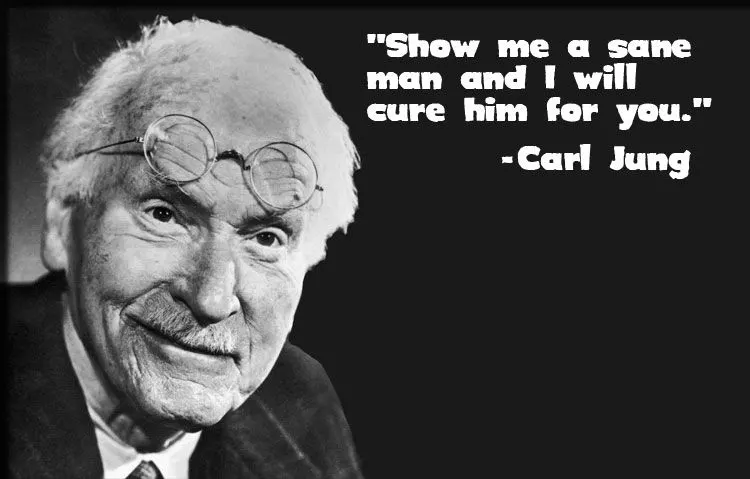
“Your visions will become clear only when you can look into your own heart. Who looks outside, dreams; who looks inside, awakes.” ~ Carl Jung

The appeal of Carl Jung in the field of psychology has to be above anything else, that he recognized our subconscious, not as merely a basement where unfulfilled desires and sexual inadequacies were stored, but as a universe of potential that existed independently of the ego.

He saw the subconscious as a hub for the imagination or ‘a primal matrix from which our species has evolved’ (Robert Johnson, Inner Work) that is host to our individual selves within the broader context of a collective unconscious.

In this way, Jung rejected Freud’s theory that the characters in our dreams represented unexpressed desires that we were and always would be cut off from, and worked with the theory that the figures we dream about are archetypes who represent unexpressed aspects of ourselves; those which were very much alive in us and our true potential.

quotes carl jung

This confirms dream work as a worthy avenue to take during psychoanalysis, as dreams are universally recognized as having meanings that are significant to the dreamer. But not only that, Jung proposed that the solution to the problem was also inherent in the dream, though not always where you’d expect.

For example, a direct interpretation would look something like; being attacked by friends indicates a fear of friendship. Although the direct route can often be the most helpful to the dreamer, Jung saw it as more complex than that.

Like Gestalt therapists, he recognized that inanimate objects, a telephone, a bed, a shell, etc., represent some aspect of the dreamer and should also be considered as significant, and to take into account the personal history of the dreamer.

In a nutshell, there was no universal interpretation for a specific dream; the dream and all the associations in it were entirely personal to that individual and should be analyzed as such.

In the book Inner Work by Jungian analyst Robert A. Johnson, Johnson offers a practical approach to dream interpretation that celebrates our individual associations within our dreams.

Of course, you should go out and read the book, but here is a summary of the first two steps to interpret your dreams:

Make Associations

interpret your dreams

Everyone makes different associations with the smallest and apparently most insignificant object. Make a list of all the objects in your dream as soon as you wake up, and make some time during the day to write a further list of associations for each object, entity or presence.

For example, you had a dream about your friends attacking you with crystals of glass on the harbor of some large city. The crystals of glass would be the first to make associations with. Be simple and direct. For example, try a chain association: Crystals of glass – glass house – sensitivity – teeth – crooked – house – old – knowledge – wisdom.

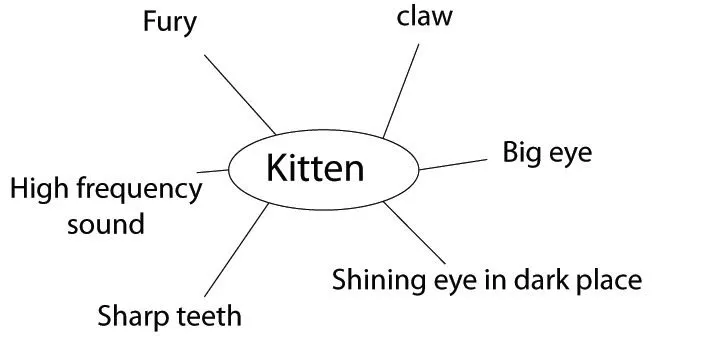
This is a method of active imagination that is playful, but could distract you from the root of the original image. Next try a bubble/mind map:

mind map

Keep experimenting until one of the associations clicks. As Johnson points out: ‘One way to find the essence of a dream symbol is to go where the energy is… Every symbol is calculated to rouse us, to wake us up.’

The symbol wouldn’t be there unless it was significant, as you already know the answer to your problem; your higher self, soul or subconscious is guiding you. So when you find the ‘click’, move on to the Dynamics of the dream.

Dynamics

Through your association work, you may have come across some archetypes, for example a flower could represent the divine feminine or great mother to you. Jung theorized that myths and fairy tales reflected the collective unconscious of a tribe or community of people, and that the symbols contained within that myth signified manifestations of that collective unconscious.

In this way, dream dictionaries are misleading as they suggest collective meanings to a symbol without taking the individual into consideration. A flower might signify the great mother to you, but to me it might have a more direct association to art or aesthetics, regardless of gender.

So archetypes, despite being generalizations, are still highly subjective, and the dynamics with which these symbols are placed in the dream must all be considered and applied with the same approach as the object association.

Archetypes directly reflect an aspect of yourself, as they do emotional systems; for example unexpressed surges of anger. In this way you could analyze the friends attacking you dream as this: The friends are also you, you need to examine your need to attack those you perceive to be weaker than you with shards of spiritual knowledge or higher wisdom.

The associations made with water, the dream taking place on a harbor, could have uncovered an archetype: water is the symbol of purity and emotional freedom and expression to you.

Applying your dream inwardly, as Johnson suggests, means detaching to a certain degree from the appearance and superficial divining properties to the dream. Friends attacking you could easily add to a confirmation of a fear you already have. Instead, think how your subconscious is trying to guide you by seeing the dream as a filter revealing to you the mechanics of the ‘game’ of life.

So the presence of water being the backdrop for the dream, and something present but out of reach, could be interpreted at face value. Digging a little deeper and taking in to consideration that the water/emotional freedom is also an aspect already existing in you.

The expansive and exciting vista could be seen as all yours, if only you’d jump in to the ocean and stop these petty exchanges with people who called themselves friends but clearly weren’t. Perhaps it’s indicating that you need to have more compassion for the other.

water goddess

Putting yourself in the point of view of the archetype/inflated part of the ego or desire/goal can also help you to realize beliefs you hold you’d perhaps prefer not to or are unable to admit to yourself.

Water can also be seen as weakness or oversensitivity; beauty, grace, silence. Are there some beliefs you hold that the original associations didn’t reach?

Perhaps the dream is indicating you should be more fluid in your beliefs and not so solidified. Perhaps the crystals of glass were actually ice; water/the emotions frozen and used as a weapon.

In this way you might uncover the gem of the dream and allow you to fully interpret it. Doing this over a period of a week can be incredibly fruitful, it doesn’t take much to help you realize your hidden truths and the message of what your dreams are whispering to you.

You’ll usually find the ‘answer’ is the one that places the power to change in your own hands. In this way you need a huge amount of honesty to not externalize it, or apply the interpretation to an individual in your life who you have an aversion to. A familiar story to all.

The final step Johnson presents is to integrate habits or rituals in your life as a practical way to address the issue your dreams have flagged up for you. Like a meditational practice, there’s no point doing it if you’re not going to use your heightened awareness to transform those areas of your life that are not quite right. Again, you and only you can direct this, there is no set answer, and the prescription entirely personal. Good luck.

'Man and his Symbols' Carl G Jung Part 1

Image Source

Telephone

Becoming Fluent in the Language of Fear

0

“There are two basic motivating forces: fear and love. When we are afraid, we pull back from life. When we are in love, we open to all that life has to offer with passion, excitement, and acceptance.” ~ John Lennon

Doing what scares you has become one of the many truisms within the current spiritual wave (I don’t want to say community as I believe it is universal), and we often find the real meaning gets lost. We can become detached – in a negative sense – to this little nugget of wisdom and ironically the knowledge it carries completely passes us by.

But could there be two sides to fear; one that inhibits and one that expands our life? At times perhaps we confuse exhilaration for more negative experiences of fear, which then becomes a trap or an excuse not to act.

Leo Gura, blogger and life coach, says that to live a successful, actualized life we need to become a results maker; making six month/yearly plans and going from one goal achieved to another. This is an entrepreneurial success story, but it takes the ongoing examination of what is holding us back in order to go forward. Something that many of us are still struggling with, especially those who are governed by the right, intuitive hemisphere of the brain.

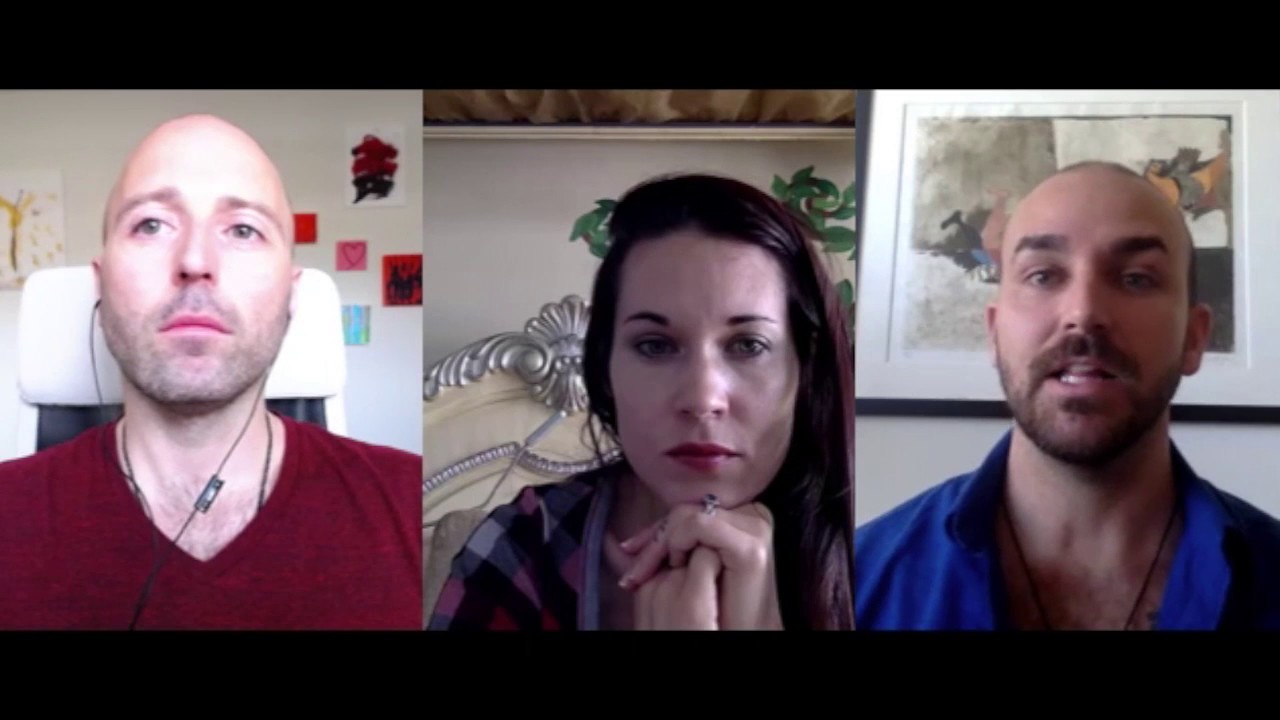
Teal Swan and Lee Harris talk about jumping on board the collective manifestation we are being propelled towards in the new year and accepting it, even if it scares us silly. To accept this fear we have – that we are approaching world war three – is a fear the cultural and political narrative has been speculating about, and perhaps even ‘attracting’ since the last world war ended.

What we don’t want to do is become afraid of what we’re attracting, and one point Teal Swan makes is that when we’re worrying, what we’re attracting is more worrying rather than what we’re worried about.

The World Today -  Teal Swan and Lee Harris Interview

So first we need to accept this fear and the reality of it, and then, as we do when meditating on death, the ego first of all lets go of the outrage and sadness surrounding that reality, and then it can go on to expressing its true potential.

So once we have accepted the reality we can go on to seeing with true clarity of how we fit in to it all, and what we might do to manifest the opposite; or what kind of future we would like to see. We know what we don’t want, but we must come up with and focus on alternatives if we wish for things to be different.

That is one sort of fear, and one that, life death and the acceptance of it, can be incredibly uplifting and carry a positive energy with it.

“The darker the night, the brighter the stars” as Dostoyevsky wrote in Crime and Punishment.

c74c0871d8a041831f18351fbf9c6611

So that is the macrocosm we’re working with, but what about our own, individual microcosms?

In our own, collective universes where we play God we also experience various types of fear. One of them, as Lee Harris analogizes in the video, is the sort we experience just before we get on a rollercoaster. Exhilaration.

That sensation that can often be confused with the warning sign we get when something’s wrong, is actually the exhilaration we experienced before something wonderfully eye opening occurs.

This could be even a life event that we perceive to be one of the best decisions of our lives; a powerful release of creativity, or a shift in energy that allows us to open up to others and finally cement some positive boundaries around us that still let in those who we want to be around. Those who lift us up and remind us of who we really are.

So how can we better recognize these signals and become more fluent in the language of the emotion of fear? Lee Harris says that the ‘good’ fear comes as a contraction, a contraction that ultimately leads to expansion of the self. For example, the way we might feel before a party.

8895a001625f81256141289f940eae21

For the sensitive, what we often do is to isolate ourselves and withdraw in to our own bubble. This is designed to protect us, but it’s a resistance of life and a denial of what we might be doing in light of current global conditions; connecting.

So, that apprehensive but exhilarating-type feeling, if we give in to our catastrophizing probably will result in what we’ll then perceive to be a bad situation or outcome, if taken on with mindful openness, could actually turn out to be a doorway to a permanent change in habits.

The ‘negative’ fear then, as outlined in Leo’s video, is flag-posted by its black and white framework and the unnatural sensations that accompany it. This unnatural sensation may be a lack of feedback from your guides, if you’re particularly intuitive, or a feeling of heartburn or indigestion.

It’s as if your own body is telling you not to go there. The key then, is in noticing the warning signs and backing out before you get too involved. The mind wants to label ‘this is never good, this is always good’; it thrives on absolutes and dualistic extremes.

So check in to how you’re feeling as you’re feeling it. Do what feels right, in that moment. Trauma detaches us from our body, so as suggested in the Teal Swan video, practice things that get you back in to your body such as Qi Gong, exercise, yoga and meditation.

Not to solve the problem of fear, or resist it. But to breed a mode of awareness that then allows you to recognize when you’re operating – reacting – to a sensation of fear or positive contraction. Goose pimples = promising life changing moment approaches, don’t be afraid of it, do what scares you.

Image source

Tightrope Walker

Why Your Life is Not a Journey ~ Alan Watts

3

“When we get to looking at everything in terms of survival and profit as we do, then, the shapes of scratches on the floor CeASe to have magic…” ~ Alan Watts: Acceptance of death.

Most of us consider life to be a journey; we put it in time frames, the simplest being birth, life and death. Honestly I find no other way to look at it, but the problem lies in how we utilize the time that we have, more importantly, the now.

So often we think that happiness is a destination; when I make a million dollars or when I buy a new car, or get a better promotion, I will be happy. Rather, we need to be happy with what we have and not postpone our happiness, thinking we will get the time to focus on joy later.

Too many people take it for granted that the purpose of our life is what is handed down to us, that is, school, college, work, or family. Life has to be balanced – it’s not just about making a living, but actually living. One of my favorite poems comes to mind, Leisure by William Henry Davies.

What is this life if, full of care,
We have no time to stand and stare.

No time to stand beneath the boughs
And stare as long as sheep or cows.

No time to see, when woods we pass,
Where squirrels hide their nuts in grass.

No time to see, in broad daylight,
Streams full of stars, like skies at night.

No time to turn at Beauty’s glance,
And watch her feet, how they can dance.

No time to wait till her mouth can
Enrich that smile her eyes began.

A poor life this if, full of care,
We have no time to stand and stare.

Why Your Life is Not a Journey

Alan Watts & David Lindberg - Why Your Life Is Not A Journey
Your Life is Not a Journey

One needs money to live, unless you’ve achieved the art of self-sustenance. However, cultivating a talent that will reward you with sustainability is what we all need to strive for.

After all, we have to dance when the music is playing.

As Watts puts it, “Life was a musical thing, and you were supposed to sing or dance while the music was being played.”

So don’t forget to make the time to dance to the music, stop worrying about tomorrow as “…tomorrow and plans for tomorrow can have no significance at all unless you are in full contact with the reality of the present, since it is in the present and only in the present that you live.” ~ Watts.

“Dance, when you’re broken open. Dance, if you’ve torn the bandage off. Dance in the middle of the fighting. Dance in your blood. Dance when you’re perfectly free.” ~ Rumi

Further Reading:

More lectures by Alan Watts