Home Blog Page 19

10 Uplifting Quotes From Mooji to Question the Mind

0

“Don’t wait for your mind to be quiet. As you are made aware of your natural state of being… this is the wonderfulness of consciousness… you’re simply here.” ~ Mooji

Speaking on the consistency of the self, and the chaos of the mind, Mooji has been speaking wise words since he opened his chai shop, where he didn’t speak for long periods in 1998, but simply served tea and studied under Papaji for some time in India.

He began meeting some determined seekers in his apartment in Brixton Hill, where his Satsang was born. Gradually, the seekers began to ask questions about how to have a direct experience of the truth, and people enjoyed basking in Mooji’s radiant presence and love. He has been speaking on the mind and on that radiant love ever since, and now spends time in Portugal, the UK, and India. 

When his master died, he famously said: “The Master does not die. It is the mister, the person, that dies. The Master, that timeless and unborn principle within, alone exists and is the Real.”

Here are Quotes From Mooji to Question the Mind

“Your heart is the light of this world, don’t cover it with your mind.”

Like all of Mooji’s messages, the coming into being involves being more in a heart space, or heart energy. Once you, not quieten, but ignore the mind, you begin to come more into heart energy and it begins to be revealed. Slowly, our heart space increases as we let go of the mind, and begin to see the true self.

The self gets space and leverage to be who it really is; a consistent, unchanging, unshakable awareness. Joy spills in, and an unprecedented awareness, light spills in and fills in the gaps. The mind may still be crazy, it may still be there, but there is only the self in an authentic sense.

“No thought has any power. You have power. And when you identify and believe in the thought you give power to the thought.”

Identifying with thoughts are in opposition of the true self. They are the anti-self. We are always having thoughts about ourselves which are not true, they change, from one day to the next, they are discarded constantly by the mind. The mind shakes up thoughts, they whirl around the mind, the mind presents us with constant theories, constant worries or ideas about the way things are.

You have power, means we have power in the self, the self, which is always there, unshakeable and still, and connected to all things that have been, and all things that are. The field of being has power, true power, and when we observe the mind, and become the observer, we give power to the self, truth and authenticity. 

“When you can bear your own silence, you are free.”

We are free in our authentic selves, and the truth lies in wait. To bear your own silence is to let go of the mind. To be free, is to be in that authentic space of the self. God is in that silence. God is everywhere, in everything. Not absolutely though, the opposite of that silence, the mind, the chaos, is where god is not. Or is he/she/it?

Perhaps the mind is also a part of God. So not absolutely, but also absolutely. When you can bear your own silence, you are free. To be free of bondage and liberation, is to be truly free. I’m free beyond the concept of liberation, and free beyond the concept of being free.

“Who reminds you to breathe and beat your heart? Something is there, taking care.”

God is everywhere. And also in you. That is why it is good to be in the realm of the heart or the breath. Because, in their consistent consistency, they give us a doorway into the truth, which is beyond all knowing of the mind. It’s nature, but its also nurture.

Quotes From Mooji to Question the Mind

It’s God, but it’s also the present moment, a space beyond the mind, which is why we can use it as a tool to focus on, and use it to create that doorway to the truth. That consistent space of joy and contentment, where true stillness lives. 

“You need nothing to be happy – you need something to be sad.”

Nothingness increases happiness, to let go of all your old attachments; to objects, to things, to ideas, especially to ideas, to the chaos of the mind, increases happiness. To being attached, is to be sad. To have something, especially ideas, better known as thoughts, is to be burdened. That burden is to be sullied by the mind. Remember it is God, but it is also not. To be sad, is not God, it’s not pure joy.

God is inherent in everything, and the mind is like an addition to that. We are sad when we have something, means we are burdened by that very thing which keeps us from a true experience of a higher force. To have something is to be sad, to not have something is to be happy; you need nothing to be happy. In the absence of thought, we are happy. 

“When you don’t want to be interesting, you are free.”

The ego really is a persistent evil in that we do not need it. Not that there is any evil in this existence. The ego just is a distraction from the now. The mind is like a devil in that it is not welcome. It helps with survival only. But to want to be interesting, this is a throwaway product of the mind. It is un-necessary.

What is really necessary are those moments of freedom, the constant that is always there, God. That limitless joy which springs up and blossoms and just is. That is true freedom.  

“You already are the peace you are looking for. Be still and know that.” 

You already are the peace you are looking for. In the stillness you can know that. Mooji is very special because he speaks in very simple terms, circling over the same truths, he speaks, yet he never runs out of words! Many of these quotes cover the same ground, yet they are always fresh.

In stillness, we are at peace, and in the ‘You’ we are at peace. You are looking, your ego is looking, yet you are already there. Being still, focusing on the breath and the heart beat, and we know we are there. The stillness increases, and we can find ourselves in our true joy and beingness. 

“Every living being is searching for this! … Rest. Because every time we touch the mind stuff, and person and personality and what kind of person you want to be, you disturb yourself. But we are so accustomed to the disturbance we tolerate it.”

We are so accustomed to disturbance, even though it is not our true being, we put up with it. That is why, when we disturb the mind, it can create chaos for us, at first. The mind swings from one thing to the next, and we tolerate it because it is all we know.

Rest is like peace and joy, we search for it, we desire it, we require it, it is the true nature of being and the true nature of all of us. God. But we ‘touch the mind stuff’ and resist that by trying to be interesting, trying to look a certain way, trying to be a certain person, and we resist the rest. You disturb yourself.  

“Your mantra is thank you. Just keep saying thank you. Don’t explain. Don’t complain. Just say thank you. Say thank you to existence.” 

Say thank you to existence, every day, say thank you. Don’t explain, don’t complain, just ignite your prayer with gratitude. ‘I’m everywhere like space’ – Guruji. And being everywhere, the thankfulness increases something in space.

Like a ripple in a lake, gratitude joins the whole, and the space it embodies. Existence becomes you, you become one with existence. By saying thank you, you can increase the moment by being away from the mind, or absent from it. 

“Some people are looking for some thing, some object, that when they find it, they say then I’ll be happy, and you know what happiness is? To be content. And you know what contentment is? To be still.” 

To be content is to be still, and that is happiness! Mooji’s words pierce the now and help us to experience those moments of joy and stillness. It’s quite a revolutionary concept, that happiness is stillness. And how do we unlock that stillness? By noticing the mind. Mood encourages us in being the observer of the mind, to question it, and ultimately move beyond it. 

Mooji truly is a special light in these current times, and we are truly grateful to him for shining his light. His words transform us, and glow in the hearts of all who hear him speak. He has been shining that light and his words will continue to do so for many years to come.
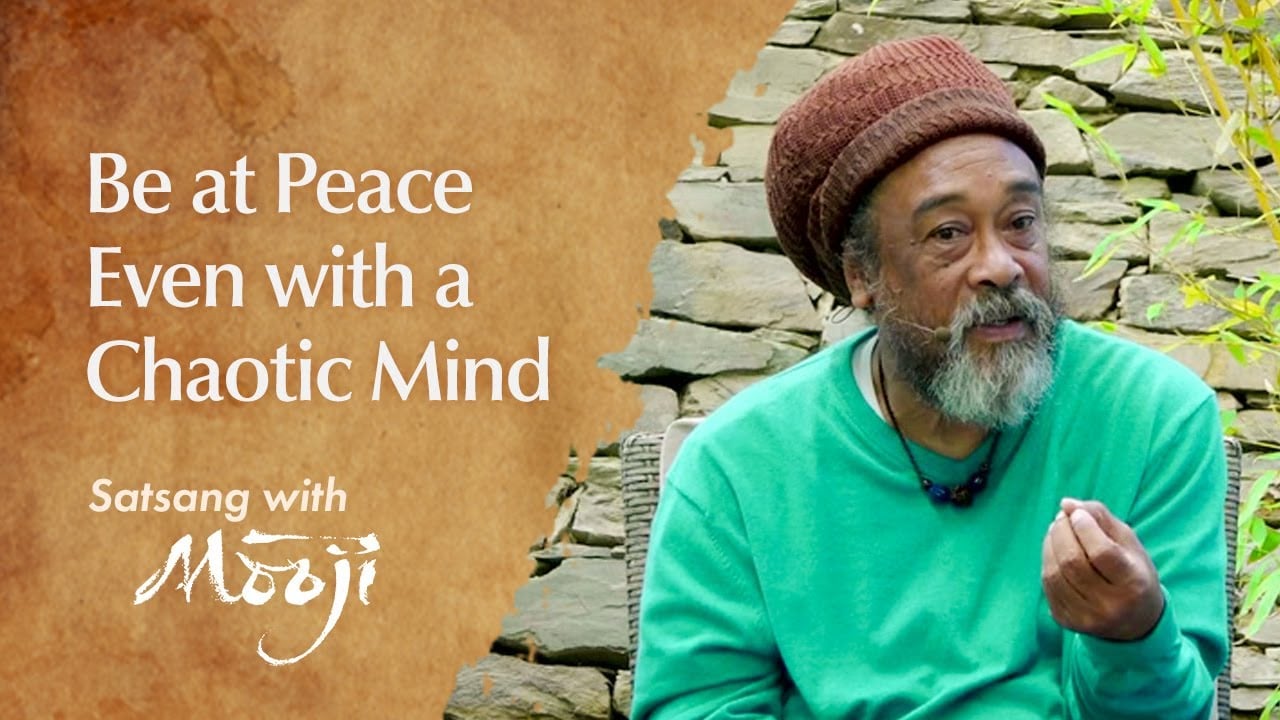
Be at Peace Even with a Chaotic Mind

Image source:

Mooji

Mooji photo

7 Divine Archetypes to Review the Psyche

0

The archetype is that which erupts from the Collective Unconscious and pokes through the veil to become and transform action and intentions in this world. It can be seen as the many facets of the same divine source, that which changes and morphs, but through which meaning can become concrete and recognised as divine truth.

Like moments of leadership, I have included mainly those which are divine/and/or spiritual, rather than psychological in how they relate to the human or hero’s journey. I have included just one shadow archetype, for those who love the dark side. My main interest as far as archetypes go, is how they manifest themselves through being a pinnacle of the Collective Unconsciousness, as Carl Jung puts it:

“A group experience takes place on a lower level of consciousness than the experience of an individual. This is due to the fact that, when many people gather together to share one common emotion, the total psyche emerging from the group is below the level of the individual psyche.” ~ Carl Jung, The Archetypes and the Collective Unconscious.

So we find archetypes manifest themselves through individuals much better than through groups, although of course we have groups of rebels, and peacemakers for example. 

1000003616

Here are 7 ‘Divine’ Archetypes to Review the Psyche:

The Divine Mother 

Lets face it, the Divine Mother is the most important facet of the Mother archetype. Modern gurus and saints like Amma and Mother Teresa embody the Divine Mother archetype. 

She is compassionately divine, her rivers of compassion flow through and encompass all of their actions, and they embody the divine feminine to limitless heights. She is able to melt karma with her word, and burn through ego with her gaze. Being in her presence will speed up your awakening, and she may only incarnate in a (normal) mother momentarily; from time to time, when the child in her care needs healing. 

Of course, she extends her healing mothering abilities to all; the sick and needy, those who are merely questioning, those who are doubting, those who are in deep suffering, and those who are in mortal peril. All of those who cross her path deserve her healing abilities, and her touch has qualities of the divine.

The Divine Child is attracted to her, and she famously mothers him or her, as Mother Mary did to Jesus. During meditation you can connect to the Divine Mother; the lotus can be a way to find that vibration, she is in the blossoming moments of meditation and the awakening of the divine self, she can be found in the rivers and streams, the leaves and branches, the mountains, the blossom flowers, the grasses and grains.

As far as crystals are concerned, she is the rose quartz, and you can download this energy from the heavens. That colour in the spectrum is the Divine Mother herself, and she welcomes you with a loving smile. She is inherent in loving kindness, in the womb and earth.

A ritual to connect with the divine mother 

1000003617

On your altar compile a rose quartz, clear quartz, lavender, goddess imagery/statues, prayer beads, flower petals, womb representations and circle imagery. Burn some incense, and visualize journeying to the centre of the earth. What message does the earth have for you? Travel to the jungle or the mountains, find a place on the earth which calls to you and say a prayer for her.

Visualize journeying up to the clouds, and connect to the pale pink light. See the Divine Mother waiting for you there, does she have a message for you? Bow to her and receive. Remember to offer her something from your altar and she will give you her blessings.

The Divine Child  

The Divine Child moves mountains and takes all the knowing and learning and realising from past lives, and becomes a new incarnation. We can be Divine children from incarnation to incarnation, and when a divine child is ready, they are born into the lifetime where they will achieve Nirvana, or become enlightened.

Divine children are often crystal or rainbow children, and many have special powers. Bending spoons, transforming water, and telekinesis are just a selection of the powers just a few possess.

The Rebel

Rebels, like visionaries, wish to find a better version of the world. They rebel against anything, and can often be the first stage of the Divine Child. Better known as Activists, they find a peaceful and polite way of communicating with those who use force to reinforce their ideals, and become active in negotiating with them in order to make changes in the world.

Some famous examples of being an activist are such things as refusing to do something like not be educated or eat or drink (not advisable, do not do at home), to extremism, which I won’t write about here!

Rebels are quite often violent, but they don’t have to be, and should instead maintain peace and balance at all times. The cleverest of rebels are polite, perform peaceful protests, and seek to comply to a certain degree to more fully step into the world of peace-making and becoming a visionary. 

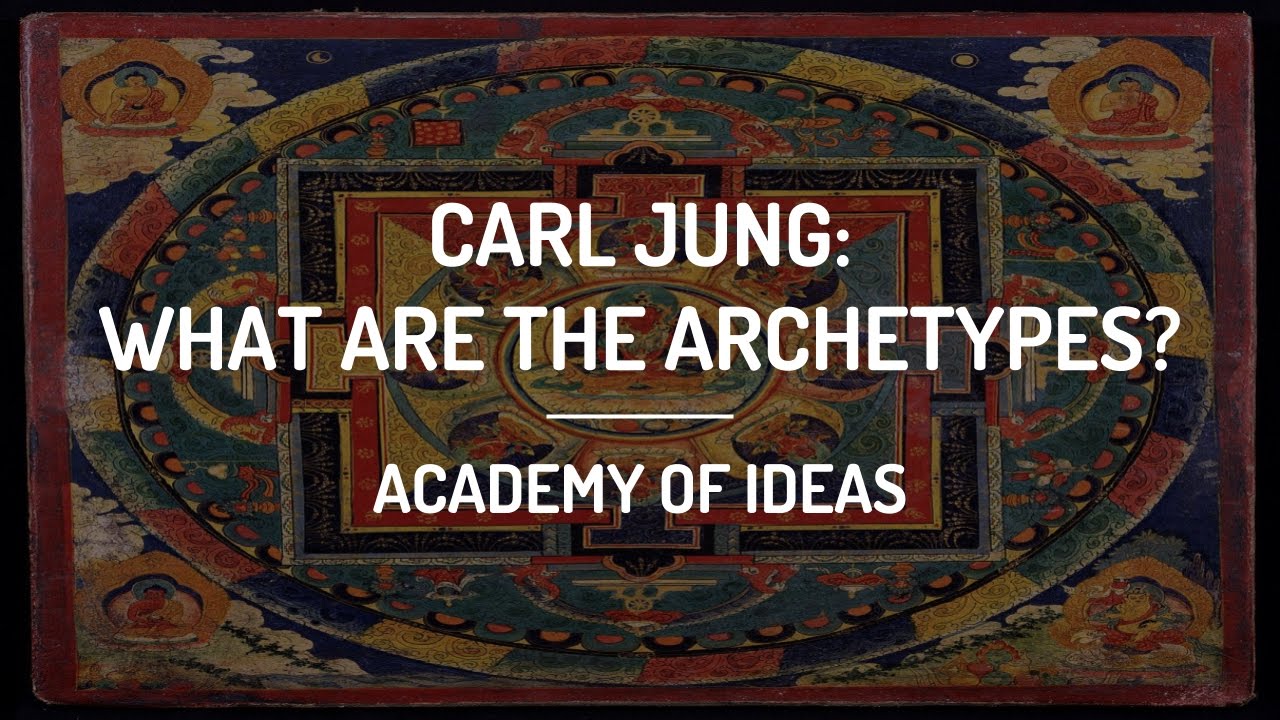
Carl Jung - What are the Archetypes?

The Holy Witness

The Holy Witness is an incredible part of one’s healing journey and embodies the need to have a witness at critical passages in your life. Like the saint or the knight, the Holy Witness can be like a guru as a witness to another’s spiritual journey. But being a holy Witness does not have to be lofty and saintly. it can be commonplace.

Being the witness to another’s life includes family and friends. Those contracts we have set up with others before this incarnation, which of course is Holy, because we are witnessing divine events or urges of the soul; God at work as he/she/it flows through every action and decision.

We witness each other’s deepest suffering, and so we will be each other’s richest companions. To be a witness to someone’s life journey can be most beautiful in the mother, the spouse, the father, the friends, or the child. 

“Jung speaks of God continually incarnating through the Holy Ghost in the world of time and space, in the conflict and coming together in all.” ~ Larry Gates

Being a Holy Witness to another is a sacred journey. In the case of the spouse, this divine union can be tumultuous, or it can be blissful. It can be both. I bow to you, can be a good prayer to help the divine flow of marriage, and the twists and turns of a life together, a divine force.

Mother and father relationships to the child are also divine flow, in being a Holy Witness to a child growing and learning, or even the child as a Holy Witness to the parent learning how to love unconditionally, and getting it wrong or right is an honour. The friend or the mentor are divine witnesses also, a person to laugh and cry together. The holy witness can also be Christian in meaning, and something ethereal.

A prayer for a holy witness

Thank you for your presence in my life. Thank you for being you, and for bearing witness to my experiences. Thank you for being here with me on this journey. You are my Holy Witness.

1000003618

The Shapeshifter

“In Jungian psychology the Shapeshifter archetype refers to the animas and the anima. The animas refers to the male element of the female unconscious, and the anima the female element of the male unconscious.” ~ Amanda Read

The only shadow archetype I have included here, Shapeshifter archetypes symbolise the shifting of ambitions or desires, which are inherent in all of us. The facets of all the archetypes, arise from the collective (un)consciousness, and the shapeshifter represents those who have conflicting facets.

They may be associated with narcissism, although I prefer to see narcissism as the wounded child crying out in pain. Shapeshifters have two or more personas, which symbolise the shifting of desires on the divine journey. They may be a rebel, but also very sociable.

They may harbour secrets and border on sociopathy. They may be vain, like the vampire, or sociable like the werewolf. They can also be associated with the jester, masters of verbal irony and sarcasm, they might embody spontaneity and a zest for life. More psychological in the approach to the shapeshifter, it can represent secrets and the shadow self on the spectrum of the divine journey. They can represent uncertainty, when we are more connected to the below than the above and the path is unclear. When we are lost, and we don’t know where to turn. 

The Shapeshifter also connects us to the animal part of us. A deep connection to the earth, the darker part, where snouts and hooves are rife, and the hair of the beast is where animal magic teaches us something, like portents, or messages from the early world.     

The Visionary

The Visionary sees ahead of the current world and transforms current problems into solutions. They can see a solution to all current world problems, using both the past, and the future, or alternate worlds to solve those problems.

They are multidimensional, and can see into several worlds at once. Aligning with those alternate worlds, they use what is going on in them, including those worlds which are heavens, and find solutions or simply become prophets to and for this world.

Visionary archetypes come through politicians, diplomats and ambassadors. If an archetype is a pinnacle, or a facet of the collective conscious, it comes through at the right time, and is carefully selected – no, chaotically pushed up – through the veil of the collective conscious and into our inner knowing.

On public platforms, through environmental activism, the politician becomes the visionary, and speaks to the masses. Those who speak stir up the rebellious nature of the crowd to then implement those changes needed to realise the vision through peace treaties and reforming bills.  

The Peacemaker

Peacemakers are committed to finding a way from conflict to resolution. They use various methods to do this including non-violent communication. This includes honouring observations, feelings, needs and requests.

Peacemakers are known throughout history as having ended wars and moments of extreme conflict. The United Nations is full of peacemakers; its purpose is to maintain peace and security. From a divine journey perspective, the peacemaker is wise and intelligent. They use negotiation in a peaceful and productive way to make progress.

The Prophet

The Prophet archetype is a messenger of the divine, who speaks of events or occurrences which will happen or have happened, and interpret them into pure love. The Prophet is often a surprise to the masses, and they speak of ways to live in the present moment, or how to love one another better.

They can also be activists and rebels, peacemakers and visionaries. They can also be used as warnings, causing alarm bells to go off in the masses if they’re not listened to. They can be the Cassandra’s of this world, and speak of war, environmental fears, and imminent disasters.

Whatever archetype you most relate to, You may just be inspired by the list I compiled, or you may know someone who fits one or more of these descriptions. Whatever you’ve discovered, I think you can agree they speak to The Whole.

And they really do speak to The Whole/the Collective Unconscious, those ripples of inner knowing which speak to the connection between us, and those moments where the archetype comes through us and speaks to our hearts and souls.    

Images:

Android Jones
Chris Miles

Beyond Cause and Effect: Insights from Krishnamurti’s Lecture on the Universe

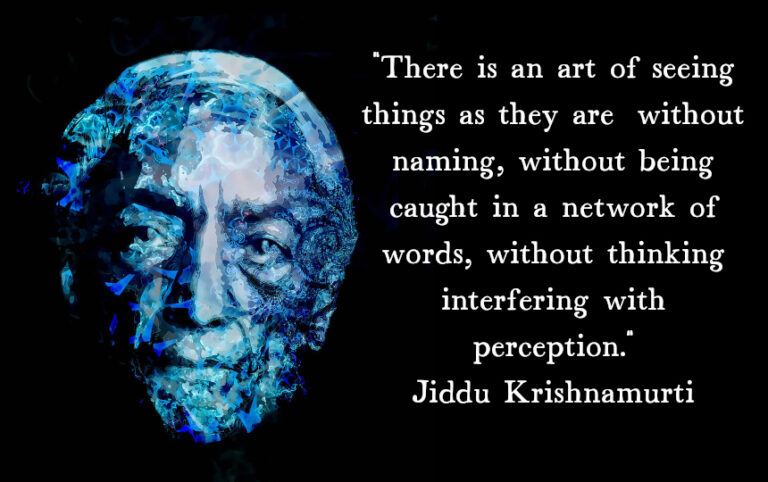
“There is only attachment; there is no such thing as detachment. The mind invents detachment as a reaction to the pain of attachment. When you react to attachment by becoming “detached,” you are attached to something else. So that whole process is one of attachment. You are attached to your wife or your husband, to your children, to ideas, to tradition, to authority, and so on; and your reaction to that attachment is detachment. The cultivation of detachment is the outcome of sorrow, pain. You want to escape from the pain of attachment, and your escape is to find something to which you think you can be attached. So there is only attachment, and it is a stupid mind that cultivates detachment. All the books say, “Be detached,” but what is the truth of the matter? If you observe your own mind, you will see an extraordinary thing—that through cultivating detachment, your mind is becoming attached to something else.”
~ Jiddu Krishnamurti, The Book of Life: Daily Meditations with Krishnamurti

We live our lives attached to things, people, money, power, views, ideas, beliefs and so on. It takes you in a spiral of negativity, overthinking and hopelessness.

Can we live in this world without a simple sense of attachment? 

Watched this video by Jiddu Krishnamurti, I was pretty confused until I read the transcript, felt like half my brain was trying to understand the words rather than the meaning. This is perhaps one of the reasons why I have always preferred reading as compared to watching a video.

Krishnamurti’s Lecture on the Universe – The Universe has no Cause

The universe has no cause; we have causes | Krishnamurti

Transcript of the Conversation

K: We can give different explanations why human beings don’t change. Ten different explanations. What? They are just explanations.

Krishnamurti's Lecture on the universe

Q: It’s not so much why they don’t change. Why are we not aware of the destructive tension in our brain?

K: When one puts the question ‘why’, then you’re looking for a cause. Right? The discovery of the cause may take time. You will say one thing, he’ll say another, I’ll say something else, so we’ll all be fighting over the cause.

Q: Twice in our conversation, we’ve come to a question, can there be an instantaneous ending, a cutting of something?
A timeless… We keep wondering off. I don’t know if we know how to even approach a question like that.

K: Don’t approach it.

Q: Well, you ask it and what does one do with it?

K: Just look. You tell me that – what? – attachment is dangerous, corrupts. You tell me that. I see your logic, I accept your logic,
I see what you’re saying is true, but I’m attached at the end of that.

Q: It’s not sufficient.

K: I am still attached.

Q: I think you need some sort of deep crisis to have that…

K: Then I’ll wait for time. I don’t want time to dissolve my problem. Time won’t dissolve my problem.

Q: But this crisis is perhaps not induced by time. It could be induced by some shock – suddenly you understand the thing.

K: All right, why doesn’t it take place now?

Q: It could take place now. Perhaps I’m not sensitive enough.

K: Then what? You follow?

Q: But doesn’t that come back to the question, if I may put it? Doesn’t that come back to what it means to actually be attentive?
I don’t know whether I’m jumping.

K: I’m not seeking a cause. I wonder if you understand that.

Q: Would you say the notion of process is itself disorder?

K: You tell me attachment is corruption. You explain to me very logically, the whole explanation. I listen to it. I don’t ask, ‘Why don’t I change?’ My first question – I won’t ask that. I’m still attached. I don’t ask, ‘Why don’t I let go?’ If I ask why, I am seeking a cause. Therefore, what has a cause has an end. Right?

So, I won’t look at the cause. You will tell me that the cause is that and that and that. I won’t do any of that. I know I am attached. I have listened to you, listened to you logic, your clarity, I say, ‘Yes, that is perfectly true.’ But at the end of it, I am still holding on.
Just listen. I am still holding on.

That’s all I know. Please listen. That’s all I know. I’m not interested in ending it, I’m just holding on to that. I see I’m holding on.
I won’t ask why I am holding on, but it is just I am that.

I think it is disastrous to ask what is the cause – for myself, I’m not telling you to accept this.

The universe has no cause. We have causes. If I can not think in terms of cause, time. Then I am attached. That very reality of ‘I am attached’ operates. I don’t have to do a thing.

Experiencing a Spiral

There’s something profound here to be learned, I paused for a moment and pondered on one of the recent causes that was on my mind.

It was something so simple a thought as to why did someone do that? The outcome of the action had already taken place yet I was attached to knowing “why” would that person do that. Sadly the next step is I begin to judge that person from my perspective the person must have not been good, as to why would that person do this. Going down to the no wonder the daughter behaves like that.

So where did the desire of knowing the cause lead me to? It spiraled me into a place of negativity. But this like I believe any philosophy, can be adapted positively to a situation for self improvement or it could be detrimental.

I do love most of Jiddu Krishnamurti’s stuff and if you’re just hearing about him, this post we have on 7 Empowering Jiddu Krishnamurti Lessons to Live By will get you up to speed on some of his thoughts.

Image Source :
Jiddu Krishnamurti

Healing Through Awareness: Lessons I Learned at The Landmark Forum

0

The time was June 2023. I was sitting in front of my laptop trying to work and no one was at home. Suddenly, tears started rolling from my eyes. As if that wasn’t enough, I started screaming my lungs out. Within a moment, there was no voice. Only my mouth wide open and me trying to scream, as if I was trapped!

I had signed up for The Landmark Forum which was to happen 15 days after this incident. Every night I remained wide awake thinking – this was my last chance. What if this doesn’t work too? I don’t know if there is another option to get myself out of this trap. I was scared!

Until now, I had tried counselling and meditation! It helped me cross some barriers. And, all days weren’t bad, some were. All relationships weren’t screwed, some were. All moments were not filled with anger, some were.

So, what was actually wrong?

I was agitated. I had chronic low back pain. I felt distanced with people. I felt no one loved me. I lost my interest in building my career. At the slightest provocation, I’d feel “Why am I always wrong and everyone else is so right about everything?”. 

I wanted to go back in time. Be the same healthy, ambitious young girl I was. Minus the stress of that young girl that got me in this situation.

This situation impacted my family and I knew I needed to work upon myself.

“Embrace each challenge in your life as an opportunity for self-transformation.” ~ Bernie S. Siegel

That is when the Landmark Forum happened to me. It exposed me to my own blind spots (things I did not know about myself), and thus opened up every area of my life – career, health and relationships. 

I got to know how ‘what we deduce from our experiences gets filed into our future’. I discovered that the source of my stuck career was the thinking – ‘I am incapable’, derived from a certain childhood incident. I also discovered that I grew up as a hard-working and highly disciplined child in order to impress my father. 

Knowing the source helped me invent new possibilities in relationships and other areas that weren’t working well. It changed my outlook towards life. It changed the way I communicated with people. Let me tell you a little bit about how all of this unfolded for me in the three and half days of doing the forum.

It is a conversation created in a step-by-step fashion by the Forum Leader, people share the areas of their life that aren’t working. The Forum leader helps us look at these situations from ‘distinctions’. The result is to get answers that you could have never figured out without those ‘distinctions’.

Here are the 10 things that I learnt from The Landmark Forum –

1) Inclusiveness

Being in the forum, I had a profound feeling of inclusivity. I was seeing myself in others who were sharing their life. This created a feeling of oneness that cannot be otherwise experienced unless you are in a state of deep meditation. A life lived making judgements, analysing, blaming and manipulating people around us, seemed useless.

2) There is no good no bad

I would often regret anger, hatred and envy. I realised that no emotion is inherently good or bad. Every emotion arises from a deep-seated thought. For example, I realised that the root of jealousy is an underlying thought that ‘I am incapable’. Once I recognised this, emotions started making sense. I could easily acknowledge my emotions without getting overpowered by them. This gave a sense of me being the creator of my own life.

3) Possibilities

“The domain of possibility doesn’t exist; we need to create it in order for it to exist. Happiness, fulfillment, regard, satisfaction are all states that exist only as a possibility. So is everything else that’s of any value.” ~ Laurel Scheaf, Landmark Forum leader

I came across the concept of ‘human being as a possibility’. I could understand why resolutions hardly work. Creating a possibility of living a ‘healthy, long and an adventurous life’ is much more inspiring than ‘I will exercise everyday from now on’. New actions emerge by creating a new possibility, rather than mere changing of the past actions.

4) Complaints into Possibility

In one of the seminars after sessions, we did an exercise – ‘listing down all the complaints we have, as we go about the day’. As a week passed, 15 pages of my book were filled with complaints. This was true of every other participant. And then we worked to convert these complaints into possibilities that opened up a whole new way of looking at life. Now, every nagging complaint in relationships, health, career, got converted into a possibility. Life is exciting when you live it out of possibilities!

“No one ever cleans the mess in the house. It’s me who cares, everyone else just makes the mess,” was my constant complaint. One day, our family got together at the dinner table and we created the possibility of being a ‘sparkling family’.

A sparkling family not only shines outside but also inside. A sparkling family not only shines outside but also inside. A family that keeps the outdoor (read ‘house’) and indoor (read ‘mind’) clean. As you see, the beauty about creating a ‘possibility’ reflects in several areas of our life.

5) Standing for the other

Until the forum, I knew how to mind my own business. Realising that others’ goals can be my goals, was a complete game-changer. My relationship with others had a different meaning. I started living life with others, like real human beings. Not living life in isolation. 

6) Living life out of ‘priorities’ versus ‘everything matters’

I lived life without prioritising – prioritising career over few relationships. While building one area of life, I would lose sight of the other areas of life. The balance was missing. Being associated with Landmark has empowered me to live a life out of ‘commitments’, not my emotions, thoughts and feelings.

There is nothing more and less important than the commitment I give to myself and other people. When I live a life out of commitment, whatever I give my word for becomes most important. Not what I ‘think’ is important. 

7) Listening

“Deep listening is the kind of listening that can help relieve the suffering of another person. You can call it compassionate listening. You listen with only one purpose: to help him or her to empty his heart.” ~ Thích Nhất Hạnh

I realised that I hardly listen to people. With the constant chatter going on in my head, it is appalling how bad a listener I was. This chatter would create filters, bias and judgement. No wonder what I said landed completely differently than the way it was supposed to go. I learnt to listen to people, really listen while minimising the constant chatter. 

8) Developing people skills

I learnt effective communication. Most times, we are so engrossed in making stories before we actually arrive at a point. We avoid getting straight to the point, because we are already thinking about the reaction that we will receive from the other person. I got that effective communication means coming straight to the point followed by demanding action. This isn’t easy. 

9) Life is empty and meaningless

I realised that operating from the space of nothingness gives me power to give my 100 percent to everything. When life is meaningless anyway, the power lies in creating my own meaning. There is no need to search for the meaning of life or its purpose on the outside or within. Because it is meaningless. And you can create just about any meaning that you want.

10) Living an authentic life

“The possibility of fully being ourselves occurs in proportion to our being authentic. Living with a pretense, or being afraid that some aspect of ourselves might be found out, precludes any real freedom. Being authentic requires courage.” ~ Joe DiMaggio, MD, Landmark Forum leader

It taught me to live an authentic life. It gave a structure to discover and deal with my inauthenticity. I would define this experience as ‘meditation on the court’. 

Lastly, for those who’d like to know about what happened to the low back pain. The clear difference that the forum made was to turn my aggression into acceptance towards my low back pain. 

To accept that a part of my body needs help, needs rest and needs compassion. I have had triggers even after the Landmark Forum, but it doesn’t stop me mentally and emotionally. It might have to physically rest but picking myself up has become a lot easier!

(Everyone should do The Landmark Forum once in life. It is the shortest possible route to transforming our outlook towards life. If you would like to know about this 3 ½ days course, do get in touch with me.)

Image source

Journey of healing

Circling: Connecting with Yourself and Others

0

Circling, a relatively new branch of non-duality and zen, brings us into the present moment with grace and knowing. A method that highlights the interactions we have between each other, as well as those more familiar tools used in meditation, such as awareness of sounds, tastes, bodily sensations, and how we are feeling in the present moment, circling is a radical way to ignite that moment.

Circling and the transformational power of Surrendered Leadership are phenomenal tools to deepen and extend our relationships with one another.

1000003380

I had the opportunity of practicing it in a six week course before Christmas, and found it to be a way to access the same results as meditation but by a different route. In its best moments, I entered a state where my awareness increased, I was seeing or experiencing the present moment as it arose and I was in a state of deep relaxation.

In other words, circling is a new way of talking. In our normal way of conversing we rely on memory, moving back to our past or forward to the future, circling brings us right into the present moment.

How is Circling & Surrendered Leadership done

Circling step one: Gazing

Unlike Vipassana, which focuses on one place under the nostrils for example, circling begins, with eye gazing. Staring deeply into one other person’s eyes for fifteen minutes is a fantastic way to step into the present moment and begin to harness its power. 

This can be done with one other person, or in groups of three or four.

Circling helps to open up more to oneself, and access parts that are hidden or gets ignored. It helps them flow with their feelings. It helps them to be more open and lead a more fulfilling life.

Jim Eaton Interview - unravelling the patterns of the mind

Circling step two: Noticing

Bringing the next stage into your practice, is noticing. This is when we verbally ‘notice’ sounds, tastes, and bodily sensations or emotions. For example ‘I’m noticing I have a tightness in my stomach, and I’m feeling a little wary of that.’ Or ‘I’m hearing lots of sounds far away, and am feeling angry about something but I don’t know what.’

Circling step three: Curiosity

Step three, responding to what the other person is saying. With the powerful tool of eye gazing, responding to another person’s ’noticing’ stage can become transformative. 

For example. ‘I’m feeling curious about that (what you just said), and I’m wondering how that is for you.’ Or ‘I’m wondering if you could expand on that, it sounds really interesting.’ Or simply, your own emotional/bodily response to that, even if you don’t understand the source.

You can see from these practices how it can be likened to non-duality or zen.

Though circling can get intense and become a journey into the unknown, it brings to the surface parts of ourselves that truly matters.

Surrendered Leadership

Circling can then move on to larger groups. Using the same practises, it can be performed in a group where we are taking our responses to each other with full responsibility – for example ‘I’m feeling really angry about that’, rather than, ‘you made me angry’.

In a larger setting, we take it in turns to have responses, or perhaps we say nothing. Two interactions can break off and become more intense, one or two people may say nothing, or the group may be equal in noticing and curiosity. The eye gazing is key to uphold, being something we continue to do to stay in the now and in our own ‘leadership.’

We then start to see moments of Surrendered Leadership, where the field of leadership is honoured. It’s difficult to describe, but being a leader becomes less about ego, and more about utilising the field, where moments rise. In the gazing/noticing/curiosity bizarre moments can happen, but where we step into our own and become leaders.

The Transformational Potential Of Circling

Reference:

Circling Europe

Image source

Circles of Healing