Home Blog Page 255

There’s More to Life than Being Happy: Five Things More Important than Happiness

3

“Everything can be taken from a man but one thing, the last of the human freedoms — to choose one’s attitude in any given set of circumstances, to choose one’s own way.” ~ Viktor Frankl

There are a plethora of get-happy-quick schemes out there. As a culture, we seem to be obsessed with being happy at all costs. And yet, with all our creature comforts; with all our gadgets and toys and things-things-things designed to make us happy, we are generally a miserably unhealthy people living in an unsustainably lost culture.

We smother ourselves, we smother each other, and we smother our environment with our human waste; mostly because we selfishly seek happiness at the detriment of healthy order itself. Sometimes in order to get the horse back in front of the cart, we need to make happiness secondary instead of primary to other things.

There is more to life than being happy. Here are five things we ought to make primary over happiness in order to achieve an optimal healthy evolution for our species.

1) Healthiness, then happiness

“One valuable insight to emerge from modern psychology is that unconscious motivations can cause an individual to engage repeatedly in unhealthy and counterproductive behavior. Such a cycle is ordinarily not broken unless the individual somehow becomes aware of the underlying mechanism that is driving his or her behavior; only then can a person initiate corrective action.” ~ Leonard Shlain

o-MEDITATION-HEALTH-BENEFITS-facebook

The pleasure-pain dilemma is a quagmire for the human condition. It always has been and it probably always will be. One way out of the quagmire and onto at least some reasonably firm footing, is to use the scale of healthy-unhealthy, which is dictated by nature.

The degree to which we become self-actualized, is the degree to which we gain the ability to adapt to and overcome each moment in a healthier way. The primary goal should be a healthy process, not a good quarterly statement.

When we’re healthy (mind, body, and soul), we are fine-tuned for happiness. We may get some happiness out of a good quarterly statement, but if we are not healthy then the happiness gained is marginal. True happiness comes from healthiness. Like Aristotle said, “Happiness, whether consisting in pleasure or virtue, or both, is more often found with those who are highly cultivated in their minds and in their character, and have only a moderate share of external goods.”

The question of our culture being unsustainable is the question of where to draw the line between scarcity and abundance. The problem isn’t comfort; it’s too much comfort. The problem isn’t cities; it’s too many cities. The problem isn’t roads; it’s too many roads. The problem is if you have too many unhealthy people it makes the world unhealthy for healthy people to live in.

Extremism is the bane of health. The healthy way has always been through moderation, balance, equilibrium, and the Middle Way; to live compassionately so that others can compassionately live. The solution is sacrificing comfort and extremism, which means making healthiness primary to happiness.

Some people might ask: what’s the point? The point is to have a healthy process so that one is able to ask: what’s the point. A healthier process might “hurt” more in the short run, but in the long run the happiness gained is not only more abundant but more rewarding.

Like Alexander Lowen said, “People living closer to a survival level may experience more discomfort, but they also know the greater pleasure of fulfillment when their basic needs are met.” Or Henry David Thoreau: “The man is richest whose pleasures are cheapest.”

2) Meaning, then happiness

“There are more ways of being a person than meets the I.” ~ Julian Baggini

the-meaning-of-life

The pursuit of meaning is unique to humans in the animal kingdom. It’s what sets us apart from other animals. So it stands to reason that in order to be better, healthier humans it behooves us to discover our own meaning. Even despite meaninglessness. One could even say that the meaning of life is about making life meaningful.

But within the “Society of the Spectacle” there is an addiction to immediate gratification: so great is people’s fear of unhappiness, they flock to the slightest distraction. But the problem with distraction is that it obeys a diminishing law of returns.

Better to face unhappiness full-on. Let it pull you into the abyss. Allow it to fill you with emptiness. But it’s an emptiness that you can then fill with your own meaning. It’s a painful process, but a necessary one. Like Viktor Frankl said, “If there is meaning in life at all, then there must be meaning in suffering.”

Who we are is a cosmic gift to us; who we become is our gift to the cosmos. Discovering our own meaning, especially in the face of meaninglessness, is the act of un-wrapping our gift for the cosmos.

When we un-wrap this gift we are revealing our soul-signature, our life’s purpose. We are proving to the world that being a free, independent person who struggles is far superior than being an unfree, codependent person who is comfortable.

In other words, we are declaring to the world that meaning (purpose, no matter how painful) is primary to happiness (comfort, no matter how pleasurable). True meaning can only be discovered through freedom.

And so it is always preferable to be an unsatisfied free person than a satisfied slave. The satisfied (happy) free person is the one who has discovered their purpose and brought meaning to the meaninglessness.

3.) Art, then happiness

“One of the unexpectedly important things that art can do for us is to teach us how to suffer more successfully.” ~ Alain de Botton

earth without art

One of the most empowering ways we have to bring meaning (and as a result, happiness) into our lives is to create art, especially art imprinted with our own soul-signature. Art transubstantiates the world. It brings nature to life in a human way.

It is a human-nature/cosmic-nature union creating a seismic synergy that can stand the test of time. Objectively, art is alive in a way forbidden natural objects and, subjectively, in a way subsuming the subjects who create them. Indeed, Art is a species-wide immortality project that trumps, no tramples, happiness under its never-ending hooves of creativity.

Some people might argue that one must be happy before one can create art, but this simply is not true. Art can come from happiness, yes. But some of the most profound art comes from anger, jealousy, grief, and pain. This is because the artistic process is also a cathartic process. When we are in the throes of our creativity we become Zen-like emotional alchemists.

We’re able to sing our anger into song, paint our pain into a painting, sculpt our jealousy into a sculpture, and write our grief into poetry. The result: happiness that transcends the pain, jealousy, anger, or grief, precisely because we have taught ourselves how to turn the tables on our feelings, we have picked the lock of our emotional prisons and broken free into a new way of being human: becoming a hero in the world instead of a victim of it.

4) Gifting, then happiness

“No one seems to truly accept that the joy of giving goes to the gift-giver. We eat the “vegetable” of kindness grudgingly, mainly believing that it’s really impossible to enjoy it as much as the sweets of possession and power.

This could be, of course, because the highly stratified and market-driven world we now live in makes us all a little less able to take pleasure in connection. Like the pups of the low-licking rats, maybe our dopamine hasn’t been properly wired to our oxytocin.

But such diminution is obviously a warning sign, a harbinger of possibly increased relational emptiness and further decreased empathy to come.” ~ Maia Szalavitz

It feels good to give; really good. And radical generosity is even more profound. We each have a connection to the universe that is unique to us. We each have the capacity to learn from this connection: a particular flavor of knowledge that cannot be gained in any other way than through us. As such, it behooves us all to discover what that knowledge is.

And like Prometheus, stealing fire from the gods and gifting it to mortals, we must gift our fire to the world. Such gifting goes beyond happiness and sadness. Even if the journey taken to discover the fire is a painfully sad one, the fact that we have “fire” to gift to others is a boon that surpasses such petty notions as comfort, happiness, and security. Like David Whyte said, “To become human is to become visible while carrying what is hidden as a gift to others.”

The market-driven world has us chasing cars we don’t need so we can drive on roads we don’t need so we can get to jobs we don’t need in order to pay for food which we DO need. Gifting eliminates all the unneeded middlemen. Don’t chase cars.

Gift people things they need instead. The happiness gained from giving what’s needed -as opposed to what’s wanted- is happiness unlike any other: a prestigious happiness, a righteous happiness, a sacred and divine happiness that feels good in the bones of the soul.

Like Lewis Hyde said, “In a gift-giving society, an individual gains prestige and satisfaction by receiving, then adding to what has been received and passing it on. In a consumer society, prestige and satisfaction are gained through accumulation and acquisition. Nothing is given. Nothing is passed on.”

And there is perhaps no greater gift than the personal development of our own soul.

If everyone gave the gift of personal development, personal flourishing, personal health, personal awareness of how everything is connected, it would change the world more profoundly than any other gift could.

Like Jim Rohn said, “The greatest gift you can give to somebody is your own personal development. I used to say, ‘If you will take care of me I will take care of you.’ Now I say, ‘I will take care of me for you, if you will take care of you for me.’”

5) Wholeness, then happiness

“Meditation is nothing but withdrawing all the barriers; thoughts, emotions, sentiments, everything that builds a wall between you and existence. The moment they drop, you suddenly find yourself in tune with the whole; not only in tune, you really find you are the whole.” ~ Osho

More to Life than Being Happy

The joy of being human goes beyond the conditioned walls of culture. It goes beyond what we’re indoctrinated into believing is the case. It goes beyond right and wrong, good and evil, happy or sad.

Human joy cannot be contained, except in the sense that it can be felt and then let go of. It can be found within the most excruciatingly painful ordeals. It can be found in the darkest places. It can even be taught by the shadow. The human spirit cannot be bound except by the individual who allows it to be bound.

The entire cosmos is a continuous process of initiation. Like Alan Watts said, “Existence is relationship and you are smack in the middle of it.” Indeed, but is your relationship one of programming or one of purpose?

Are you a codependent aspect, or an interdependent whole? Does culture have a stranglehold on your perception of reality, or have you torn through the blindfold and witnessed the interconnected wholeness of all things? Like Rumi said, “We should split the sack of this culture and stick our heads out.”

Splitting the sack of culture and sticking our heads out is precisely an act of independence that has the potential to lead to an enlightened state of interdependence. So what if you’re “happier” in the “comfort” of your “home.” So what if your job is keeping you “safe” and “secure.” So what if your friends will “disapprove” of you if you are “irresponsible” according to their outdated, culturally-prescribed notions of right and wrong.

Leave home anyway. Quit your job anyway. Disappoint your friends anyway. Get out into nature. Discover a spiritual adventure. Discover a journey of the most high. Become holistic. Meditate. Witness the world with “over-eyes.” See beyond your preconditioned state. Reach beyond your comfort zone. Shatter the all-too-precious glasshouse paradigm where your Codependency lies curled-up in abject fear and cowardice of being “unhappy.”

Break “the rules” in order to discover Cosmic Law.

Like Shakespeare said, “One touch of nature makes the whole world kin.”

The Brothers and Sisters of Interdependence await you, out in the Garden Where All Things Connect. You are not a victim of the world, you are the world! Now is the time to prove it.

Image source:

The meaning of life is…
Earth without art
Wake up and live

4 Yoga Asanas to Heal your Solar Plexus Chakra

“People are like stained-glass windows. They sparkle and shine when the sun is out, but when the darkness sets in their true beauty is revealed only if there is light from within.” ~ Elisabeth Kubler Ross

The Solar Plexus or the third chakra is the power center of our body, radiating vital prana, the sum total of all energy that manifests in the universe. Situated just above the navel, below the chest, Manipura chakra is associated with the element of fire.

Just as fire transforms solids into liquids and liquids into gas, the inner fire transforms our unconscious into conscious awareness. This chakra is your core self and represents your ability to be confident and in control of your life.

It is also associated with digestion and movement. In this respect, our emotional self and mental correlate which are found within intuition and “gut feelings.” Those who lack confidence in life, suffer from insecurity, low self-esteem or are fearful about things suffer from an imbalanced Navel Chakra.

This chakra is responsible for a healthy, spirited, warm, hearty, radiant and a strong willed person.

A guide to the Solar Plexus Chakra:

Colour: Yellow
Element: Fire
Glands/Organs: Pancreas, adrenals, stomach, liver, gallbladder and nervous system
Gems/Minerals affecting it: Citrine, Gold Topaz, Amber, Tiger Eye, Gold Calcite and gold.
Foods: Starches and yellow fruits & vegetables

Here are some yoga asanas to heal your Solar Plexus Chakra:

Paripurna Navasana/Boat pose

Yoga Asanas to Heal your Solar Plexus Chakra

How to: Be seated in staff pose or Dandasana, gently bend your knees while you have your hands on the side and pressed to the floor. Following the variations mentioned in the image above, lean back slightly and lift your feet, bringing your shins parallel to the floor and lift your arms up with palm facing each other.

Take a deep breath if you can and gently straighten the knees, so that the legs form a 45 degree or a V shape. Bring your hands to the front, facing each other. Try to pull the abdomen in to support the spine and create greater balance. Hold for 5 to 7 breaths while you focus your awareness within.

Why to: As mentioned above the position of the Solar Plexus is our core area. Paripurna Navasana is a great core strengthening posture. Stimulating the digestive system, it balances the whole body and creates self confidence. Enhancing the sense of personal power, it awakens the go-getter attitude.

Ardha Matsyendrasana/ Half lord of the fishes pose


How to: Sit in Staff pose or Dandasana, now gently bend the right knee and place the right foot flat over the left leg. Now, bend the left knee and place the leg on the floor with the heel touching the right hip and toes pointing outward. The leg on the floor will point 45 degrees (refer to the image above).

Ardha Matsyendrasana Half lord of the fishes pose

Take a deep breath and twist the torso towards the right side. Place the left hand elbow outside the right knee. The right hand will be pressed to the floor, behind the hips. The spine should be erect at all times, while you hold the pose for 5-7 breaths and looking back. Gently untwist and repeat on the other side.

Why to: Targeted towards the digestive system and abdominal twisting, it accentuates the feeling of comfort and relaxes the spine and the back. Pressing the abdomen, it strengthens our will power and develops a balance in the right and left sides. Seated twists are generally directed towards harmonising the body and increasing elasticity of the spine.

Dhanurasana / Bow pose

Dhanurasana Bow pose


How to: Lie on your stomach with arms by your side, palms facing upwards. Inhale, place the chin on the floor, exhale, bend your knees, so that the feet move towards the buttocks. Grasp your ankles with your hands. Inhale and lift both your chest and thighs up, while still holding your ankles. Ensure your knees do not separate and keep them hip width apart, while you continue breathing deeply at all times. With each breath press the heels back and up, gradually increasing the back bend, keeping the spine long. Hold for 5-7 breaths and slowly release the feet.

For beginners, a belt can be used to hold the ankles, if your hands do not reach the legs completely.

Why to: Generating a sense of equilibrium in the body, the whole weight along with the blood flow is transferred to the abdomen area. This movement strengthens the abdomen as well as stimulates the digestive system, thereby empowering the Manipura chakra.

Urdhva Prasarita Padasana or Upward Extended Feet Pose


How to: Lie on your back with the hands on your sides. Now, inhale and raise the hands, placing them back on the floor above your head. If you need extra support, you can place the hands underneath your hips as well with palms facing downwards. Lift your leg up gently at 30 degrees and hold for 3-5 breaths. Keep your toes flexed. Now repeat the same process at 60 degrees and 90 degrees. Hold the pose at all the three phases for 3-5 breaths or more, if you can and come back in the same pattern.

Upward Extended Feet Pose
Urdhva Prasarita Padasana

Why to: Builds the strength of the core muscles and improves posture. This pose will challenge your limits and can build massive strength in the abdominal area. By extending and lengthening the abdomen muscles, the pose will involuntarily direct the focus towards the centre as it blurs of all other distractions.

Agnisar Kriya or Churning of abdomen

Agni means fire and Sara means wash so it literally means to wash the fire chakra or Manipura Chakra.

How to: Be seated in any comfortable pose like Easy pose, Thunderbolt pose or Lotus pose, place the hands on the knees and breath in a normal, rhythmic fashion. Focus on breathing for a while, then take a deep breath and exhale slowly. Without inhaling, expand and contract the abdomen 5-10 times or more. Each time you contract, try to suck the belly in deeply, like you are touching the abdomen muscles with back muscles.

While coming back, keep a steady stance, gently and slowly inhale deeply. Take a couple of breaths and try again. Ensure that this Pranayama practice is done on an empty stomach, i.e. minimum of 4 hours of fasting. People suffering from high BP, hernia or disease related to intestines should avoid this pose.

Why to: Instantly activating the Solar Plexus, it stimulates the digestive system and is a great way to balance the Solar Plexus chakra. Helps with constipation, tones the stomach and even low appetite, this exercise generates and circulates energy in our whole body. The video below will guide you with this breathing practice..

Seed Mantra Meditation

How to: RAM (pronounced as rum) is the seed or beej mantra of the Solar Plexus Chakra. Sit away from any support in cross legged or lotus pose and take deep breaths. Visualise the colour yellow in the region of the chakra and chant ‘RAM’ three times, then chant ‘OM’ three times and feel the flow of the energy vibrating from head to toe. Now repeat the chant mentally beginning with RAM then chant OM, three times. This is one set. Continue to chant RAM and OM, till you wish to.

Why to: The seed invocation is a form of a charged mantra. The sound when chanted resonates and reaches directly to the centre of the solar plexus chakra and immediately opens it. The beej meditation will increase the circumference of the chakra and balance it. Problems and diseases related to abdomen like digestive disorders, lack of energy, anger, fear, hatred, or excessive need of authority and power can be eased out.

Solar Plexus Chakra Yoga Class 🔥 Energizing Yoga For Willpower & Motivation 🔥 | Chakra Challenge

The postures mentioned above can be practiced by all levels of practitioners but if you wish to challenge yourself further, here are some advanced poses you can try: Pasasana or Noose pose, Standing Splits, Urdhava Dhanurasana or Upward bow pose and Nauli Kriya. While practicing these poses, try to ensure your safety first or perform under expert guidance.

Image Source

Solar Plexus chakra

Eight Beautiful Life Lessons from Dr Seuss

Reading to children is a wonderful way to nurture their imagination and creativity. One name that rings a bell is Theodor Seuss Geisel, better known as Dr Seuss – who with his imaginative characters and creative rhymes, taught us about everything from courage, gratitude to the profound wonders of the universe.

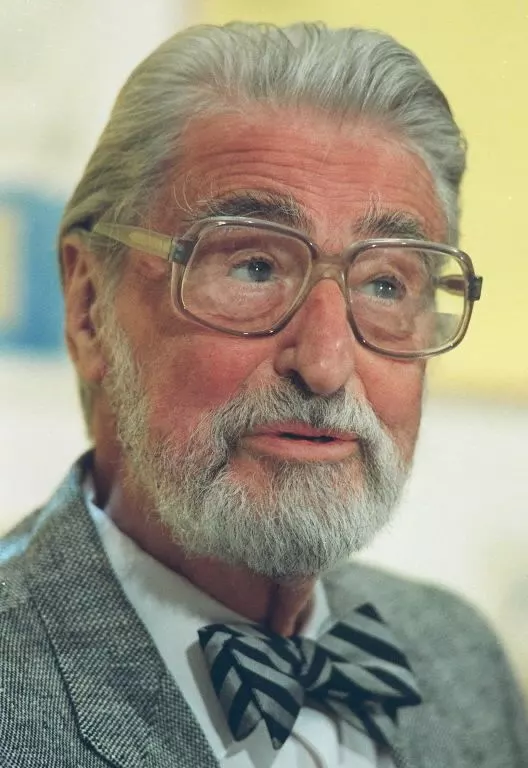
Dr Seuss

He was a perfectionist in his work and would sometimes spend up to a year on a book. Few of his well known stories and illustrations were “The Cat in the Hat”, “Green Eggs & Ham”, “How The Grinch Stole Christmas”, “Lorax” and “Horton Hears a Who!”

Let’s travel through the realms of his wondrous imagination to learn some profound words of wisdom.

Here are eight lessons we can learn from Dr Seuss books that we can apply in our daily lives.

1) Nonsense wakes up the brain cells. And it helps develop a sense of humor, which is awfully important in this day and age. Humor has a tremendous place in this sordid world. It’s more than just a matter of laughing. If you can see things out of whack, then you can see how things can be in whack.

Why do people take life so seriously? A sense of humour helps us get through the uncertainties and absurdities of life. Having a sense of humour doesn’t mean you don’t value a situation, but simply shows the willingness to deal with it in a more fun way.

2) You can get help from teachers, but you are going to have to learn a lot by yourself, sitting alone in a room.

Teachers or mentors can guide you and show you the way. But its you and you alone who has to walk the path and navigate through the ups and downs of life. No matter how much you read or have been told, experience is always the best teacher.

3) Today you are You, that is truer than true. There is no one alive who is Youer than You.

dr seuss quoteThese words hold true not only for children but also grown ups, who try to be someone so they can fit in or get other peoples approval. You need to be true to yourself, accept yourself the way you are, because everything that you are is what makes you special and unique.

As Dr. Seuss points out: Why fit in when you were born to stand out?

4) “You’re off to Great Places!
Today is your day!
Your mountain is waiting,
So… get on your way!”

Follow your dreams, no matter how difficult it seems. Whatever your mountain is, you need to over come it. The mountain represents an obstacle in your life, which will take strength and perseverance to accomplish. Cast away the burden that’s holding you back, believe in yourself and keep moving forward.

5) You’ll miss the best things if you keep your eyes shut.

Children see the world without any filters that distort their perspectives, everything is new and this makes them rather curious. This curiosity fades away as we grow old and it limits our true potential. The above message tells us to rekindle that love of learning and see the world like we used to as a child.

6) “So be sure when you step, Step with care and great tact. And remember that life’s A Great Balancing Act. And will you succeed? Yes! You will, indeed! (98 and ¾ percent guaranteed) Kid, you’ll move mountains.”

Words of encouragement and caution from Dr Seuss. You need a little bit of planing to make progress in the right direction. Choose your steps carefully in life and things will fall into place. The importance of balance has been spoken about enough, yet once again a subtle reminder, finding balance is key!

dr_suess_future7) A person’s a person, no matter how small.”

This is a powerful message in today’s world which is divided based on religion and ethnicity. Everyone deserves the same respect, no matter the caste, creed, nationality, or race. We get so stuck with the external, height, weight or color that we forget each one of us is a soul.

8) “I have heard there are troubles of more than one kind. Some come from ahead and some come from behind. But I’ve bought a big bat. I’m all ready you see. Now my troubles are going to have troubles with me!”

This is a beautiful message that helps us realise that you can take charge of your troubles. If your stuck with it, its time for you to shift your perspective and deal with it head on. Don’t let fear take control, put on your gloves get your bat and smack it out of your life. It time for you to trouble your troubles.

If you have any more inspiring messages by Dr Seuss that resonate with you do add them in the comments 🙂

Image Source

Quote
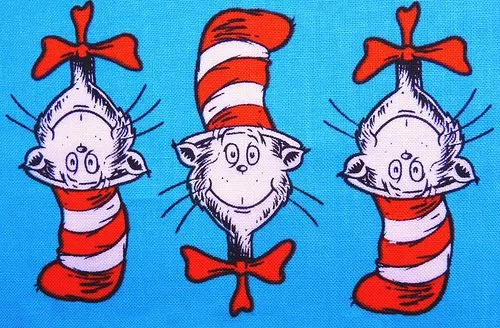
Cat in the hat
Seuss quotes
Control Your Future

The Zen of Alchemy: Transforming Anxiety into Art

9

 “This is why alchemy exists. So that everyone will search for his treasure, find it, and then want to be better than he was in his former life. Lead will play its role until the world has no further need for lead; and then lead will have to turn itself into gold. That’s what alchemists do. They show that, when we strive to become better than we are, everything around us becomes better, too.” ~ Paulo Coelho

Transformation is tough. Even healthy transformation is difficult work. In fact, healthy transformation can be even more painful than unhealthy transformation. It is scary stretching comfort zones and breaking mental paradigms.

It’s uncomfortable thinking outside of traditional and parochial boxes, especially when those boxes are all we’ve ever thought inside of. Creating art is one of the ways we have to smooth the transition of transformation, and art can even make the process an exciting adventure.

But in order to see/feel/understand how powerful art can be we first need to get to a place of peace and calm. So it is that the first art in the Zen of alchemy is the transformation of anger into humor. Like Deepak Chopra said, “The secrets of alchemy exist to transform mortals from a state of suffering and ignorance to a state of enlightenment and bliss.”

Transforming anger into humor

“Anger is an acid that can do more harm to the vessel in which it is stored than to anything on which it is poured.” ~ Mark Twain

Anger is indeed an acid, but through the art of emotional alchemy, it can also be a fuel that can help us to outline healthy boundaries and to express our essential truth, passion, purpose, and even bring forth a necessary healing strength into the world: a sacred sense of humor.

But in order to be able to transform acid into fuel, we first must resolve the dilemma of the ego, which requires resolving the dilemma of either remaining a victim or becoming a hero. No easy task, this. But art isn’t supposed to be easy, and neither is transformation. Like Seth Godin said, “Making art hurts. But it’s better than the alternative.” holding-on-to-anger

We read a lot about soul authentication and ego denunciation, about starving the ego and feeding the soul, and this is an extremely important process, but at a certain stage of spiritual development it is highly necessary to have a robust ego that can act as an independent force of interdependence in an otherwise codependent world.

This is the individuated ego, the resolute self, the creative force of personal character, the aspect of the self that shows the interdependent world its own soul-signature. Daring to show the world our unique soul-signature takes tremendous courage and the nerve to starve the victim and feed the hero in order to discover high humor. Victim is to anger as hero is to humor. When we resolve the issue of ego, we individuate and realign with soul.

Heroes always function from a place of soul. The difference between a hero and a villain is that the hero’s platform tends to be soul-centric, whereas the villain’s platform tends to be ego-centric. Heroes still use the ego, mind you, they just happen to use it as a tool to leverage humor, thereby gaining power. Villains tend to be used by their ego, becoming a tool to power, which leverages separateness (independence/codependence) through angry energy.

It probably goes without saying that we would all rather be heroes than victims or villains, and that we would all rather be courageous than cowardly. But most of us don’t want to do the hard work necessary to transform our victimization into individuation. In most cases it requires us becoming intimate with our pain and comfortable with being vulnerable. It usually requires us to face our demons and wrestle with our shadows.

Pain, demons, shadows; these are all scary concepts. But even scarier is their suppression. In order not to become people who suppress themselves in unhealthy ways (in order not to become victims or villains), we must instead become people who can express themselves in healthy ways (heroes). What follows are two tactics of self-expression that can prevent such suppression: creative catharsis and artistic playfulness.

Creative catharsis

“In almost every bad situation, there is the possibility of a transformation by which the undesirable may be changed into the desirable.” ~ Nyanaponika Thera

One exciting and rewarding way we can go about becoming our own hero, instead of remaining a victim, is through creative catharsis: purging our anxiety through artistic expression. By transforming our anger into humor, and our humor into art, we are all at once allowing ourselves to be worthy and to courageously engage with our demons. We are daring ourselves to dance in the fire, to harness the ability to transform rage into a fire that cooks things rather than burn them.
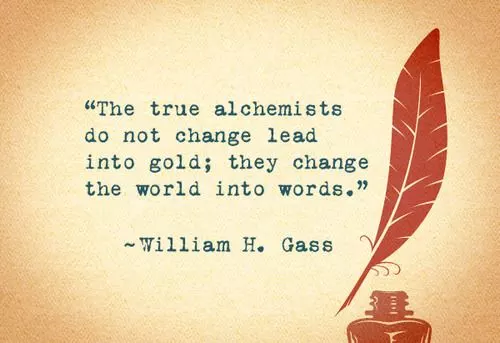
The-true-alchemists-do-not-change And if we should so happen to get burned, so what. We can simply rise like a phoenix through our own artistic expression. Like Lawrence Ferlinghetti said, “If you would be a poet, create works capable of answering the challenges of apocalyptic times.”

By channeling our anger and anxieties into creativity, we launch ourselves into a heightened state of awareness where our art is free to transubstantiate the world.

“What is the real origin of my own anger?” wrote Jean-Yves Leloup. “Is it the ego defending its territory, or is it something that has its source in the desire for the well-being of all?” Life isn’t just about enduring and going through it.

It’s about the ability to affirm life despite, and even in spite of, the worst that can be dished out. It’s about coming back to what one has as their bedrock, their own unique capacity to be creative. From this place one can transcend any amount of pain, anger, or hate, and even transform it into a gift for others.

When we can process anxiety by expressing the energy through a drawing, a painting, a dance, or through song, we are indirectly unshackling the soul from its attachment to ego. We are liberating ourselves by transforming that which stressed us out into a sharpening stone that sharpens us into a finer instrument, an instrument capable of soulful self-expression.

Like the Latin poet Quintilianus said, “Facit indignatio versus: My anger creates my verses.” Forget water to wine, that’s old hat. Instead, turn anger into art. Now that is a most worthwhile alchemy.

Proactive playfulness

“Humanity has advanced, when it has advanced, not because it has been sober, responsible and cautious, but because it has been playful, rebellious, and immature.” ~ Tom Robbins

Playfulness, and the drive to play, requires suppression of the drive to dominate. This in itself is worthy of practicing playfulness, but being proactive with such playfulness takes it to a whole new level. Call it benevolent chaos; strategic messiness; purposeful improvisation; playful experimentation; alchemical joy.

Proactive playfulness is the precise ability to transform the mundane into mythos, seriousness into sincerity, profanity into sacred resonance, and anger into art. Practicing proactive playfulness is harnessing the power to transform confusion into clarity. Imagine Toto calmly pulling the curtain to reveal to Dorothy and friends the true nature of the Wizard of Oz. Imagine Banksy practicing civil disobedience through humorous graffiti.

Such a state is a platform where bewilderment and turmoil might blossom into insightful clarity, and might even have the power to stretch the comfort zone or break the mental paradigms of others.Life-is-too-important-to-be-taken-seriously “There are some enterprises in which a careful disorderliness is the truer method.” So says Ishmael, the hero of Herman Melville’s novel Moby Dick. How true it is, especially in an impermanent world that is constantly changing.
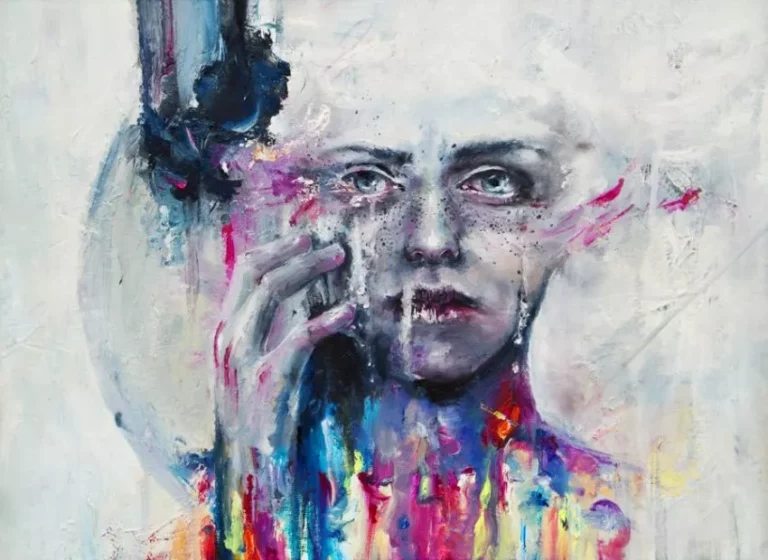
Such playfulness launches the spirit into a heightened state of creativity even as it prevents certainty from imprisoning imagination. It dances a jig upon the laurels and glories of old with the full intent of trampling them, burying them like seeds that can grow into something gloriously new.

Like Bruce Nussbaum mischievously articulated, “In an uncertain, complex world of constant change, playfully discovering new answers to puzzles that do not have one right answer is a better approach than solving existing problems that do.”

It’s all wide open. Not even the sky is the limit when approached with a playful heart. There are no rules but for cosmic thresholds, and even those can be breached (at least metaphorically) with enough imagination.

Like Einstein said, “Games are the most elevated forms of investigation… Mystery is the most beautiful thing we can experience. It is the source of all true art and science.”

Proactive playfulness puts us firmly in the game of life, in the thick of the pains and pleasures, the heartaches and love quakes, dancing us over it all with a humor of the most high that launches us into immanence. Here, even the gods bow to us in profound veneration.

Image source:

Galaxy head
Buddha quote
William H. Gass quote
Oscar Wilde quote

Is Your Fear of Suffering Worse Than the Actual Suffering?

“Tell your heart that the fear of suffering is worse than the suffering itself. And that no heart has ever suffered when it goes in search of its dreams, because every second of the search is a second’s encounter with God and with eternity.” ~ Paulo Coelho

We spend so much of our time trying to avoid pain at all costs. We have this little voice in our head that says “I shouldn’t have to feel pain,” or “Pain is wrong, suffering is not where I want to be, so I will distract myself in any way possible from actually having to feel any sort of suffering.”

We have judged pain and suffering as an indication that there is something wrong with us. And because we view pain as something that needs to be avoided and fought against, when it shows up in our lives we resist it by trying to deny it, or we avoid it by distracting ourselves with things like addictions, or buying more stuff, or focusing on the lives of others in order to not have to focus on our own.

painimage1

We start to fear the sensation of suffering so much that we go about our lives doing anything to not have to feel it. We may find ourselves staying in circumstances that are completely “comfortable” and “known” even though in the back of our minds we know that they are not truly making us happy and fulfilled. The irony being, we stay in situations that are painful to avoid having to feel the pain of the unknown.

For some reason the pain we know and are accustomed to feels better than accepting that it may be time to move on. And even though the change we are going to experience may bring about some level of discomfort for the fact that it is new and unknown, experiencing the discomfort is in fact the only way that we can truly move through it to the other side where happiness, fulfillment and inner peace live.

In order to truly embrace discomfort and suffering we must first do the one thing that every fiber of our being will probably try to tell us is absurd or maybe even dangerous… stop judging pain as “wrong” or “bad.”

“There is no coming to consciousness without pain. People will do anything, no matter how absurd, in order to avoid facing their own soul. One does not become enlightened by imagining figures of light, but by making the darkness conscious.” ~ Carl Jung

Everywhere we look we are told to avoid suffering. The TV tells us we must look like everyone else, in order to avoid the pain of judgment. We must indulge in food and alcohol in order to always stay in pleasure, we must get jobs like everyone else, drive cars that make us feel accepted, all to avoid any sort of “bad” feeling of unworthiness or not measuring up.

The minute someone comes along and says, “Hey, I’m in pain. My heart is broken, I’m sad, I’m depressed, I’m hurting,” everyone looks as if this person is some sort of social outcast that has something inherently wrong with them.

But, the fact of the matter is, everyone experiences pain and suffering to some extent in their lives. Even though we may perceive that we are avoiding it and we may believe that there is some alleged “perfect” existence completely devoid of any sort of suffering, there really is no life that is completely pain free.

But there’s a secret that anyone who has experienced a shift into a higher state of consciousness knows… pain is indicative that a transformation is underway. Anytime our body is rising to new energetic vibrations, or a higher state of awareness is in progress, some level of discomfort will be experienced.

Yes, that’s right. The fact that one is experiencing pain is only there to show that a shift in consciousness or vibration is underway, and the more we embrace our pain and love it, the easier the transformation becomes. While everything we have learned from society is telling us to avoid the pain, the more we avoid it, the longer we stay stuck in it.

If we instead choose to become excited about our pain, welcome it with open arms because we know that the only reason it has popped into our life is our fair warning that we are rising to new energetic levels and that old limited beliefs are being dropped, we then start operating from a different perspective and the whole transformation process becomes a more fulfilling experience.

Instead of giving ourselves the illusion that we are avoiding the pain (and I say illusion because even though we think we are avoiding it, it is still happening whether we choose to be conscious of it or not) we can start loving it wholeheartedly that eventually it begins to vanish.

The less we identify with the pain as “our” pain, but instead just pain, we actually create a space in between us which allows us to simply observe it and patiently wait for it to pass without attaching ourselves to the story that our mind is creating about the pain.

transforming-pain“Make no mistake about it-enlightenment is a destructive process. It has nothing to do with becoming better or being happier. Enlightenment is the crumbling away of untruth. It’s seeing through the facade of pretense. It’s the complete eradication of everything we imagined to be true.” ~ Adyashanti

We’ve all been through periods of time where we were somewhat able to distract ourselves or make ourselves believe that the pain bubbling just under the surface wasn’t really there and therefore not something that needed to be addressed.

However, there will be a time in every person’s life that the pain becomes unbearable or debilitating even, and at this point, feeling the pain can’t be avoided. We are thrust into it and forced to experience it whether we like it or not. When this happens, clap your hands and jump for joy.

The degree to which you are experiencing this pain is only telling you how much pleasure and happiness is on it’s way to you. Approach pain from the standpoint that anytime it has appeared in your life, you can welcome it and even be ecstatic because you are changing.

When pain takes away everything you thought you “were” or thought you “needed” in order to feel whole, you are only left with one thing.. your true authentic self. At this point you not only are able to look back and realize why everything happened the way it did, but you become grateful for the pain you experienced.

The deeper the depths of hell you had to go through will only make coming out of it feel that much more amazing.

Image Source

A hint of color
Transforming anger