Home Blog Page 305

7 Signs You May Be Experiencing a Dark Night of the Soul

“There is scarcely any passion without struggle.” ~ Albert Camus

What is the Dark Night of the Soul?

When we are on the verge of uniting with the infinite wavelength of eternal vibration, our old frequency can sometimes go through a crisis of stasis. It buckles and bends trying to adjust itself and tune into the cosmic orchestra.

We tend to doubt everything we’ve known to be true. In worst (best) case scenarios we tend to fall into an existential crisis, or Dark Night of the Soul. But, if we are able to make it through this dark time, and shed that which has weighed us down, then we will open up once again, and even wider than before.

This can happen many times on our spiritual journey, and each time we tend to gain new levels of wisdom.

Here are seven signs you may be experiencing a dark night of the soul.

1) You’re experiencing, or have experienced, Ego Death

“I couldn’t live with myself any longer. And in this a question arose without an answer: who is the ‘I’ that cannot live with the self? What is the self? I felt drawn into a void. I didn’t know at the time that what really happened was the mind-made self, with its heaviness, its problems, that lives between the unsatisfying past and the fearful future, collapsed. It dissolved.” ~ Eckhart Tolle

Ego Death, Soul Birth

Your sense of reality, or worldview, has been shattered. You have come to understand the illusory aspects of the ego and are in the process of letting attachment go. You are experiencing a re-organization, a reidentification, and a reinterpretation of the boundaries between self and cosmos.

Like Stanislav Grof wrote, “Ego death means an irreversible end to one’s philosophical identification with what Alan Watts called skin-encapsulated ego.”

The dark night of the soul is also referred to as the Night of Pan: the mystical state where one’s ego goes to die a small death in order to be reborn as a Soul. In mythological terms it’s a journey into the Underworld, where difficult trials must be completed before the hero can return back to the “real” world.

2) It is only when you’re alone, that you realize you’re never alone

“The capacity to be alone is the capacity to love. It may look paradoxical to you, but it’s not. It is an existential truth: only those people who are capable of being alone are capable of love, of sharing, of going into the deepest core of another person–without possessing the other, without becoming dependent on the other, without reducing the other to a thing, and without becoming addicted to the other.

They allow the other absolute freedom, because they know that if the other leaves, they will be as happy as they are now. Their happiness cannot be taken by the other, because it is not given by the other.” ~ Osho

You feel alone and isolated in the world at times, but you find that it is actually in your alone time that things become clearer and more connected. You realize the utmost importance of solitude and meditation. You’re coming to find that being alone and silent is a very important part of individuating the ego and actualizing the soul.

We are each a microcosm within a macrocosm, tiny stars within a greater universe, drops of water in a mighty cosmic ocean.

This is the great lesson of loneliness: we can no more separate the micro from the macro than we can the human from the natural. Both are needed to put the whole into holistic.

It’s the astonishing ache of loneliness that causes us to feel, as Kafka wrote, “This tremendous world I have inside of me. How to free myself, and this world, without tearing myself to pieces. And rather tear myself to a thousand pieces than be buried with this world within me.”
 Mortality
Mortality

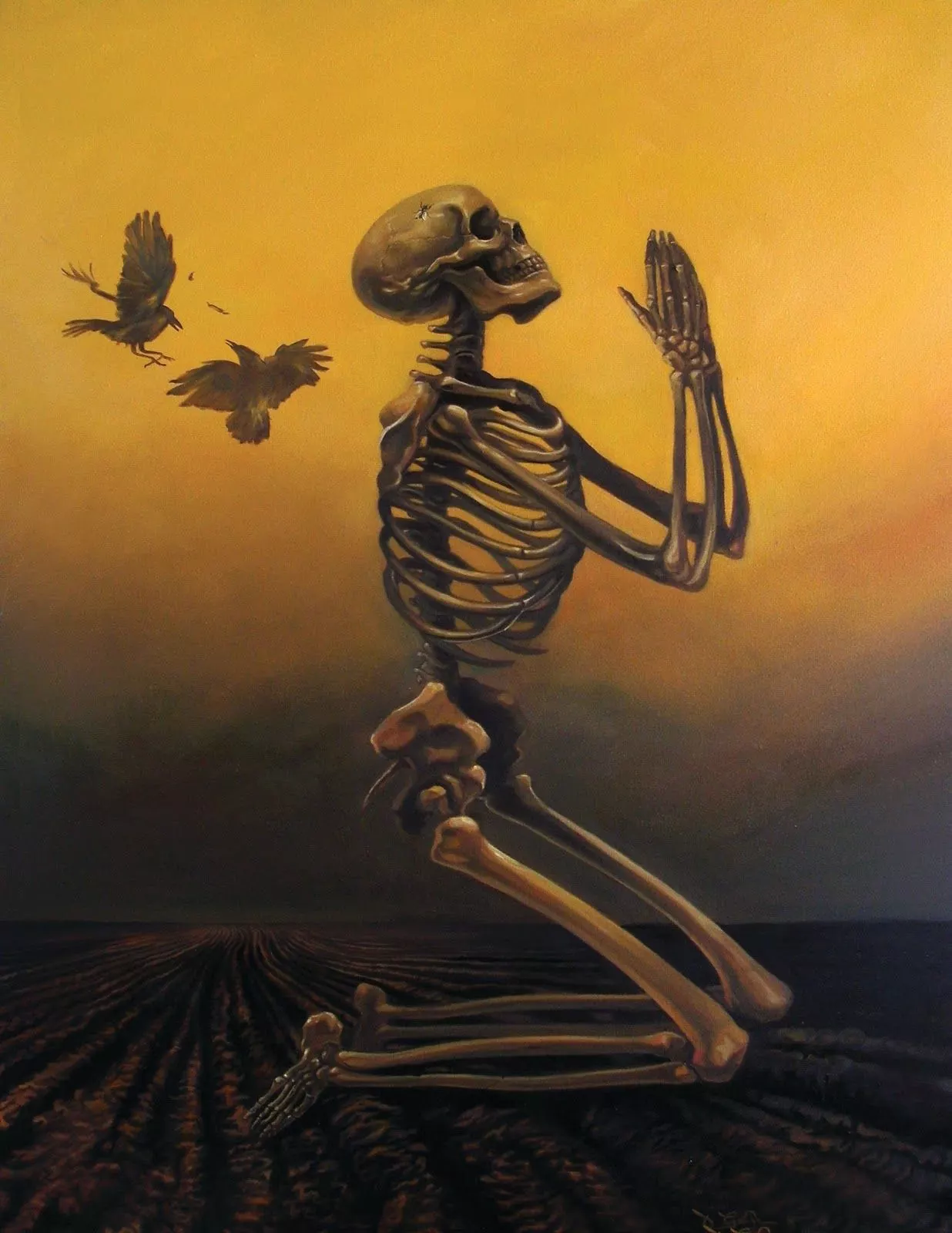
3) You have a new-found appreciation of your mortality

“Thanks to impermanence everything is possible.” ~ Thich Nhat Hanh

You have become exceedingly introspective. The weight of time is like a giant sitting on your shoulders. But you are beginning to learn how to reverse that dynamic, becoming someone who has the ability to stand on the shoulders of the giants instead.

You appreciate more the passing of time: the reminiscence of times past, the contemplative present, and the forbearance of things future. It’s all a giant telescopic projection of your third eye focused on the intrinsic value of mortality, and how it brings meaning in ways immortality simply cannot.

4) The purpose of your life has taken on new meaning

“Don’t ask what the world needs. Ask what makes you come alive and go do it. Because what this world needs are people who have come alive.” ~ Howard Thurman

You realize that the meaning of life is whatever you want your life to mean. But this is a huge responsibility, tantamount to an existential crisis. Your breath catches in your throat, and is then dragged out of you.

You are now suddenly duty-bound to bring meaning to an otherwise meaningless universe. It’s up to you, and you alone, to be the hero of your own story.

It’s up to you, and you alone, to get beyond the artificial division you’ve created between yourself and the world. The mountain of meaningless you’ve been standing on hitherto, awaits the flag of your own unique meaning to be stabbed into it.

The path to your own meaning is daunting, but it is a path that only you can walk.

5) You’re more aware of the importance of your freedom

“Every time you are tempted to react in the same old way, ask if you want to be a prisoner of the past or a pioneer of the future.” ~ Deepak Chopra

Balance
Balance

You understand that freedom is paramount. But willing yourself free is not easy. Freedom is something you do, not something you are. It is not a given. It takes effort, courage, and determination, usually in the face of those who would force you to live their way.

You see how the inert, civilized human has escaped the anguish of freedom only to fall into a state of preoccupation and paranoia.

You see how the inert lifestyle can lead to nihilism and tyranny (extremism). You see how acting courageous in the face of that inertia is a powerful way to thwart the would-be tyrant within.

You’re slowly becoming a freedom unto yourself, and though it hurts like hell, you realize that it’s better to be an unsatisfied free man than a satisfied slave.

6) You’re experiencing anomie and cognitive dissonance

“It is a happy faculty of the mind to slough that which conscience refuses to assimilate.” ~ William Faulkner

Anomie is a term popularized by French sociologist Émile Durkheim. It is a nurtured condition that arises from the lack of morality and social ethics in one’s culture. You’ve experienced the pain of this condition and you are in the process of embracing it and letting it go in order to discover your own sense of values.

Similarly, your old worldview has been trumped by the new worldview brought about by the individuation of your ego and the actualization of your soul. This is known as cognitive dissonance. It’s an unsettling feeling to have two worldviews clashing inside you, but you are working through it and will be better for the struggle in the end.

7) You realize that the ability to fall apart and coming back together again is real strength

“Suddenly you’re ripped into being alive. And life is pain, and life is suffering, and life is horror, but my god you’re alive and it’s spectacular.” ~ Joseph Campbell

You realize that healthy annihilation is possible, and necessary. Like the Hindu Goddess of Never Not Broken, you’re learning to embody the ability to come together and fall apart, over and over again.

Indeed, you’re discovering that your strength comes precisely from your ability to experience a dark night of the soul and come out of it with scars blazing like badges of honor.

You are constantly in the throes of metanoia.

You’ve been fire-tested. You’ve been verified by vicissitude. Your strength comes from your ability to adapt and overcome to falling apart and coming back together again, from wholeness to brokenness and back to a stronger form.

The Dark Night of the Soul explained by William Meader from the American Theosophical Society

William Meader: The Dark Night of the Soul

Let’s delve deeper into the 10 Things I learnt from my Dark Night of the Soul and the 4 Steps Toward Surviving a Dark Night of the Soul.

Image source:

Ego death
Mortality
Balance
Dark night of the soul art

10 Existential Movies You Must Watch

Cinema is an eloquent form of art. Since ages, it has played an instrumental role in portraying and foretelling the stories of mankind. It has picked up several themes: existentialism being one of them.

Existentialism has been an area of curiosity since mid-20th century among artists, painters, writers and filmmakers. Although the roots of existentialism goes back to 19th century, where Soren Kierkegaard and Friedrich Nietzsche began to explore the meaning and worth of human life in changing times.

In the late 1950s, French filmmakers inspired by existentialist stream of philosophy made films that threw light on a man’s quest for a deeper meaning in life.

Soon, existential cinema was a genre of its own and filmmakers dived into the abyss of human existence elucidating stories that made one introspect and reflect. Think and act.

Here is a list of 10 movies that meanders on the philosophy of existentialism, giving one a deeper insight into life.

1) The Seventh Seal (1957)

tumblr_mmye2c8g8R1rwo9cno1_1280The Seventh Seal talks about idealism, human faith and the understanding behind spiritual enlightenment. Philosophically, its a brilliant film with two intertwined stories projecting the uncertainties of life using powerful analogies.

It breaks the concept of religious sentiments and tries to make one understand that, ultimately, the self has to offer the meaning to life.

“I want knowledge! Not faith, not assumptions, but knowledge. I want God to stretch out His hand, uncover His face and speak to me.” ~ The Seventh Seal.

2) The Passenger (1975)

the-passenger
Michelangelo Antonioni’s, “The Passenger” is a thought-provoking masterpiece that delves into the theory of past and present in context to identity and escapism. The story line embraces the irony of life in a positive light. Keeping this in focus, the movie revolves around the metaphor ‘Irony’.

It’s about a journey of a man called David Locke who is craving freedom from ironic circumstances. He finds himself standing on the various threshold of life and its epiphanies. The movie throws a great amount of light on existential angst.

3) The Truman Show (1998)

the_truman_show___unfinished_discontinued_by_ximmadreamerx-d5mig7r

“The Truman Show” makes a poignant differentiation between illusion and reality. Nothing can be more dangerous for a man who has started believing in his own ignorance and mistakes.

The protagonist, Truman Burbank (Jim Carrey) takes us on his journey of skepticism forcing us to think and question our own beliefs/reality formed by the society we live in. By the end of the film, one gradually introspects the self with a different perspective.

4) Modern times (1936)

Poster_Modern_Times_02

Modern Times by Charles Chaplin is an influential critique of the social structure and class division in our society. Due to a refrained social structure, one seldom is allowed to discreetly slip into the world of his own imagination and dreams.

The movie ponders upon Nietzsche’s philosophy of good vs bad life. Modern times displays how social structures and class positioning have become parameters to gauge goodness of life over time. Clearly, existential crisis that is drilled into your brain deliberately is not an existential crisis.

5) Ikiru (1952)
kkiru_icantremember1

Ikiru is a movie that deals with a bureaucrat’s struggle to come to terms with his impending death. He has less than a year to live and in introspection, he realizes his mundane existence where he never bothered to live the way he would have wished to.

He never took a step to unravel himself and decided to do something worthwhile before his life ends. The movie is a journey of those philosophical vs. practical arguments, which we often deal with.

6) Winter light (1963)

Winter light

Winter light is a story of a pastor who is in a state of despair as he deals with existential crisis and Christianity. He can’t make sense of the random world and struggles with his faith.

The movie focuses on understanding various textures of emotions in times of crisis. A bad experience, however, is a good lesson.

7) Lord of the flies (1963)

lord-of-the-flies-small1

Lord of the flies reflects Locke and Hobbes’s existential philosophy of life. In a lifetime, several times we find ourselves standing on the verge of good and evil. The movie gives an interesting insight into understanding the inherent nature of human kind using influential symbolism.

8) Wings of Desire (1987)

wings of desire

“Wings of Desire” is a surreal representation of what it takes to be a human being. An angel descends upon earth and explores the existence of humans on earth. The angel is enthralled by the genuine human love and wishes to experience the same.

The movie has strikingly articulated thoughts about existentialism.

Isn’t life under the sun just a dream? Isn’t what I see, hear, and smell just the mirage of a world before the world? Does evil actually exist, and are there people who are really evil? How can it be that I, who am I, wasn’t before I was, and that sometime I, the one I am, no longer will be the one I am?

9) Slacker (1991)

10344950_796443563699416_86698550_n

Slacker is an intriguing movie exploring existential philosophy and the ephemeral circulation of ideas in society. It shows the way of life of overactive minds in a passive lifestyle that follow existential dilemmas.

It projects that section of people who were largely known as dreamers, misfits and misguided generation during the 1990s.

It wasn’t easy to blind or brainwash slackers as they completely out ruled the false beliefs and logics of selfish authorities like the Government. The movie brings up the challenges of being a part of such stream of consciousness.

10) Waking life (2001)

After ‘Slacker,’ the same director Rickard Linklater, released “Waking Life” ten years later. The movie is considered a sequel to Slacker. It talks about dreaming, lucid dreaming and reality mystically.tumblr_m0ujs3478C1qbdxsro1_500

The movie showcases an interesting perspective to human existence, laying emphasis on understanding coincidences and the meaning of connections, as everything is connected to everything else.

On really romantic evenings of self, I go salsa dancing with my confusion.  ~ Waking Life

Image source

Existentialism 
1, 2,3, 4, 5,
6, 7, 8, 9, 10

5 Ways Those Who Love Peace can Organize as Effectively as Those Who Love War

0

“Those who love peace must learn to organize as effectively as those who love war.”

Dr. Martin Luther King, Jr. said these words On March 25 1967 in a speech he gave after leading 5,000 people down State Street in Chicago to protest the war in Viet Nam. Since then they have become a beacon of peaceful resistance terminology that has moved those who love peace to organize more effectively.

Such organization requires us to be peaceful with our resistance but ruthless with our tactics, as love does not imply pacifism. Here are five ways those who love peace can organize as effectively as those who love war.

1.) Learn to trump competition with cooperation

“The research consistently shows that competition not only isn’t necessary for excellence but tends to impede excellence on most tasks. And the more challenging the task -the more ingenuity, problem solving skill it requires- the more completion tends to disrupt that achievement. Excellence pulls in one direction and completion pulls in another.” ~ Alfie Kohn

The basis of nature is cooperation and democracy. It’s in our DNA. It can be seen in every organism from ants to primates. If we are truly observing and listening to what nature is telling us, then we will come to see that the healthy way to live in accordance with each other is through democracy, cooperation, and moderation; NOT fear, exploitation, and competing for more than we need. Everything is connected.

The problem is we are all raised to believe that everything is separate, that it’s a dog-eat-dog world, that we should fear each other and especially the dreaded “Other” or we may find ourselves in harm’s way.

We lived in healthy accord with each other and nature for millions of years, until we MISTAKINGLY went from living in a democratic, cooperative, healthy (eco-centric), way to living in an exploitative, competitive, unhealthy (ego-centric) way. The first step toward organizing peacefully and effectively is to allow cooperation to take a front seat to competition once again.

Ownership is borrowed energy that you will one day have to give back

2) Learn to trump ownership-based love with relationship-based love

“We are effectively destroying ourselves by violence masquerading as love.” ~ R.D. Laing

Ownership is an illusion, especially when it comes to love. But we have been raised to believe that everything has a price-tag on it, and that all things can be owned. Ask yourself what is ownership.

What does it mean to own something? If you describe ownership as the given right to control, then you have an unhealthy understanding of ownership. If, on the other hand, you describe ownership as borrowed energy that you will one day have to give back, then you have a healthy understanding of ownership. The problem is we’ve confused ownership with the right to control and destroy.

Like Derrick Jensen wrote, “The culture’s problem lies, above all, in the belief that controlling and abusing the natural world is justifiable.”

A better method is to practice relationship-based love with all things: with the land, with money, with your spouse. Everything is borrowed energy, and the sooner we can self-actualize this concept the sooner we will be able to be the type of person who can organize peacefully, despite those who love ownership, power, and war.

art-is-resistance

3) Learn to trump artillery with art

“In a decaying society, art, if it is truthful, must also reflect decay. And unless it wants to break faith with its social function, art must show the world as changeable and help to change it.” ~ Ernst Fischer

Celebrate art and satire, not guns and violence. You are free to be creatively mischievous and openly rail against the State, using art as your tool. A person using a gun is a symbol of failure. Guns are for the weak. Violence is for the immature.

True courage isn’t blowing up a hostile tank, it’s creatively counting coup on your enemy through satiric jest. True courage is standing on your feet with joy & love in your heart, holding a pen, a camera, or a paintbrush, with a smile on your face while the tanks of madmen threaten to roll over you.

Violence should only ever be a last-ditch-effort at self-reservation, never a first. To remain healthy, sustainable and vibrant, each cultural “system” requires a constant renewal of ceremonies and rituals through a revolution in art & literature.

Objectively, art is alive in a way forbidden natural objects and, subjectively, in a way subsuming the subjects who create them. Think Picasso’s Guernica. Think Orwell’s 1984.

Think Banksy’s street art. In order to accede to a full engagement with our humanity, we must involve ourselves with art that transcends our current knowledge of things, and then learn how to apply that knowledge so as to become more ethical than the society we were raised in.

art_is_resistance_ii_by_ravenblakh-d35rrxk

4) Learn to trump obedience with civil disobedience

“Civil disobedience is not our problem. Our problem is civil obedience. Our problem is that people all over the world have obeyed the dictates of leaders…and millions have been killed because of this obedience…Our problem is that people are obedient all over the world in the face of poverty and starvation and stupidity, and war, and cruelty. Our problem is that people are obedient while the jails are full of petty thieves… (and) the grand thieves are running the country. That’s our problem.” ~ Howard Zinn

This might seem counterintuitive to peace, but it’s not. It is actually the foundation of peace, as it keeps those with power (false or otherwise) humbled, accountable and in check, for it is those who are in power who drop bombs and order people murdered.

Civil disobedience is a pawn putting a king in checkmate on a chessboard. It’s Gandhi on the salt march. It’s Martin Luther King going to jail 30 times for social justice. It’s Bradly Manning revealing war crimes. It’s Edward Snowden revealing the overreach of the surveillance state.

If we would be proactive citizens who love peace more than war, then we must be able to trump the vile epidemic of civil obedience with the courageous accountability of civil disobedience.

If we cannot do it, or if we are prevented from doing so, then John F. Kennedy’s words may just come true: “Those who make peaceful revolution impossible will make violent revolution inevitable.”

5) Learn to trump greed with empathy

“The true culprit, the puppet master that manipulates our elites from behind the scenes, is the money system itself – a credit-based, interest-driven system that arises from the ancient, rising tide of separation; that generates competition, polarization, and greed; that compels endless economic growth; and most importantly, is coming to an end in our time as the fuel for that growth – social, natural, cultural, and spiritual capital – runs out.” ~ Charles Eisenstein

burningmoney

We have been conditioned to value money over relationships with other people. This conditioning must be reversed and reconditioned. The heart should always be greater than money, but we have inadvertently allowed the opposite to occur.

This must change. Equality must trump equity. People must trump profits. Democracy must trump plutocracy. Proactive citizenry must trump passive consumerism. The land of the free must trump the land of the fee. Or we are doomed as a free and robust nation.

“The land is not a commodity that belongs to us;” wrote Also Leopold, “it’s a community to which we belong.” We need a community of people whose foundation is the maintenance of relationships: relationships with each other and with the biotic community. We need these people to stand up, in peaceful resistance, to people whose foundation is the primacy of production.

The former group is based on community, the latter on economics. Economics must be secondary to relationships in order for a healthy, sustainable, happy society to emerge.

Like Martin Luther King Jr. said, “A nation that continues year after year to spend more money on military defense than on programs of social uplift is approaching spiritual death.” And here we are.

Image source:

Organized peace
Wold love
Art is resistance
You have a voice
Burnt money

The Path of a Shaman

“He (the Shaman) is a self-reliant explorer of the endless mansions of a magnificent hidden universe.” ~ Michael Harner

Shamans or medicine men are navigators, explorers, healers and guides operating in the realm of the collective unconscious. They know how to navigate through the subtle spirit worlds and human consciousness.

During our transformational journey we had the opportunity to speak with Chakaruna (name changed on request), an indigenous Shaman and a gifted musician from the Amazon rainforests of Peru, South America.

Born in the jungle city of Tarapoto, Chakaruna started his path and vocation as an Ayahuasquero and a healer nearly 20 years ago.

His family ancestors have worked with the knowledge of the Amazonian medicines for generations and passed the wisdom of shamanism on to him. He shares with us his experience of being a shaman, the intense training one undergoes, the sacred plants used in rituals including Ayahuasca and much more.

Tell us little bit about growing up in your family of Shamans, in that kind of an environment, what kind of effect it had on you?

We grew up in the high jungles of Peru. Situated in the northwest of the jungle, there is a waterfall, lakes and rivers. Growing up in nature, my family comes from south a special small village. There is a dense forest surrounding the lake and my uncles, grandfathers were using lot of medicinal plants from there. There wasn’t a pharmacy at that time many many years ago, my roots come from the medicine men who were working with lot of different kind of medicines and my uncle Antonio was a shaman doctor.

We call ‘hitalista’ doctor, people who are with nature, work with plants, it can be with roots, leaves or the covers of trees. My uncle was working with Ayahuasca its the most holy medicine, that help us to connect again with nature. He passed away and nobody was conducting any Ayahuasca ceremony.

When I was 17, I drank Ayahuasca with all the shamans and the visions that I had was that I have to continue to pray, and continue the knowledge which my ancestors were using for holding this sacred space, holy space, by drinking this brew. This is my culture; Ayahuasca is my sacrament, my religion, my belief. It’s the belief of many indigenous cultures; we come from the Quechua tribe.

But we are still using the holy Ayahuasca, throughout my training. I am 36 now but I started to drink Aya when I was 17 and after training for 8 years, I started holding ceremonies. Because I had to learn more about myself, now I am in India making ceremonies, holding space, sharing what my roots, spiritual masters taught me.

What does it take to be a shaman, do you have to study for a while and when you get to know yourself you start or is there anything particular you have to do or learn?

It is a very strict way to live, it is a way to live, because when you are training, you don’t eat salt, you don’t eat sugar, you don’t have sex for a while because you have to keep your energy to understand the power of each plant you are going to drink, not just Ayahuasca.

Featured in the book 'The Ayahuasca Visions of Pablo Amaringo' by Howard G Charing & Peter Cloudsley
Featured in the book ‘The Ayahuasca Visions of Pablo Amaringo’ by Howard G Charing & Peter Cloudsley

How many plants?

For all plants you have to go to a small hut, you stay alone you drink the plant what the shaman or the medicine man is going to give you.

You work with the roots of Huisache. It helps to connect with your family, heals situations with your family and there is a plant ‘Chiricsanango’ used to confront the fears and there is another plant ‘Ushpahuasha Sanango’ used to open the heart. We drink it for 10-15 days to one month, depending on how deep you want to go with the master plants.

We call them the teacher plants, because they teach us to sing, teach us to heal. The spirit of the plants come to sing to you in your dreams. This is how you learn Icaros, the music we sing during our ceremonies. This is how we learn through our master plants. This is how we train to be a shaman, its a very deep, very deep process.

What would you say life is according to your teachings? What is existence?

I think existence is to create new ways to share love. We come here into existence to share love. But if there is no war, if there is no darkness we are not going to understand love. We are right here, somewhere on this earth…Mother Earth to understand the essence of our vibration, to understand our human nature.

If someone dies, someone is born or there is darkness, the sun will shine the next day. There are plants growing, it’s raining, its sunny there’s war, fear, happiness, security and insecurity. All this has to be like this, it’s part of our training, to understand ourselves, this why we are here, to understand the process of life.

Your ceremonies are intricately connected to the spirit world, what is the spirit world?

There are important things to connect. One is nature, spirits live in nature and the other thing is humans. There is no separation between them, ceremonies are to connect deeper with the spirits, because the spirits are the healers/grandmasters who come to heal you through Ayahuasca, or other plants.

This is why we make the sacred circle during the ceremony, its like a hospital. We make a hospital, to work there – to call the spirits, call the power animals to heal, to connect with yourself, to open your heart, to connect with your spirit, to connect with your soul, your body again with your gods and your own beliefs.

The spirits are around us all the time?

Yes, all the time, its invisible, its the other world. There are two worlds – this is the world you can see, you can feel, but there is another world, the spirit world. Where there is no time, there is no age, there is no future or past, this is the life of the spirit. You can flow in this vibration and go into the process of your childhood there is a hole where spirits are living.

How many ceremonies have you done till date?

I really don’t know….more than one to two thousand I think…

In these ceremonies have you cured people of certain diseases and what kind of diseases did they have?

Most diseases people had were psychosomatic problems, because if your soul is sick, your body is going to be sick. If your soul is sick it takes a lot of energy, if you are ill psychosomatically. If you are sick you start freaking out this is where your soul is going to be sick.

aya art

After Ayahuasca when we connect with the vibration of the soul and spirit, this is where we are stuck in problems. How we take it out is through purging, through the crying or going to the bathroom. Psychologists call it shamanic cutters, this helps to take out lot of pain, this is how we create the atmosphere for healing.

What about curing terminal diseases like cancer, I’ve read online that people have got cured of these kind of diseases as well.

There are a lot of plants, all the medicine comes from the plants.

So basically its not just Ayahuasca, you mix up other plants as well?

Yes, exactly, Ayahuasca shows us or tells us what plant we are going to use for healing. If there is some deep problem we use Ayahuasca to see what plant I am going to use for that ailment. Maybe I can say, I can’t do anything, because its in the last process of healing. This is the point, sometimes we can’t do anything because its too late but we can use lot of different plants for healing. We can use a lot of plants to heal the cysts.

What does Ayahuasca mean to you?

We can learn many things from our surroundings. For example I can learn from the ants, but what can you learn from the ants they are very small? They are hard workers, who communicate efficiently and we can learn this by observing them.

Even a leaf, we can see the leaf, green and happy, always refreshing we can learn from the leaves. You can learn from small things. If you open your eyes, you can learn from huge trees and the universe. We have a lot to learn but we aren’t going to learn all of it in this life there is so much to learn.

During your Aya session you start by marking a territory, is that to put away bad spirits?

Yes, its called Arkana. I have to protect this circle of healing because when we enter the other world the spirit world and dark spirits can enter.

Have you ever experienced the dark spirits?

Ya ya, like exorcism. Some spirit enters through the other body. When you have a hole in your aura, your chakra, spirits can jump in your aura. This is where they can move your energy, they are like a vampire they want to take away your energy, and because they live on your energy, they can suck out your energy.

How do you get rid of it?

We use sacred tobacco, Icaros, singing to the person until its gone. It’s a lot of work, very strong work.

Last question, what does music have to do with this

The music shows you the way, like a cross, its like a car, lets go, we have a pothole. I am the driver, even if there’s a lot of raining or darkness we have to go ahead.

Image source
Pablo Amaringo
Alexander Wardy

Understanding the Human Aura

“If you want to find the secrets of the universe, think in terms of energy, frequency and vibration.” ~ Nikola Tesla

We often see painters showing a ball of light or halo around the heads of enlightened figures. This invisible, divine energy that actually surrounds every living thing in the universe, is the aura.

human-auraThere are times when you feel the positive or negative vibrations of an individual, that’s the aura of a person. It is a direct reflection of what exists deep within, our true selves and our physical, emotional and spiritual condition.

It is scientifically proven that electromagnetic fields exist around every object in the known world. While in science its often referred as energy field, in the metaphysical world this energy emission is known as a person’s aura.

Everyone’s aura is unique – some have a healthy aura while some unconsciously possess an unhealthy one. It describes a person’s emotional state of being.

The aura surrounds the body in an oval-shaped field, also known as the Auric egg. Human energy extends up to one meter on all the sides, above the head and below the feet into the ground. Aura isn’t the result of an imagination or illusion but a real phenomenon.

This physical manifestation of the spiritual aura was shown in Kirlian photography that revealed visible auras around the objects photographed.

The aura consists of seven layers or levels that correspond to the seven chakras. Each level has its own unique frequency, and the vibration level of the energy increases with each level. So any disruption in the functioning of the chakras will have an impact on the aura surrounding us.

Mind Over Matter

To bridge our understanding of the unseen world of energy, Princeton University and Dr Konstantin Korotkov, professor of physics at St. Petersburg Technical University, carried out experiments using a technique called bioelectrophotography.

Everything is energy and energy cannot be created or destroyed; it can only be transformed. Following these assumptions, Dr Korotkov found that upon death, the human aura will continue to change for approximately 72 hours after the person is declared clinically dead.

“We are developing the idea that our consciousness is part of the material world and that with our consciousness we can directly influence our world,” said Dr Korotkov.

https://www.youtube.com/watch?v=B6NIUV24vcQ

The color and size of aura varies depending on the emotional and physical health of an individual. Auras change all the time according to the person’s mood and environment. For example, those with happy and positive thoughts have wider and brighter aura while those with sad and negative thoughts have smaller and faded/black aura.7 layers of aura

Having a healthy aura around you is as important as having healthy food. The catalysts to healthy human energy field are positive feelings, thoughts and experiences. Negative thoughts disrupt the flow of energy creating blockage within the mind and body.

Traumatic events and experiences can cause energetic “wounds” that may take time to heal. In such situations, the severity of the negative energy should be acknowledged by the mind.

Once the wound is acknowledged, one can work towards converting the pain into a positive energy.

Each human being has energy clothing and feelings of fear, stress, anxiety, hatred, jealously, physical crisis, or any other negative thoughts stains our energy clothing and suppresses the positive aura. Cultivating any of these negative emotion for a prolonged period of time can injure your psychic health and aura.

When your aura is holding unwanted energies, you may feel depressed, anxious and not yourself in the true sense of our existence. Once you know the state of your aura, you can use few aura-cleansing techniques.

Here are a few simple ways you can clean your aura, that is easy to practice and inculcate in daily life.

1) Keep yourself hydrated through pure filtered water. 9-12 cups of pure water is essential.

2) Breathe in positive energy and breathe out negative energy. Work Out.

3) Wear the color that makes you feel great.

4) Sunlight is a natural energy purifier. And so is good breeze. Enjoy nature.

5) Watch your thoughts and keep them positive.

Image Source

Aura levels
Aura
Human body