Home Blog Page 314

Crouching Warrior Hidden Champion, Part 3: Encounter with the Inner Trickster

Trickster is an agent of transformation, and transformation is directly connected to the trickster’s typical character as a shape-shifter, neither fully one thing nor the other, someone betwixt and between all moral and ontological categories. The trickster is the embodiment of contradiction, creator and destroyer of norms, clown, monster, giver of fire, creator of worlds. Having such a confounding figure at the center of one’s worldview helps to keep the mind nimble as it moves between opposites, both creating meaning and tearing it down to make room for new creation.” ~ Louis G. Herman

Tricksters
Tricksters

We all have a hero buried somewhere within us. For most of us this hero lies dormant, expressionless and cut off from the world. To connect with it is to begin the difficult path toward individuation and self-actualization.

Kokopelli
Kokopelli is a fertility god, prankster, healer and story teller venerated by some Native American cultures

We, the hero initiates, discover our hidden hero through an inward journey broken up into four stages. This article covers the third stage: the encounter with the inner Trickster.

Like life, the path of hero-initiation can have many ups and downs. Sometimes (usually, I’m guessing) things don’t turn out the way we think they should. Our expectations get crushed under the unforgiving boot of reality.

Maybe the path is bumpier, rougher, scarier, or more painful than we thought it would be. It’s times like these that we need a little pick-me-up. We need to laugh, and laugh hard. More importantly, we need to laugh at our self-seriousness.

Goethe wrote, “The highest to which man can attain is wonder.” But I disagree. I think the highest to which man can attain is laughter, which is usually the reaction to wonder anyway.

This is the job of the inner trickster, who uses laughter to assuage the pains gained from our trials and tribulations, while also using humility to temper our expectation of how things should turn out.

Our inner trickster does not trick by nature, but by necessity. Sometimes it’s necessary to poke holes in things we’ve deemed sacred or necessary, so as to recycle outdated values and harvest new knowledge. Knowledge is nothing more than an impasse anyway.

For the hero, the unknown is the truer passage. Whoever cannot seek the unknown seeks nothing. So our heart must become a trickster.

What it tricks is us; the small-picture-us, so that the big-picture-us can call the shots. It’s the duty of the inner trickster to shake us out of our typical, conditioned states of mind, so as to awaken latent capacities for perceiving reality.

It plays pranks on both our ego and our soul, not to make us feel embarrassed or stupid, but to show us ways we can become more imaginative. Indeed, only the trickster can see the hero’s “feet of clay.”

The synthesizing effect of Trickster metaphysics is underlined by the fact that “knowledge exists in a fundamental relationship with not-knowing. The only absolute is that there are no absolutes, and even this absolute may not be an absolute.” ~ Louis G. Herman.

This absolves us from the bureaucracy of truth and empowers us to become more proactive with expanding our consciousness and experiencing direct relationship with the divine.

Heyoka
Heyoka is the Lakota equivalent of a sacred clown. They were thunder shamans, representing the mysterious dual-aspect of nature and the cosmos

By recognizing that a background of mystery always remains, we are free to humiliate our certitude.

Through our very own coup de wit, a sudden or unexpected stroke of trickster genius, we are free to ninjaneer the rational into the irrational, the yin into the yang, the chaos into the order; we give ourselves permission to be more courageous in the inhale-exhale between inner and outer, self and other, individual and community, right and wrong. We launch ourselves, like Nietzsche wrote, “beyond good and evil.”

At the end of the day, such endeavors can be enlightening, but they can also be frightening. What the inner trickster reveals is that we are clumsy creatures torn between imagining we’re gods and realizing that we’re mere animals caught up in the hide-and-seek game of mortal life.

There is much to be gained from this push-pull dynamic, but there is also much to lose. Above us there is the promise of individuation and enlightened self-actualization.

But nothing is a given, everything on the hero’s path is hard-fought, for below us is the ever-present, snarling, howling, breathtaking abyss just waiting for us to fail. Like Lewis Hyde wrote in Trickster Makes This World, “It’s better to operate with detachment, then; better to have a way but infuse it with a little humor; best, to have no way at all but to have instead the wit constantly to make one’s way anew from the materials at hand.”

Read the other parts

Encounter with the Inner Herald
Encounter with the Inner Mentor
Confrontation with the Inner Shadow
Image Source:
Tricksters
Kokopelli
Heyoka

Seven Ways Music Benefits your Health

“I think music in itself is healing. It’s an explosive expression of humanity. It’s something we are all touched by. No matter what culture we’re from, everyone loves music.” ~ Billy Joel

There are myriad ways music benefits your health. I remember when I gave birth to our son, the doctor played some relaxing, soothing tunes to ease the process of giving birth. Music can dramatically affect the human mind and spirit, no matter one’s condition.

ways music benefits your health

From reducing stress levels, to elevating your current state of consciousness, or taking you in a state of trance – it opens the doors to new dimensions – dimensions that can only be accessed in a certain state of mind.

Music seems to be part of our biological heritage, because infants have excellent musical abilities, that’s why many to-be mothers sing to their unborn child, because they respond/dance to different types of music.

Ancient cultures and tribes have always been aware of the ways music benefits your health. Music has been used across different cultures for healing purposes. In ancient Greece, music was used to ease stress, promote sleep, and soothe pain.

Native Americans and Africans used singing and chanting as part of their healing rituals, like shamans. Even the Chinese character for medicine includes the character for music. Music and healing go hand in hand.

Let’s take a look at the seven ways music benefits your health –

1) Improves your visual and verbal skills

Early music education stimulates a child’s brain, leading to improved performance in verbal intelligence. This was suggested in a study among 4-to 6-year-olds who received only one month of musical training. It included training in rhythm, pitch, melody, voice, and basic musical concepts, and this proved to have a “transfer effect,” enhancing their ability to understand words and explain their meaning.

Another study among 8 to 11-year-olds found that those who had extra-curricular music classes, developed higher verbal IQ, and visual abilities, in comparison to those with no musical training.

Even one-year-old babies who participate in interactive music classes with their parents smile more, communicate better and show earlier and more sophisticated brain responses to music.

Ways music benefits your health

2) Affects the heartbeat, pulse rate and blood pressure

As Nietzsche, said, ‘We listen to music with our muscles.’

music-helps-to-recover-from-heart-diseases
Music strengthens the heart and improve the recovery of patients suffering from heart disease

Studies have proved that music can not only strengthen the heart but also improve the recovery of patients suffering from heart disease.

No matter the genre of music, listening to one’s favorite music releases endorphins in the brain that improves the vascular health. (Opera, classical and other types of ‘joyful’ music were more likely to stimulate endorphins as opposed to heavy metal)

At Abbott Northwestern Hospital in Minneapolis, men and women who listened to music soon after undergoing cardiac surgery were less anxious and reported having less pain than those who just rested quietly.

At Massachusetts General Hospital, a nurse-led team found that heart patients confined to bed who listened to music for 30 minutes had lower blood pressure, slower heart rates, and less distress than those who didn’t listen to music.

The rhythm, the melody and harmony, all play a role in the emotional and cardiovascular response.

3) Improves sleep quality in students

Young or old, we all face sleep problems, in some cases, regularly, in other cases, when we’ve had an overactive day. Listening to soft music is indeed relaxing, hence improving the quality of your sleep.

Research shows that music can help reduce several factors known to interfere with sleep (including stress and anxiety), promote physical changes that support more restful sleep (such as lowered heart and respiratory rates), and aid in treatment of Insomnia.

4) Makes you happier

Music affects our emotional state, making you feel happy, ecstatic or even sad. According to a study, your brain releases dopamine, a feel-good chemical, when you listen to tunes that move you.

Sometimes you also experience feeling of shivers or chills while listening to a particular track, this shows that brain releases large amount of dopamine, that gives you happiness and pleasure. So listening to music gives us the same hit of happiness that we would get from a piece of chocolate, sex or drugs.

benefits of music on human health and mind
Without music, life would be a mistake. ~ Nietzsche

While another study shows that Music with a quick tempo in a major key, brought about all the physical changes associated with happiness in listeners. In contrast, a slow tempo and minor key led to sadness.

Even when we listen to happy music with the intention to feel happy, it always works as opposed to simply listening to music without attempting to alter our mood.

5) Boosts your immune system and reduce Pain

Music has been found to reduce the levels of stress hormone, cortisol, which can weaken the immune system and is responsible for many illnesses. If you like to dance to uplifting music, then you are definitely on a path to better health. Scientists found that after listening to just 50 minutes of uplifting dance music, the levels of antibodies in participants’ bodies increased.

Different types of music might have different effect, but it also depends on your personal preference and what tunes resonate with your soul. What resonates with the spirit, does have a healing effect.

6) Reduces Depression and Anxiety

Listening to music has much more effect on the human mind and psyche. Researchers say that it can help ease anxiety among cancer patients, have positive effects on their mood, pain and improve quality of life.

Researchers from Drexel University found that cancer patients who either listened to music or worked with a music therapist experienced a reduction in anxiety, had better blood pressure levels and improved moods.

7) Keeps an aging brain healthy

Having musical training could help keep the brain healthy as people grow older. Any kind of musical activity in life serves as a challenging cognitive exercise, making your brain sharper and more capable of dealing with challenges of aging.

Even someone with brain damage or dementia can recover memories through listening to music. It is ingrained in our deepest core of being, no matter the language, the sound and the rhythm resonates deep within.

Like Kahlil Gibran puts it, “Music is the language of the spirit. It opens the secret of life bringing peace, abolishing strife.”

Here’s another video on different ways Music benefits your health including your Brain

Seeing the myriad ways music benefits your health, it has to become an integral part of our lives. Whether playing an instrument or listening to it, music is a healing tool that cannot be ignored.

References

Music Training Enhances Children’s Verbal Intelligence

Practicing a Musical Instrument in Childhood is Associated with Enhanced Verbal Ability

Babies’ brains benefit from music lessons, even before they can walk and talk

Music and the Heart

Using music to tune the heart

Ways music benefits your health

Brain releases dopamine with music

Exploring the Musical Brain

Listen to happy music

Music can boost your immune system

Effect of Music Therapy on Pain and Anxiety Levels of Cancer Patients

Music Training May Help Keep Aging Brain Healthy

Image source

Music and children
Effect of Music

Crouching Warrior Hidden Champion, Part 2: Encounter with the Inner Mentor

mentor
Direction

“The most beautiful thing we can experience is the mysterious. It is the source of all true art and science. He to whom this emotion is a stranger, who can no longer pause to wonder and stand rapt in awe, is as good as dead: his eyes are closed.” – Albert Einstein

We all have a hero buried somewhere within us. For most of us this hero lies dormant, expressionless and cut off from the world. To connect with it is to begin the difficult path toward individuation and self-actualization. We, the hero initiates, discover our hidden hero through an inward journey broken up into four stages. This article covers the second stage: the encounter with the Inner Mentor.

For those of us who have not refused the call from the inner herald, our second encounter on the inward journey toward hero initiation is with the inner mentor, also known as the higher self, Super consciousness (Yoga), objective consciousness (Gurdjieff), Buddha consciousness (Buddhism), Cosmic consciousness (Hinduism), Christ consciousness (Christian Mysticism), The Übermensch (Nietzsche), and the Collective consciousness (Jung). As Joseph Campbell said, “One has only to know and trust and the ageless guardians will appear.” This ageless guardian is our own inner wisdom, representing the benevolent, sheltering competence of our potential destiny.

wisdom
Wisdom

Each and every individual has a higher self. But just as the call to adventure can be difficult to hear, so too can the wisdom of our higher self be difficult to hear. Until we are able to, it can be argued that we are only partially aware of our own potential, as we are mostly preoccupied with subordinate emotions and lesser impulses.

As a result, we are not much more than sleepwalkers caught up in mechanical and neurotic modes of conduct, grinding through the hours of a meaningless day. Gurdjieff called this ordinary condition of humanity “waking sleep.” I call it the slumbering rank and file of the status quo. Either way, it’s a condition of precondition that our higher self can help us recondition. Joseph Campbell said it best, “A hero is not a champion of things become, but of things becoming; the dragon to be slain by him is precisely the monster of the status quo.”

Mindlessly marching in rank and file to the music of the status quo is one way to waste a good life, but it is antithetical to our purpose as hero initiates. Rousing ourselves from the “waking sleep” requires much self-discipline, but it can be achieved through daily mindful meditation, specifically on the third eye (Ajna) and crown (Sahasrara) chakras.

Opening the third eye chakra teaches us how to master our minds, how to see beyond our lesser impulses and past the doldrums of the daily grind. Opening our crown chakra teaches us interconnectedness and interdependence and how to transcend the oppressive soft-mindedness of the status quo.

inner-universe
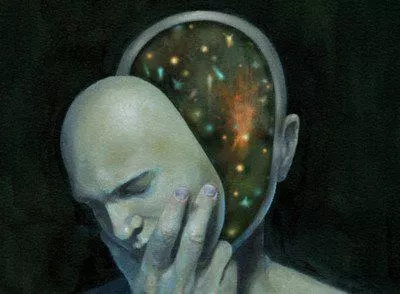
The Universe is Inside us

Through meditation and examination of self-knowledge, we encounter the inner mentor. Through the inner mentor we learn about personal capacities that we were insensate to before. We learn how to focus our power and our energy effectively and efficiently. We are taught how to balance Ego with Soul. We are given new eyes. The path becomes radiant, clear beyond what we could fathom in the time before. Most of all, the inner mentor gives us support and the spiritual provisions we’ll need for the arduous journey still to come.

Through communion with our inner mentor we gain spiritual wisdom. By exercising our relationship with our higher self, we gain the ability to manifest our desired future. When we align our Ego with Soul our higher self is united with cosmos and we earn the capacity to create our own reality. Through such power our true destiny manifests itself. But the abyss is ever-present, glaring up at us and mocking our progress.

The threshold of the self is buckling, collapsing in on itself to reveal the journey is probably not what we thought it would be. It turns out we’ll need a good sense of humor to withstand the trials, tribulations, and vicissitudes of the heroic journey.

Read the other parts

Encounter with the Inner Herald

Encounter with the Inner Trickster

Confrontation with the Inner Shadow

Image Source:
Direction
Wisdom
The Universe is Inside

Understanding the Law of Karma

10

“Nearly all men can stand adversity, but if you want to test a man’s character, give him power.” – Abraham Lincoln

We all have come across a stage where we notice the fight of good vs. evil within us. William Golding, in his novel “Lord of the Flies” said that, “Humans are barbaric and animalistic in nature. Give them a chance and they’ll reveal their monsters.” law of karma

When we talk about monstrous and outrageous behaviour, we think of murders and instigation of communal riots/differences on the basis of race, status etceteras. Everything that surrounds us began from a thought, and this applies even to an act of committing a murder, betraying someone or even fallacious behaviour.

These are the conscious negative choices we make for ourselves that ends up harming us the most, once we land into the court room of the universe. Because the universe stays in motion and everyone has to deal with their Karma. Whatever you do, will come back to you. Good or Bad. Even when you’re unaware, you’re in conversation with the universe. You are communicating with your actions and thoughts.

Contrary to this Law of Karma theory, we have capitalism (industrialisation/commercialisation) reaching to a level of destruction from where we can’t find a way back. I see the world around and it fills me with remorse for having to believe in the uprising culture of materialism and greed. As Lincoln says that, “Give anyone a power to reach to the conclusion about one’s character.”

We do know that people involved in capitalism are building up a bad karma. And they do have to compensate for it. I have had few friends asking me about the credibility of the Law of Karma, “Hey, that person is a wrong-doer, yet he is so happy. How?”

We all go through a phase where we query all that can be put into realm of questioning because we have been wronged or can see wrong.

Karma is a slow process. One needs to have endurance and perseverance to witness its functioning. Never despair and keep that hope in the hood. Also, after some serious pondering over the question, I realised, it all comes down to the parameters we set in our head that becomes the prominent cause of agitation.

Happiness, however, is eternal. It shines through your eyes and emits a vibe full of positivity. It fills your surrounding with joy and lightens up your face. It connects you to the higher spiritual self. It becomes a state of mind.

As humans, we tend to compare, even though we should master the art of not indulging in one as comparisons give a limit to your imagination when one is infinite and limitless. In other words, it’s judging oneself harmfully.

Haruki Murakami, the Japanese author says that, “Whatever you’re seeking won’t come in the form you are expecting.” Wrongdoers always know that they are doing wrong and to avoid facing the guilt they keep on indulging themselves in the same process. But, no one is spared. Their peace of mind is disturbed in ways we can’t envision. Capitalism is indeed at its peak but after greater chaos comes greater order.

So, never for once let your faith get fragile in the goodness of the soul and mind. It is the only thing that can connect you to yourself. And allow the universe to give you immense happiness. Rest everything is similar to puddle jumping. Believe in the vastness of the universe. Faith indeed can move mountains.

Image Source

Soul and Mind

Crouching Warrior Hidden Champion, Part 1: Encounter with the Inner Herald

It Begins
It Begins

“It is precisely the god-like in ourselves that we are ambivalent about, fascinated by and fearful of, motivated to and defensive against. This is one aspect of the basic human predicament, that we are simultaneously worms and gods.” –Abraham Maslow

Welcome to the Hero Initiate series. The central conceit of this series is that we all have a hero buried somewhere within us. For most of us this hero lies dormant, expressionless and cut off from the world. To be initiated into our hero identity we must descend into the dark depths of our unconscious. Therein lay the key elements of our heroic destiny.

We, the hero initiates, discover our hidden hero through an inner journey broken up into four stages inspired by Joseph Campbell’s Hero’s Journey. This article covers the first stage: the encounter with the Inner-Herald.

answer-the-call

Joseph Campbell referred to it as the Call to Adventure. Nietzsche called it the will to power. Anthropologist Arnold van Gennep posited that the rites of passage founded in all cultures begins with the Separation Stage. Clarissa Pinkola Estes calls it the Beginning Initiation. Bill Plotkin refers to it as the Descent into Soul. But renowned poet Rainer Maria Rilke may have said it best, writing, “sinking back into the source of everything,” and “going out onto your heart as onto a vast plain.”

We all hear the call to adventure in some form or another. Some of us choose to listen to it, while most of us refuse it. Or worse, we suppress it. Either way it is there singing its fluted truth. It can arrive spontaneously, as a blunder, or as a lucky break. It can arrive through super-serendipity, as a chance occurrence, or a cruel twist of fate. It can come through new life, or through unexpected death, or both. It can come from a book, a song, or even a movie. There are countless places that the call to adventure can come from. The key is to be open and adaptable.

But where is this “calling” coming from? Who, if anyone, is behind the bullhorn? It’s arguable that it comes from deep within us; from a primordial place that is still in touch and in tune with the greater forces that connect all things. The archetype we’ll use to describe it is that of the Inner Herald. The Inner herald is our hidden messenger, our innermost voice, our soul-whisperer. He, or she, is our gut instinct personified, warning us of danger and revealing to us the path toward our true vocation.

But in order to hear it we must first be able to listen. We must have a mind open enough to comprehend it. Otherwise it just goes in one ear and out the other; or from one dead place to another, which is perhaps a big reason why so many people go through their lives without ever listening to their own personal call to adventure.

One way to grow “ears” powerful enough to listen is to meditate, especially on the Vishuddha chakra, or throat chakra, located at the back of the neck.

With the purification of the Vishuddha chakra, deep listening becomes an essential skill. By listening with conscious intent, deep knowing arises; and through deep knowing, a deeper being results. Our highest expression becomes manifest. We are then free to “say what we mean and mean what we say.”

Mind-Field-of-the-Inner-Child
Mindfield of the Inner Child

In between commitment and doubt, our Inner Herald reveals a place where we are free to be creative. Tapping into this creative space is the essence to heeding the call. This is where we are free to grow, to stretch comfort zones, to shatter mental paradigms, and to think outside of whatever box was preventing us from tapping into our authentic creativity. In this space there is no true self. There is no fixed essence. There is only momentary self-awareness.

The best way to learn about it is to play with it; like a kindergartner in a sandbox full of infinity. In a lot of ways our inner herald is our inner child, eternally curious and ready to take on all sandboxes. As Bertrand Russell wrote, “Curious learning not only makes unpleasant things less unpleasant, but also makes pleasant things more pleasant.” And so the future becomes more pleasant, and even the unpleasant pain experienced with transitioning into heroism becomes less unpleasant.

Read the other parts

Encounter with the Inner Mentor
Encounter with the Inner Trickster
Confrontation with the Inner Shadow

Image Sources:

The Call
Mind Field of the Inner Child
Crouching Warrior