Home Blog Page 341

Peyotism and Native American Spirituality

5

Earlier we had spoken how marijuana has been used in India and is still used across the country during festivals like Holi in the form of bhang.

The Rig-Veda is the chief of the four vedas of ancient India, that consists of hymns and prayers sung well before 800 BC to worship Gods – it speaks of Soma, a potent drink produced from an unidentified plant. It was drunk only at sacrifices, and caused the most invigorating effects.


Today we shall take a look across the world at Native American spirituality revolving around the use of entheogens, the current use of Peyote and the chemical Mescaline that is derived from it and widely used as a recreational drug.

The exact date as to when man started using Peyote is not known, but at an archaeological excavation in Texas, a radiocarbon analysis showed that the specimens of Peyote found there were dated between 3780 and 3660 BC.

This results only let us know that the Native North Americans have used peyote for at least five and a half thousand years, while the Indian Mexicans, who have their own Peyote rituals are dated somewhere around 180 to 1070 AD with specimens from a burial cave.

Lets take a look at the essence of a Peyote ritual –
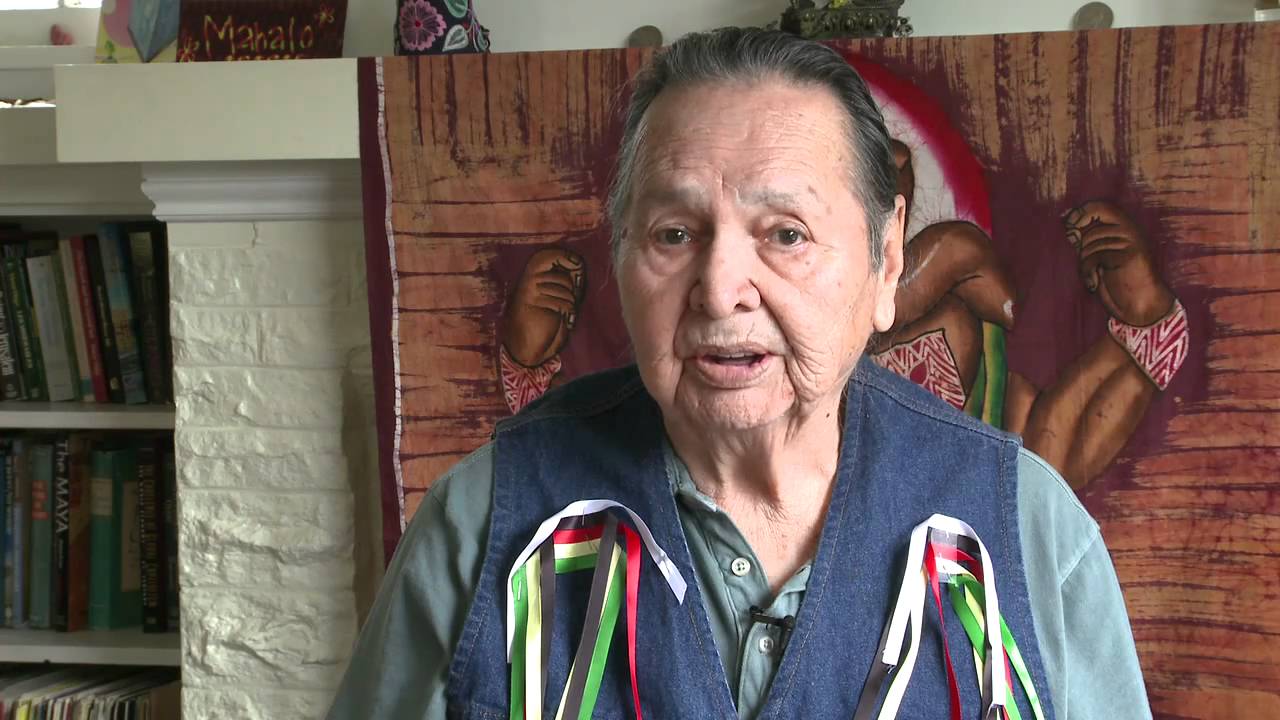
Fred Wahpepah - About the Peyote Ceremony

Today the Native American Church, a religious organization, practices Peyotism or Peyote religion, that was created by Quanah Parker in the 1890s.


It was formally incorporated in 1918 where it has been reported that Parker adopted the peyote religion due to a vision of Jesus Christ while suffering from a near fatal wound following a battle with Federal Troops.

“The White Man goes into his church and talks about Jesus. The Indian goes into his Tipi and talks with Jesus.”

Is Parker’s most famous teaching regarding the Spirituality of the Native American Church.

the eagle the condor and me jim figora peyote art 1Apart from that it is currently used world wide as a recreational drug, an entheogen, and supplement to various transcendence practices including meditation, psychonautics, and psychedelic psychotherapy. (That refers to therapeutic practices involving the use of psychedelic drugs, particularly serotonergic psychedelics such as LSD, psilocin and DMT.)

But what are the harmful effects of these drugs, according to a paper published in 2005 in Biological Psychiatry quoting Dr. John Halpern’s research of the “Psychological and Cognitive Effects of Long-Term Peyote Use Among Native Americans”.

It was found that Peyote users scored significantly better than non-users on the “general positive affect” and “psychological well-being” measures of the Rand Mental Health Inventory (RMHI), a standard instrument used to diagnose psychological problems and determine overall mental health.

In contrast, alcohol abusers did significantly worse than the comparison group (non-users) in all measures of the RMHI.

Peyote Ceremony

Smoking Pot, a Part of Indian Culture

14

Marijuana has been an essential part of Indian culture, in fact there is a long and varied history of its use in religious ceremonies, dating back to 1500 BC. Some of the sacred text of Hindus, Rig Veda, describes the use of Soma, an intoxicating drink, believed to be marijuana.

I wanted to highlight that how marijuana is so heavily ingrained in the Indian culture that its impossible to ignore its use.

Besides, that it grows in the wild in various parts of the country. Lord Shiva’s association with cannabis is well known, its believed to be his favorite. His devotees, long-bearded sadhus, ascetics engage in pot to attain the spiritual oneness with Shiva. Cannabis holds an important place in Tantric Yoga, as you will find out in the latter half of the post.

As I mentioned before, that marijuana is illegal in India, but during Mahashivratri (Night of Shiva or Great Night of Shiva), mortals are allowed to consume cannabis in the form of ‘Bhang,’ because Shiva use to take Bhang. Its made out of cannabis leaves with a mixture of almonds, spices, cold milk and sugar. Worshipers offer ganja to god and also consume it to attain a blissful state. Many Sadhus might not drink alcohol but are allowed ganja and bhang. Villagers in Rajsamand district, Rajasthan consume bhang instead of their morning tea. They don’t consider bhang as an intoxicant, but as prasad (offering) of Lord Shiva.

While writing this post, I stumbled upon an interesting piece of information. Cannabis is also an important part of Tantric Yoga sex acts consecrated to the consort of Lord Shiva, Goddess Kali, who is generally associated with death and destruction.

Devotional ceremonies involve cannabis ingestion and ritual sex, which aims at raising the Kundalini energy from the base of the spine up into the higher centers of the brain.

The use of marijuana for religious and spiritual purpose in India is quite deep-rooted, and no one can deny that connection!

The Fractal Nature of Consciousness

4

Many of you may know how this blog got the name Fractal Enlightenment, because of this video I came across by Arthur Clarke, Fractals the Color of Infinity.

While I watched that I was pleased to find the entire documentary, ‘Fractals the Color of Infinity’ available to watch online. Its time for you to understand the building blocks of God. Another thing, this explains is how we all are the same. We are one!


Mandala: The Sacred Art of Tibetan Buddhists

14

kalachakra_sand_mandala
An art that has been carried on for centuries, symbolising the universe and believed to create a positive environment. I am referring to the Tibetan Buddhist sacred art of Mandala (means circle in Sanskrit), which is made by monks from millions of grains of dyed sand or paint. A bit similar to Rangoli made by Hindus.

Monks spend days to make this intricate masterpiece, with utmost care and precision, as you will see in the pictures below. Mandalas are believed to assist in purification and healing and represent the Buddhist value of compassion, so the process of making one, as you will find out, involves few rituals, even while destroying the design.

The process of making a mandala starts with an opening ceremony, when the monks will pray and chant to sanctify the place, then draw the detailed design from the center outwards on a wooden platform.
2making_of_tibetan_mandala

3powdered_sand_mandala

Monks start filling the circular design using metal funnels called ‘chak-pur’. The vibrations of the chak-pur being grated with a metal rod causes the sand to flow like liquid.

4metal_funnel_used_for_mandala_art

Apart from sand even powdered flowers, herbs, stones, or grains are used. In ancient times, powdered precious and semiprecious gems were also used.
5final_touches_to_mandala The design consists of various deities with the principle deity in the centre of it, so mandala also serves like a meditation tool. Traditionally, mandalas are destroyed shortly after its completion, in a ritual ceremony.
6destruction_of_mandala The monks ask for blessings of the deities, and as they chant the mandala is slowly wiped off to serve a reminder of impermanence of life, a Buddhist teaching. The sand is then collected and dispersed into the sea to spread its healing power to the world, you know the the power of thoughts on water molecules, it transforms into beautiful designs.

The Life and Death of a Sand Mandala

Image Source
Mandala

Nature’s Patterns from an Aerial View

0

The vivid patterns, textures, fractals on earth’s surface become more apparent through aerial photography.

Showcasing such unexplored natural phenomena through his work is Bernhard Edmaier, a German photographer, geologist and author of many books.

Bernhard has traveled around the world from Alaska to the Bahamas and Iceland, and from continental Europe to North America and New Zealand, capturing the real landscape of Mother Nature.

He travels along with his partner Angelika Jung-Hüttl, also a geologist, to inaccessible places, where there is no human presence, so thorough research and planning is needed to produce immaculate photographs.

Let’s see some of his photographs. This is from his early work called ‘Volcanoes’. His photographs are taken without colour filters and are shown as it is without any manipulation. 

Afar Erta Ale Ethiopia volcano bernhard edmaier

This the extinct volcanic cone of Mælifell, near the glacier Myrdalsjökull in south Iceland. You can the glacial water flowing around the base of this cone.

Maelifellsander Island aerial bernhard edmaier
Maelifellsander 001

These are some rocking photographs. The natural patterns formed with the wind, so the edges of these yellow-brown sand mounds in the Namib Desert in Namibia are sharpened daily.

bahamas nature patterns bernhard edmaier

Image Source

Bernhard Edmaier