“It is when we act freely, for the sake of the action itself rather than for ulterior motives, that we learn to become more than what we were. When we choose a goal and invest ourselves in it to the limits of concentration, whatever we do will be enjoyable. And once we have tasted this joy, we will redouble our efforts to taste it again. This is the way the self grows.” ~ Mihaly Csikszentmihalyi
You know that feeling when time stops when you’re doing something and get completely immersed in it. It could be different for everyone, it could be gaming, writing or even riding a motorcycle.
When I was in my twenties riding my motorcycle used to transport me into another realm, there was no time except the now, with the amount of traffic in Bombay and getting to work on time you had to be completely focused. So much so that I would feel like I was one with the motorcycle. It felt like the motorcycle was an extension of my Body.
What is “Flow”?
The experience of getting completely immersed in what one is doing, according to psychologist Mihaly Csikszentmihalyi is “Flow”. In his book Flow: The Psychology of Optimal Experience, he describes getting in the flow as a pleasure, delight, creativity and process where one is completely immersed in life.
Don't let this stop you, show us some love and subscribe to continue reading!
“Those who cling to life die, and those who defy death live.” ~ Kenshin
For those of you who have never seen The Matrix, the main character, Neo, is offered a choice between a red pill (difficult truth) and a blue pill (comfortable deception). The blue pill will let him remain in the fabricated reality of the Matrix, while the red pill will take him out of the Matrix and into the real world.
Here are 7 ways to take the red pill –
1.) Proactively seek rabbit holes:
“I can only show you the door, you have to walk through it.” ~ Morpheus
The choice is not as straightforward as it may seem because the lie of the Matrix is simpler and more comfortable than the difficult and uncomfortable truth of the real world. Should you choose the ignorance and bliss of deception and remain in your comfort zone or face the uncomfortable truth outside of everything you’ve come to believe is true?
If you believe in the comfortable lie, and you are certain it’s real, then there is no reason to upset your certain belief. Which is why it is paramount that you should have at least some doubts in order to stay ahead of the curve and change the way the game is played. Otherwise, you’ll forever be behind the curve and stuck in the game, forever stagnant and trapped in the box.
It is only through healthy doubt, through vital inquiry, through the seed of a question, that you can become like Neo and take the initial leap of courage and gain the capacity to recognize white rabbits, or how to proactively seek rabbit holes.
2.) Forget Alpha and Beta, go Meta:
“Our firmest convictions are apt to be the most suspect; they mark our limitations and our bounds. Life is a petty thing unless it is moved by the indomitable urge to extend its boundaries.” ~ Jose Ortega y Gasset
Seek out rabbit holes, then ascend through wormholes.
Ascension is best summed up by the concept of ‘going Meta’. Going Meta is reimagining imagination. It’s seeing the big picture. It’s connecting the dots that most people aren’t even aware of. It is third-eye illumination and visionary insight.
Going Meta is texturing fear with courage and anger with humor. It launches us into a big-picture perspective. We’re shot out of the box of outdated thinking (alpha and beta) and into a realm of higher consciousness, where our lizard brain gets countered by updated logic and reasoning.
We gain the sacred vision of “Over Eyes” (similar to the Astronaut Overview Effect), where limited societal delusions and cultural abstractions dissolve into empowered interconnectedness and sacred interdependence.
3.) Indulge in a heightened state of radical humor:
“There is nothing in the world so much admired as a man who knows how to bear unhappiness with courage.” ~ Seneca
Employ a shock and awe campaign. You can call it Operation Mindfuck. Or Guerilla Ontology. Or Self-inflicted Philosophy. Or Disaster Shamanism. Or an Anti-cognitive-dissonance Campaign. Or whatever. The point is to use out-of-the-box thinking as a strategy to keep you out of your own way and ahead of the curve.
Shock value is an essential part of taking the red pill. The more aligned you are with mystery, the more you discipline your imagination with awe and transcendence, the more likely you are to adapt and overcome. This requires giving yourself comedic (courageous) license. This requires an exceptional sense of humor, a radical humor, a humor of the most high.
4.) Practice lucid dreaming:
“In art and dream, you may proceed with abandon.” ~ Pattie Smith
On average we are asleep for 30% of our lives. That’s a lot. Lucid dreaming is a mystical technique that allows you to tap into your unconscious mind to access the deepest parts of your psyche. It is a way of capturing your unconsciousness in pill form. A red pill if you will.
You do this through dream analysis and connecting the dots between the many symbols and archetypes that arise. Dreaming becomes a wormhole disguised as a rabbit hole as you ascend into descending. The line between real and unreal blurs into the surreal and your imagination becomes ripe with the capacity for self-overcoming.
The more you practice navigating your dreams the better you will get at understanding your psyche. The more you understand your psyche the more likely you are to keep your perception of reality in proper perspective. You’re more likely to remain open to new experiences. More likely to take the red pill of truth while rejecting the blue pill of deception.
5.) Practice solitude and deep meditation:
“Anyone who has had an experience of mystery knows that there is a dimension of the universe that is not that which is available to his senses. People living in the world of nature experience such moments every day. They live in the recognition of something there that is much greater than the human dimension.” ~ Joseph Campbell
Heavy from aggrandized civilization (blue-pill), we go into nature seeking medicine (red-pill). We seek a connection between finitude and infinity, between mortality and immortality, between life and death. We discover it by simply being present (meditating) and embracing solitude.
Introducing solitude and meditation into our lives helps reveal the concealed world. Whether it’s through ritual dance, or an out-of-body experience, or a mind-altering natural entheogen, the experience has a decalcifying effect. Something undefinable peels off the surface of reality, taking with it hyper-reality, labels, and words.
It’s a kind of eco-ego-melting, where “I” melts into “Not-I” and the third-eye opens. Solitude and meditation teaches a particular flavor of humility that gets you over your own ego. When you unbecome yourself, you become everything. You’re free to experience interdependence despite culturally conditioned codependence.
6.) Use fear as fuel for fire:
“Light is the left hand of darkness and darkness the right hand of light.” ~ Ursula K. Le Guin
Make pain your ally. Pain is the ultimate wakeup call, the primordial teacher. Primal and vital, pain instills resilience, robustness, and even antifragility as long as the student has the capacity to learn from it.
You gain the capacity to learn from pain by learning how to use fear as fuel for the fire of doing what you love. Otherwise, fear cripples you before you ever get a chance to hurt. In this sense, fearlessness is not the lack of fear, it’s a doubling down on fear and using it as energy, as an inspiring force.
Fear becomes a heroic self-empowerment rather than an excuse to remain a victim. Then it’s all about staring into the abyss of the human condition and declaring, with courage and mercurial aplomb, “Bring it on. Do your worst. I’m prepared to learn from the pain of living a life well-lived.”
7.) Don, discard, and design your masks:
“I want to stay as close to the edge as I can without going over. Out on the edge you see all kinds of things you can’t see from the center.” ~ Kurt Vonnegut
Governing the precept that the definition of the self is ‘masks all the way down perceiving delusions all the way up,’ it stands to reason that we stay ahead of our delusions by flexibly engaging, un-engaging, and then re-engaging the utility of our many masks.
The possibilities are limitless. Neo was a mask for Mr. Anderson. Insouciant Tyler Durden was a mask for timid Tyler Durden. V was a mask for the burn victim turned hero in V for Vendetta. And the list of mask-wearing superheroes is too long to even mention.
The point is to use our masks to embolden what’s beneath. To inspire courage where before only cowardice reigned. To instigate a glass-is-half-full perspective despite the empty glass. To trick us into creating meaning despite meaninglessness. To encourage going Meta while everyone else is going alpha or beta. To flip the script on the small picture Ego by slipping in the big picture Soul. To turn the tables on clingy codependence by practicing detachment as a way to remain connected to everything. To transform ‘the Desert of the Real’ into Providence.
Nobody will protect you from your suffering. You can’t cry it away or eat it away or starve it away or walk it away or punch it away or even therapy it away. It’s just there, and you have to survive it. You have to endure it. You have to live through it and love it and move on and be better for it and run as far as you can in the direction of your best and happiest dreams across the bridge that was built by your own desire to heal. ~ Cheryl Strayed
It’s a funny thing about life, once you begin to take note of the things you are grateful for, you begin to lose sight of the things that you lack. ~ Germany Kent
“It is awfully hard work doing nothing” ~ Oscar Wilde
It is an art. I realised that during my mid-term holidays from school. My routine life kept me on my toes. My entire day was spent completing tasks and doing chores, and I had completely forgotten what it’s like to do NOTHING at all.
When the holidays began, and I had no work from school, my mind was still stuck in work mode. I felt that I needed to do this, or should I do that or reply to a mail and so on and so forth. I actually began to feel guilty about not doing anything at all. Not only that, but I couldn’t just relax and enjoy the nothingness.
Although this wasn’t the case a while ago, as my life’s pace wasn’t dictated by my job. We lived in the countryside and things were never rushed like the way it is in an urban setup. Since we moved back to the city a year and a half ago, I felt that I had to constantly do something, be on the go, and even the train of thoughts kept me on the same track.
But then I realised what I was doing to myself – feeling stressed out, overworked, anxious, and I had become irritable. Then came ‘Niksen’ to the rescue.
Understanding Niksen
The Dutch concept of “Niksen” which literally means “do nothing,” just looking at your surroundings or hanging around, without any purpose.
As Carolien Janssen describes in her book, Niksen: The Dutch Art Of Doing Nothing, as “similar to mindfulness, yet you don’t need anything special to do nothing.” In order to practice it, “slow down and celebrate the moment of not achieving.”
Doing nothing came as a blessing in disguise. When you are doing nothing at all, time comes to a standstill and things begin to move slowly, a pace that your mind fears to take on. You begin to notice the subtleties of life, for example – you observe your child’s giggles for absolutely no reason or the dance of the leaf as it sways in the wind and gently falls on the ground.
I had stopped noticing such things on a daily basis, and that made this whole idea of doing nothing important for my own well-being.
So picture yourself sitting on a chair and looking outside the window and just being without any agenda, schedule or chores to attend to.
Today’s modern society has transformed many of us into doers, performers, and overachievers. It doesn’t mean one shouldn’t be ambitious, but we must also make time to ‘do nothing’ without feeling guilty about it.
According to a study done a few years ago, people were put in a room and were asked to be just by themselves, and they were given the option of just sitting by themselves or electrically shock themselves. What’s shocking is that 67% of men and 25% of women chose to give themselves a mild electric shock rather than just sit there.
The art of doing nothing is a powerful practice that may well change our lives. What surfaces is – our feelings at the moment (whatever it may be), our ego drops its guard and our true self emerges.
Young children are masters of doing nothing, or even cats for that matter. I often see my 5-year-old son lying on the ground several times during the day looking outside at the birds or a tree. It is a temporary moment of withdrawal from the hustle and bustle of life.
How to practice Niksen?
If you think to do nothing sounds difficult, then here are a few ways to get into a state of deep relaxation.
Switch off all your distractions – TV, phone, laptops, gadgets or people.
Find a comfortable spot where it would be easy for you to switch off. Yes, may be your favorite chair or the verandah.
If you have had a bad day, then it would be good to begin by focusing on your breath. Slow down, take a few deep breaths in and out.
That’s it, there is nothing more to doing nothing. You will discover, in that space of nothingness, something substantial will emerge within you. When you let go of controlling every moment of your day, you experience a state of deep relaxation.
If not at home, then take it outdoors. Go for a walk in the forest, lie on grass, look at the sky and the clouds passing by, or just close your eyes and relax! After 10-15 minutes of doing nothing, you can get back to doing something. If 10 mins is too much of quiet time, then begin with 2-3 mins and gradually increase the time limit.
How will Niksen ‘doing nothing’ benefit you?
The current times have been quite challenging indeed, in terms of finances, work, maintaining sanity amidst all the uncertainty. Switching off from the day-to-day grind for as little as 10-15 mins is an elixir of rejuvenation, restoration, and renewal.
According to a neurologist, Marcus Raichle, a special network in our brains known as the Default Mode Network, comes alive or activates when we do nothing. This Default Mode Network is potentially the neurological basis for the self, reflecting one’s own emotional state, thinking about others, thinking about one’s self, remembering the past, and envisioning the future rather than the task being performed.
Sometimes the day is filled with so many events, that we need times to process our thoughts, feelings and to release tension from our body. Especially right now when stress and anxiety levels are high, Niksen becomes an effective way to alleviate stress, anxiety, and gain clarity in life.
Make time for doing nothing today. Let your mind wander without a guilt, daydream, it is good for you!
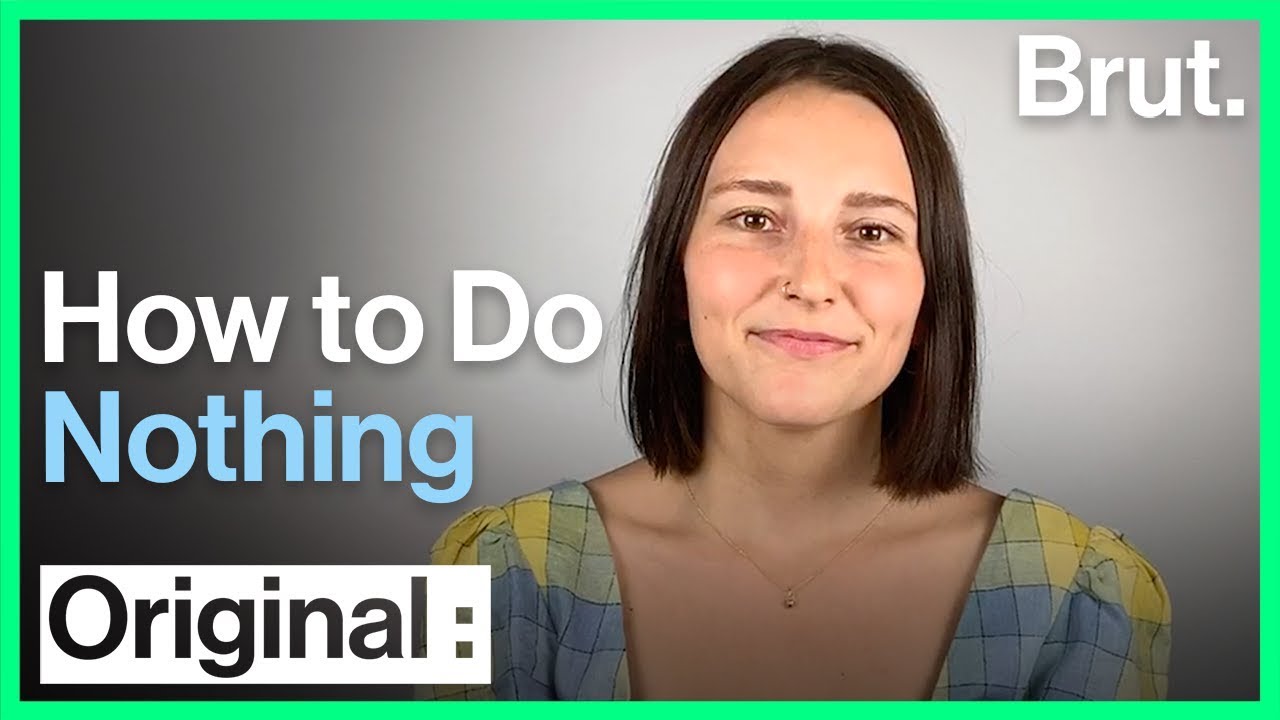
A Video on Niksen or the Dutch Art of Doing Nothing