Home Blog Page 178

Hoka Hey! Courage, Confidence, and the Battle Against Oppression

2

Simply put, Hoka hey is a Lakota word meaning “Let’s go!” or “Let’s do it!” expressed with courage and confidence in the face of great odds.

This phrase is often confused with the phrase “Today is a good day to die,” which, though a false translation, is apropos with the intensity of the expression, especially when taken in context.

a-hoka1

In the book, Black Elk Speaks, there’s a recounting of the Battle of Little Bighorn describing the warriors under Crazy Horse: “…off toward the west and north they were yelling, “Hoka hey!” like a big wind roaring, and making the tremolo; and you could hear the eagle bone whistles screaming.”

They were fighting against the tyranny and oppression of the state. They were fighting for freedom. They were fighting for the common interest of leaving a healthy world for their children.

As Sitting Bull said, “Let us put our minds together and see what life we can make for our children.”

For the purpose of this article Hoka hey! is used as a rallying cry amidst the dull drone of people pretending to be asleep, a charge of confidence in a world riddled with cowardice, a courageous assemblage despite fear, a disobedient interruption in the chain of obedience. Hoka hey is the peaceful warrior’s battle cry.

Let it be heard, especially in these times of state driven propaganda and willful ignorance.

Couragea-hoka2

“I survived because the fire inside me burned brighter than the fire around me.” ~ Joshua Graham

You do not need anybody’s permission to be free. You need to give yourself permission to be free, and then will yourself into doing the difficult work it takes to remain free.

For this you’re going to need courage, and a lot of it. Because everything around you, the state, statists, other states, will be working against your freedom. They don’t want you free because it undermines their belief system of control.

It erodes the illusion of their legitimacy. Either that or they’re confused about what freedom means, due to state conditioning and brainwashing from a centralized hierarchical chain of command.

So, it’s time to buck up, buttercup! Dig deep. Find the courage to be free despite those who wish to rule over you. Live fiercely despite the bleakness of the dark. In short: make sure your inner fire is burning brighter than the fire seeking to consume you.

Then get to work. Manifest the peaceful warrior’s spirit with a “Hoka Hey!” in the face of tyranny and oppression.

Confidence

a-hoka3“In the end, I want my heart to be covered in stretch marks.” ~ Andrea Gibson

You need courage to spark the fire, but you need confidence to keep it lit. And if you want your inner fire to burn brighter than the surrounding fire, then that confidence needs to be exponential.

Confidence is the meat in the Hope-Commitment sandwich. Hope against despair, hope against the odds, hope against pessimism.

Commitment to a healthy cause, commitment to a common idea, commitment to freedom. Confidence is precisely what Crazy Horse had boiling up inside him when he uttered the famous battle cry, “Hoka Hey!”

But confidence is surprisingly difficult to maintain in a world that threatens our spirit and squashes our hopes. An attitude of inner-serfdom rears its ugly head and we become inclined to inertia under the boot of perceived authority. We’re apt to bury our heads in the sand and stick to our comfort zones while turning a blind eye to atrocity.

So, confidence sometimes requires a leap of courage. The two feed each other. Courage begets confidence begets courage. To maintain the fire of our courage we must stoke it with the kindling of our confidence. And that takes discipline.

It takes daily overcoming of our tendency toward inertia. It takes turning the tables on our inner-serf and telling him/her to rise to the occasion or stay out of the way. There’s work to be done.

The Battle Against Oppression

“We have every right, indeed a duty, to break certain rules and think things through independently. We need to learn a calculative form of disrespect. We need to learn a constructive suspicion of authority, a path between total compliance on the one hand and sullen skepticism on the other.” ~ The School of Life

a-hoka4Limited by mortality, infinite in passion, mankind is a fallen god trying to remember its godhood. Part of remembering our godhood is making the most of our courage and confidence and focusing both into channeling our personal power against the unhealthy use of power.

This is the battle against oppression. And it begins by harnessing courage and confidence and then directing it at liberating the self.

Once the self is liberated from oppression, courage and confidence become a self-sustaining feedback loop that can then be used to focus power against outside oppression.

“Hoka hey!” is the profound expression of this self-sustaining feedback loop. It’s an empowering phrase that can spur us, first into self-liberation, and second, toward the liberation of others.

It’s a power phrase that self-empowers through courage and confidence, while revealing to others how easy it is to take their power back in the face of those who seek to steal it. It’s Crazy Horse raging against the oppression of the state.

It’s Water Protectors raging against the “Black Snake” of the Dakota Access Pipeline. It’s our ancestors rising-up inside us and raging against all forms of oppression so as to leave a healthy world for our children. It’s the seventh generation rising-up inside us and doing the same.

It’s Derrick Jensen declaring to the world, “We are the governors as well as the governed. This means that all of us who care about life need to force accountability onto those who do not.”

Confidence

Image source:

Hoka hey
Homeland security
Chinese proverb
When the last tree is cut…
Sioux War Cry by Frank McCarthy

Chasing Genius: Three Ways to Transcend the Cultural Operating System

0

“Talent hits a target no one else can hit. Genius hits a target no one else can see.” ~ Arthur Schopenhauer

You don’t have to be a genius to be creative, but you have to be creative to be a genius. Chasing genius is allowing the journey of the creative experience to be the thing.

a-genius1

Genius may arrive or it may not, but we’ll never know if we don’t at least attempt to put ourselves out there creatively.

Chasing genius is hunting the creative experience. It’s tracking down elusive flow states and pouncing on them with hungry hearts and metaphorical bloodymindedness. It’s digging down deep into the darkest depths of passion and pulling out frenzy and fire.

Then it’s putting that frenzy and fire to work.As Henry Van Dyke said, “Genius is talent set on fire by courage.” Yes, chasing genius takes courage.

Here are three ways to put that courage to work.

1) Recondition your thinking:

“If you are immune to boredom, there is literally nothing you cannot accomplish.” ~ David Foster Wallace


a genius2 e1534245479114Find the mystical in the mundane, and, failing that, create the mystical in the mundane. The mundane is the ordinary grind, the blatantly banal, the overly serious tedium.

The mystical is the magic hidden in the monotony, the mythos concealed by logos, the numinous cloaked by the obvious. Finding the mystical in the mundane is realizing: moments are neither ordinary nor extraordinary, but thinking makes it so.

When it comes down to it, it’s all a matter of disposition. Chasing genius requires a creative disposition, a recognizing of the extraordinary in the ordinary, and then manifesting the extraordinary into a creative act.

This usually requires deconditioning our preconditioning, and then reconditioning through creative expression.

And the best way to do that is through creative play. As Ian Bogost intuited, “Play bores through boredom in order to reach the deep truth of ordinary things.”

Chasing genius is the epitome of boring through boredom. It’s a controlling of the locusts in order to gain a Locus of Control. But more importantly, it’s a letting go of that control and allowing the flow state to flow.

It’s using the reality distortion field like a magic wand in order to usher new worlds into being, and then tossing it into the abyss (Harry Potter style) in order to prevent fixed thinking and to keep reconditioning magical thought.

2.) Catalyze your imagination:

“The world is but a canvas to the imagination.” ~ Henry David Thoreau

Chasing genius is invoking the gods of creativity & art and sucking them dry in order to catalyze imagination. It’s milking the soulstream. It’s resourcefulness begetting ingenuity begetting originality. It’s allowing the cocoon of inspiration to annihilate thought and transform it into the butterfly effect of visionary experience.

Most of all it’s a dare, a double-dog dare, a triple-dog dare with its hair on fire, challenging you to probe the perimeters of the possible. To venture into unknown places, both figuratively and literally.

To enter into the realm of the numinous. To tap the cosmic ocean and realize that you were always tapped in.

You just forgot somehow, or you were blocked psychosocially, or you denied yourself your own fountainhead because you were afraid of the unknown.

As it turns out, catalyzing your imagination is the essence of getting intimate with the unknown. So buck up, buttercup! The rabbit hole doesn’t appear for just anyone. The wormhole doesn’t open for the faint of heart.

You have to search for that s**t. You have to be vulnerable and open. You have to be present – balls to bones, ovaries to marrow. You have to surrender to the chase in order to “catch” what you’re chasing.

3.) Domesticate your madness:

“We might say that both the artist and the neurotic bite off more than they can chew, but the artist spews it back out again and chews it over in an objectified way, as an ex­ternal, active, work project.” ~ Ernest Becker

Then there is the shadow side, the ghosting dusk of the human condition, where the demon howls against old night but secretly wants to sing in new light. There’s a madness here that few people talk about.

Mostly out of fear, but habitually out of self-doubt. Little do they know that by facing the demon, by daring to delve into their own shadow work, fear magnifies into fearlessness and self-doubt transforms into the ability to self-overcome.

Domesticating madness is allowing such magic to unfold. As Oscar Levant famously said, “There is a fine line between genius and insanity, I have erased that line.” Indeed.
a-genius4
Chasing genius is tip-toeing over the barbed wire of that fine line. It’s risking the decent into madness in order to gain the elusive elixir of creative wisdom.

It’s juxtaposing brilliance with foolishness and emerging as a double-edged sword sharp enough to cut God. It’s discovering that our inner demons can be our greatest allies.

In fact, those demons often become the elusive genius we’ve been chasing. We just had to realize that they were us (our suppressed self) and we were them, all along. We just had to shine a light into the darkness, onto their suppression, in order for their howl to become a vital part of our song.

At the end of the day, we need more people who are willing to chase down their inner genius; to decondition their thinking, to catalyze their imagination, and to domesticate their madness. The more people chasing genius, the less stagnate, fixed, and unsustainable our culture will be.

The more alive we will be, despite entropy and death. The more we will be capable of “raging, raging against the dying of the light.”

As Jesus Christ cryptically stated in the Gospel of Thomas, “If you bring forth the genius within you, it will free you. If you do not bring forth the genius within you, it will destroy you.”

Image source:

Schopenhauer quote
Recondition your mind
Thoreau quote
Touch of madness

Healing Your Chakras with Music and Vibrations

3

“Each celestial body, in fact each and every atom, produces a particular sound on account of its movement, its rhythm or vibration. All these sounds and vibrations form a universal harmony in which each element, while having its own function and character, contributes to the whole.” ~ Pythagoras

Everything, including your mind and body, is in a constant state of vibration. Sound is a vibration that resonates with the soul, which can be felt in every cell of our body. Sound has the power to heal not only on a physical level but also on emotional and spiritual levels.

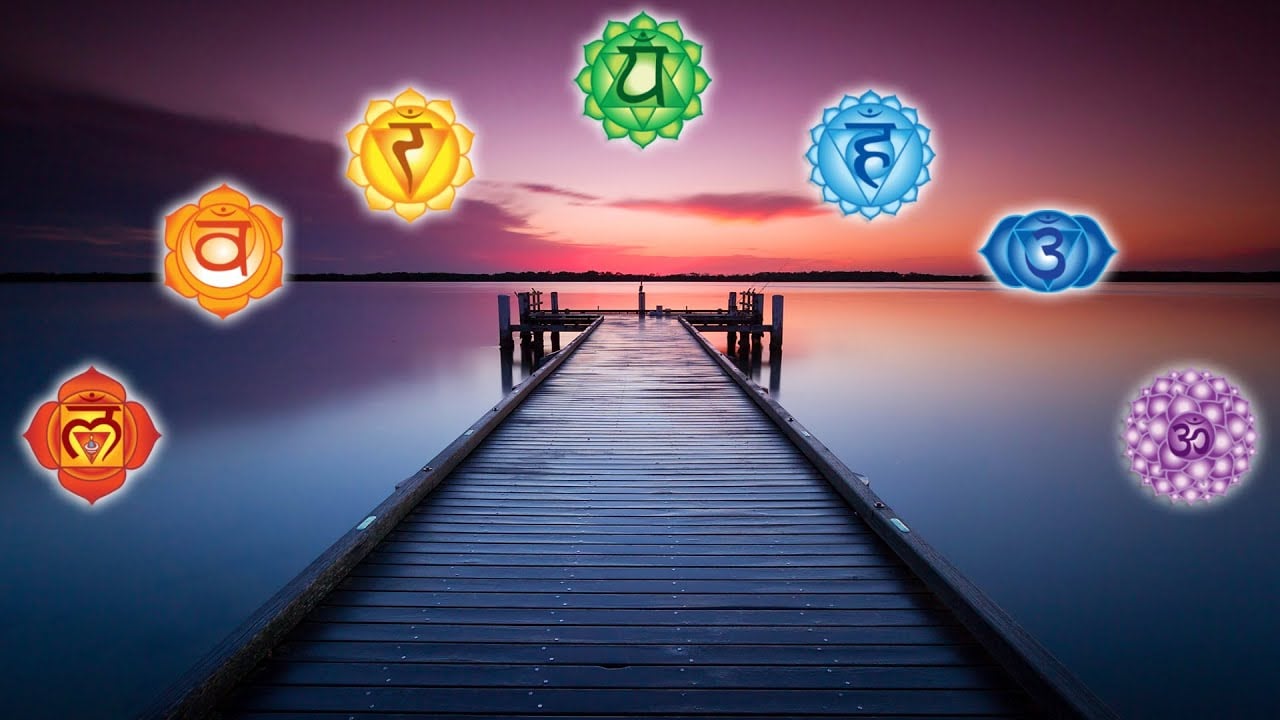
The seven energy centers in our body or chakras have their own frequency, and certain sounds have the vibrational power to tap into those chakra frequencies, and bring it into balance and harmony.

These sounds awaken a specific emotional state and wisdom within us — starting from the root into the pelvis, the solar plexus, heart, throat, third eye, and crown of the head.

Healing Chakras with Music

Each of the seven chakras gets energized by seven musical notations C D E F G A B.

The root chakra is energized by C, navel chakra by D, solar plexus by E, heart chakra by F, throat chakra by G, third eye by A and the crown chakra by B.

healing chakras with sound

Each sound helps in healing of the organs related to that specific chakra. For example, the sound of the musical notation E energizes the solar plexus and helps in the healing of major digestive organs, stomach, liver, pancreas, spleen, gall bladder etc.

In the same manner there are various emotions related to the energy centers, and the musical notations help to strengthen the positive emotions and eliminate the negative ones.

Musical Instruments that Connect to the Seven Chakras

“Music is the art of the prophets, the only art that can calm the agitations of the soul.” ~ Martin Luther

There are various musical instruments that resonate with each chakra. The root chakra is related to drums, tabla and musical instruments of similar kind, and the strong beats of these instruments awakens this chakra.

The navel chakra is activated by trumpets, pipes, electric guitar etc. Most of the organs related to this chakra are hollow like the female uterus and intestines, thus the instruments which use the modulation of wind are hollow as well and it awakens the sacral chakra.

The solar plexus is stimulated by string instruments like violin, guitar, cello etc. The solar plexus is the area which is surrounded with organs which have pouch like formation like the stomach, the liver, pancreas, thus the instruments which have a “belly” like violin and guitar, help in its activation.

All 7 Chakras Healing Meditation Music

The heart chakra resonates with softer string instruments like harp, piano, violin etc. This is the seat of love in our energetic body, and the instruments mentioned, invariably “play with the strings of the heart” and thus raise the energy level of this chakra.

opening chakras using musical instruments

The throat chakra, which is related to speech and expression of emotions, is energised by flutes and other wind instruments.

The third eye loves the sound of bells, chimes and synthesizers as the neurons in the brain react to these subtle sounds and get active.

The crown chakra is energized by the sound of a conch shell. Practicing music as a vocal or instrumental activity is a wonderful and effortless way to harmonize and heal one’s physical, emotional and spiritual bodies.

Balancing your Chakras using Vowel Sounds

chakra-vowel-sounds

In addition to the musical notations, there are various vowels which help in the process of chakra healing. All the vowels create different frequency waves, and the frequency of a vowel matches the frequency of a particular chakra, and stimulates that chakra.

These vowels can be practiced individually or with a partner. When used individually, they help to synchronize your own energies and when used with a partner, it brings balance and harmony in your relationship.

When practicing alone, you may use your natural tone and pitch and produce the sound, for example if the heart chakra is the focus of healing, you have to make the sound “AH”. Take a deep breath and while exhaling make the sound “AH” as long as you can.

While elongating the sound, it may sound like “AAAAAAAAAAAAAAAAAAAAAA…….hhh”. The other vowels can be practiced in the same manner. One may sit comfortably cross legged on a carpet, yoga mat or sit on a chair if sitting on the floor is not possible.

The important thing to be kept in mind is that the spine must be erect and shoulders relaxed and the posture stable. Make these sounds in a gentle voice – don’t strain.

Healing Relationships with Chakra Sounds

relationship-healing-chakra-sounds

This practice will help you build a deeper connection with your partner, loved ones or anybody with whom you wish to heal your relationship. Its effective when practiced after you have had an argument or difference of opinion and feel distanced from your loved ones. The practice of “sound sync” helps bridge this gap.

Sit face to face with your partner. Hold hands or don’t, whichever feels comfortable. Start by taking slow deep breaths.

When both are ready, take a deep breath and start with the root chakra sound. The vital issue to be handled here is matching the pitch of your voice with your partner’s voice, both must work towards this. Each vowel has to be repeated 3 times.

In the first session, you both might be out of sync, but with practice the voices as well as the energies of both will connect, eventually healing your relationship. It really works as my partner and I have tried this exercise.

It lightened the mood considerably due to the powerful energy exchange and it also turned out to be a fun activity due to the out of sync sounds initially. The words that we hear and speak help us in communication of our thoughts, but the pitch and tone of the sounds which we hear affect us on a subconscious level.

“The magic of “Musical Medicine” will come into its own. The application of such healing potencies will not be limited just to man’s body and mind. It will be an agency for building and healing his soul as well.” ~ Corinne Heline

HEAL ALL 7 CHAKRAS | Powerful Tibetan Singing Bowl Meditation Music

Image source & reference

Music and chakras
Healing power of musical notes

Freedom Without Adjectives: The Marriage of Anarchy and Fallibilism

0

“Our highest truths are but half-truths. Think not to settle down forever in any truth. Make use of it as a tent in which to pass the summer night, but build no house of it or it will be your tomb.” ~ The Earl of Balfour

Anarchism means without rulers. Fallibilism means without certainty. Between the two, freedom flows.

Moral fallibilism is an epistemological perspective that doubles down on the fallibility of the human condition as a means toward empathizing with our mutual shortcomings as an evolving species, thus creating compassion and understanding between the extreme ideals of right/wrong, good/evil, and even the more concrete healthy/unhealthy.

Don't let this stop you, show us some love and subscribe to continue reading!

If you're already a member, please login.


Image source:

Freedom arm
Karl Popper quote

The Three Stages of Development in Waldorf Education

1

‘Each individual is a species unto him/herself.’ ~ Rudolf Steiner From Theosophy: An Introduction to the Spiritual Processes in Human Life and in the Cosmos (1904)

Rudolf Steiner was a pioneer in alternative education. He created a movement that saw individuals as spiritual beings rather than economic fodder or shapes for society to mold.

According to the Steiner Waldorf Schools Fellowship, ‘the priority of the Steiner ethos is to provide an unhurried and creative learning environment where children can find the joy in learning and experience the richness of childhood rather than early specialisation or academic hot-housing.’

Though the works of Steiner are extensive and would require several essays to reflect upon, his writings and talks on the three stages of development a child must pass through to achieve a successful integration of the self, can be the perfect place to start.

In being introduced to these, we might have insight into how Steiner graduates have achieved emotional maturity and a rounded and grounded sense of self, one that is progressive and able to create independent thought and compassionate values in their adult lives.

“Where is the book in which the teacher can read about what teaching is? The children themselves are this book. We should not learn to teach out of any book other than the one lying open before us and consisting of the children themselves.” ~ Rudolf Steiner, Human Values in Education

Below are the 3 stages of development in Waldorf education ~

The Physical: Birth – Age 7

Body.

Physical Expression: Metabolic/Limb System

Psychological Expression and Developmental Mode: Willing

Spiritual Expression: Sleeping

Cultural Orientation: Religion

Attribute: Goodness

The first stage on the path to ‘ethical individualism’ is that of the physical where the child, having recently left the ethereal plane, has gently integrated the physical body through ritual, a safe environment and a deep connection with nature.

0d61fe738d45b47a07e73ea8bb319639

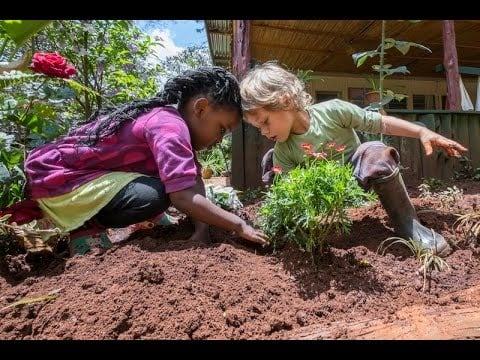
The child learns through non-self-conscious imitation in a nurturing environment to help them with this; the kindergarten is decorated like a home, kept warm and they are encouraged to help out with physical activities such as chopping vegetables to make their own soup, painting or polishing wood, and simple crafts like finger knitting and sewing.

Rather than being directly ‘taught’, the imagination and thought processes are allowed to develop through song, story and puppet shows of their own accord and pace, discipline delivered through gentle song (basically a telling off told in a loving and forgiving way) and daily work and play outside to keep them grounded and steeped in reality.

The religious element is designed to be much more about ritual and celebrating festivals than enforcing any ideology on the child, and in an ideal environment, to show the child that the world is good and that their every need is met.

The teacher may observe their play and reflect back to them their processes but avoid labeling and practice non-attachment with each child.

Teachers in the Early Years in Steiner education generally do not pick up children, instead taking them on their knee if they’re upset and although the emphasis is put on nurturing the child through their engagement in day-to-day activities and self care, they become highly self sufficient, seeking answers and direction from within rather than the external. The teacher keeps commands and input to a minimum, simply holding the space and being in the background.

THINKING, FEELING, WILLING - Nairobi Waldorf School

‘Live through deeds of love, and let others live with tolerance for their unique intentions.’ ~ Steiner, Philosophy of Freedom

The Imagination, Age 7 – 14

Soul.

Physical Expression: Heart/Lungs

Psychological Expression and Developmental Mode: Feeling

Spiritual Expression: Dreaming

Cultural Orientation: Art

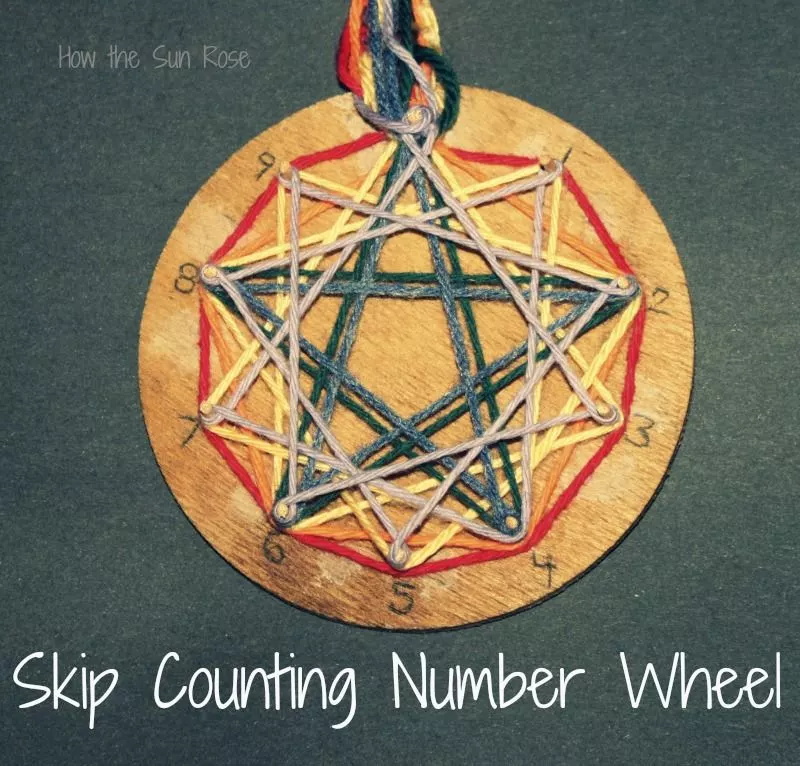
skip-counting-number-wheel-4

Attribute: Beauty

Deciding when the time is right to bring a child into slightly more formal classroom settings where they can begin to learn the alphabet and numbers depends on how formed their character is and is usually dependent on whether they are losing their milk teeth, which is the body’s indication they are ready for the next stage of development.

Children between seven and fourteen will be assigned a class teacher who teaches the majority of subjects to them without becoming a figure of authority in order to upkeep their assertions of self and an autonomy to their learning processes.

As with the early years, the teacher encourages learning through physical movement, poetry and story and becomes a nurturing figure who oversees a class who stays together for many years with abilities mixed together in a familiar setting.

Song and story still play a big role in allowing children to access academic tools to further their educational enquiry and the imagination and feelings of the pupil are the key elements being developed between these ages.

For example, a biblical story – invariably one about the angelic realm – is told to demonstrate the rules of grammar. One angel represents a command, another represents a question, a third represents a statement, and so on.

“If we do not believe within ourselves this deeply rooted feeling that there is something higher than ourselves, we shall never find the strength to evolve into something higher.” ~ Rudolf Steiner

512a5434183180653338e6174b13ee70

The Spirit, ages 14 – 21

Spirit.

Physical Expression: Nerves/senses

Psychological Expression and Developmental Mode: Thinking

Spiritual Expression: Waking

Cultural Orientation: Science

Attribute: Truth

From ages fourteen to twenty one children, having connected with their bodies and hearts can now be taught in a more logical, structured fashion. Students are allowed to focus on certain subjects that explore their interests having embraced their true selves and been given a grounded foundation in the world.

ae2b9c9a03258a54e9435fb931e8404a

As the body becomes disrupted and transformed with adolescence, children are encouraged to embrace freedom and their role in the outside world. Specialist teachers will come in and they are able to spread their wings a bit more and take influences from outside forces.

Students can enjoy the slow pace of their former years where they were able to develop their social skills and emotional needs in their own time without the pressures of formal testing.

It is in this stage that pupils may enjoy their emotional maturity and see the fruits of being more in touch with their core and inner voice, a gift that allows them to choose more directly what they want to do in the world without external confusions.

Why Waldorf Education for the 21st Century?

And the development doesn’t stop there! Steiner went on the describe the karmic stages beyond normal school age:

eur04

The next three seven-year segments are associated with the Sun (21-42 years old), and the elements of sentient soul, intellectual soul, and consciousness soul.

The next seven-year segment is associated with Mars (42-49 years old), when the soul works hard to impress the full forces of its personality upon the world. At this time, the soul has the opportunity to a higher state of consciousness called Spirit Self.

The following seven-year segment is associated with Jupiter (49-56 years old), when wisdom is dawning and the ego needs to unfold the Life Spirit.

The final seven-year period is associated with Saturn (56-63 years old) when Saturn completes its second “return” (e.g. comes back to its position it had at one’s birth), and the soul can manifest an event higher element of Self called Spirit Man.’ ~ Thomas Armstrong

For more information, see Steiner’s Karmic Relationships Vol. VII, lecture two.

Image Source:

Rudolf Steiner
Counting Wheel
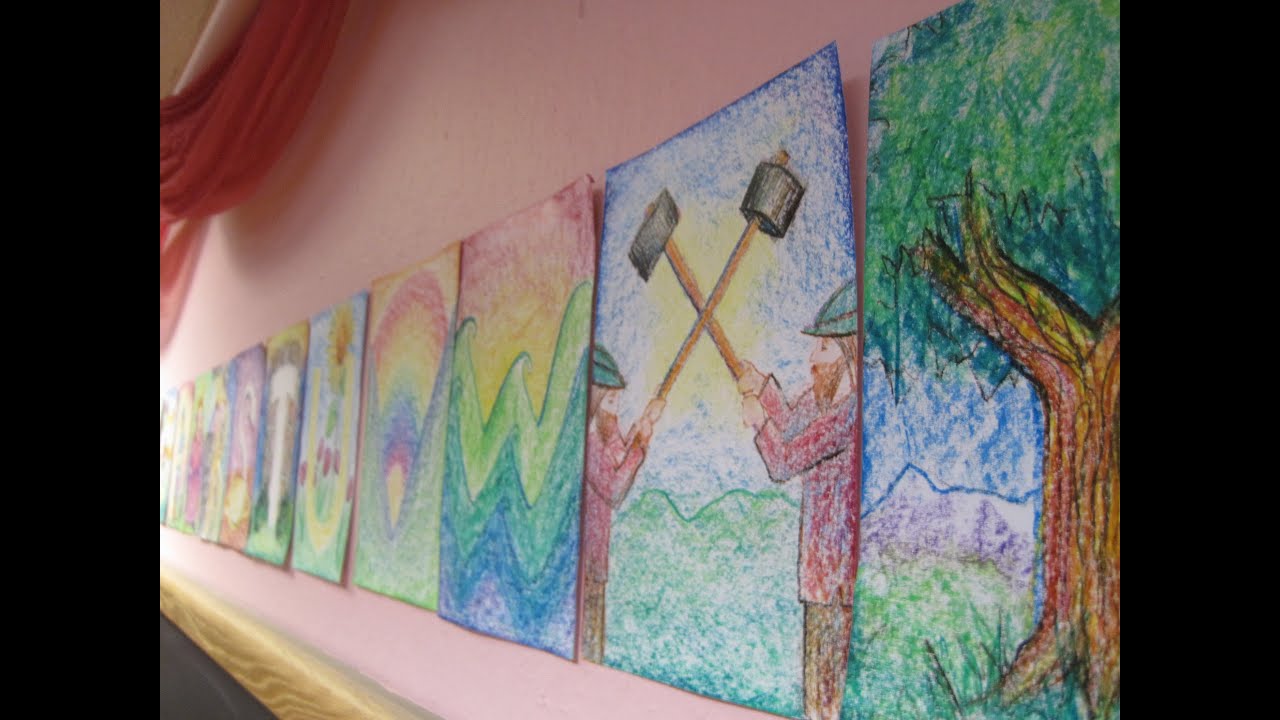
Eurythmy