Home Blog Page 278

Redefining the Sacred Masculine

“When the Sacred Masculine is combined with the sacred feminine inside each of us, we create the ‘sacred marriage’ of compassion and passion in ourselves.” ~ Matthew Fox

The age of armored masculinity is dead and dying at our feet. It’s a bloody tangle of weaponry and bloated egos glued together by myopic one-upmanship and congealed rage.

But buried in the rot and decay are the seeds of a new way of being a man in this world, a reawakening of our awareness of the sacred brought on by the reemergence of the divine feminine. No amount of armor can suppress it. No amount of weaponry can keep it at bay.

The New Shiva is growing robust and powerful alongside the New Shakti. The world may not be ready for this New Man to emerge, but emerge he must, if we are to continue living on a planet which is demanding that a healthier more sustainable man appear.

In the same way that both men and women have a feminine aspect, so too do both genders have a masculine aspect. According to analytical psychologist Carl Jung, the feminine aspect of a man is called the anima and the masculine aspect of a woman is called the animus. The New Man, this Shiva incarnate, has the ability to tap into his anima, thereby awakening the divine energy of Shakti from its unconscious state into a state of conscious awareness.

He uses this energy to create rather than destroy, to catalyze rather than militarize, to heal instead of injure. He understands, as Andrea Gibson wrote, “We have to create. It is the only thing louder than destruction.” And so he continually creates ever-changing arenas for further creation.

For thousands of years mankind has been afraid of the light. Even Plato recognized it in his day, saying, “We can easily forgive a child who is afraid of the dark; the real tragedy of life is when men are afraid of the light.” No more.

The redefining of the sacred male principle is the dawn of a new vibrant light, a mature masculinity that is not abusive, domineering or grandiose, but generative, creative, and empowering.

-creative-surreal-and-dark-art-piecesHe is vulnerable without shame, revealing that his now discarded armor of invulnerability was nothing more than an illusion that hid his true power. He is now free and open to rediscover and reconnect with the power of nature and the cosmos. Tanks be damned. Warmongers be damned.

He is ready to establish true relationships with authenticity and integrity. The Great Mystery moves through him, reminding him constantly that he is it and it is him. He is a force of nature first, a man second, the spear of Gaia herself. And no amount of perceived invulnerability can guard against it.

Without the parochial armor of old weighing him down, he frees himself to honor the path of descent, where he engages with the unconscious underworld and is initiated by the Great Mystery itself.

Through this initiation he discovers his anima. He discovers his shadow. He discovers a plethora of sub-selves all in contention for his subconscious.

He learns how to make them all conscious. He learns how to wrestle with them, engage with them, play with them, ushering in the beginning of his individuation.

After his initiation he takes the first steps toward self-actualization, leaving behind the codependence of his youth and the independence of his courage, and engaging soulfully with the interdependence of his divine masculinity.

He has gone from New Man to New God in a mighty feat of self-overcoming that he realizes will require many more feats of the same.

Together with the Sacred feminine, this New God is prepared to engage with the world in a way never before seen. He is Whitman’s multitudes, Goethe’s Faust, Shelly’s Prometheus, Camus’ Sisyphus, and Nietzsche’s Übermensch.

reclaiming-sacred-masculineHe is Robert Moore’s King, Warrior, Magician, and Lover all wrapped up into one overtly evolving creature. Animal happy, he is Iron John, Wild Man, Father Sky, and Green Man. He is eco-systemic, soul-centric, the prolific planter of the seeds of healthy sustainable change.

He rides alongside the fifth horseman of the apocalypse, protecting her when need be, but mostly empowering her and helping her to see that she is the most powerful thing to ever have existed on the planet.

He is the tip of the spear, self-overcoming and constantly adapting to the constantly changing “air” he flies through. He understands, as Jennifer Ratner-Rosenhagen said, “The real struggle of the heroic individual is not solely to liberate himself from conflict with society, but rather to use the conflict within himself as a source for self-regeneration.”

He is a lover par excellence. But he understands – balls to bones – that love does not imply pacifism. His love is his honor, his honesty, and his sincerity in an otherwise dishonorable, dishonest, and insincere world. He has learned how to swallow his pride. He has learned how to forgive.

Indeed, he has learned to forgive all things, not because all things are worthy of forgiveness, but because he is worthy of peace. And through such vulnerable forgiveness, his love shines like a mighty beacon of hope for others.

He understands that love is a double-edged sword, with which he chooses to stab himself, over and over again, in order to discover the harsh pain of Truth. He accepts that true love is a beautiful annihilation. Like Ken Wilber said, “Real love will take you far beyond yourself; and therefore real love will devastate you.”
Shiva
In the end, the sacred masculine exists precisely because of such devastation, rising up from the ashes like his sister the Phoenix. The outdated modes of power that came before him, militaristic and uncouth, are the ashes from which he gathers himself into a force to be reckoned with, a new power that will turn the tables on mankind’s notions of power hitherto.

A power that will co-create a new breed of Hero who has the capacity to expiate his power in order to become a prestigious game changer as opposed to merely a powerful game controller; a truly robust infinite player with the ability to play multiple finite games while respecting the overall infinite game of life.

Militaristic men beware; the time for congratulating yourselves on being conquerors of the world will soon be at an end. Your unsustainable ideals and parochial idols are fast disintegrating all around you.

Soon there will be nothing left of your so-called invulnerable constructs of power. It’s time to make way for the healthy New Man, the vulnerable New God, and the truer power of the sacred masculine.

Image source:

Android Jones
Nietzsche quote
Desperation by Antonina
Divine Union

How to be Confident while Remaining Humble

 “There’s a thin line between confidence and arrogance…it’s called humility. Confidence smiles, arrogance smirks” ~ Unknown

Somewhere along the line, what we recognized as confidence may have been misconstrued a little. We started associating traits like aggressive, loud, opinionated and arrogant with being a confident person. You’ve probably seen the type, or maybe you are the type.

They know FOR SURE that what they believe is the unequivocal truth. Therefore, they need to tell everyone about it…constantly.

When they aren’t able to convince someone to believe exactly as they believe, they may be caught calling others, “asleep” or a “sheep” or any other plethora of derogatory names that I probably can’t mention here. We also may have misconstrued what it means to be humble a little bit, too. Being Humble is associated with weak, shy, meek, and someone who cowers to others.

Someone who is so unsure of themselves or their beliefs that they keep them to themselves and are too insecure to tell everyone they meet their opinion on everything. Is there a way to be both?

Can a confident person also be a humble person? In order to answer that question, we must dissect what it means to be truly confident, and how does “artificial confidence” come about.

“Because one believes in oneself, one doesn’t try to convince others. Because one is content with oneself, doesn’t need others’ approval. Because one accepts oneself the whole world accepts him or her” ~ Lao Tzu

There are many reasons a person may develop artificial/arrogant confidence. One may be cognitive dissonance, which means they may be holding on to a belief so tightly that when evidence is presented that contradicts this belief, they may be completely unwilling to look at the new evidence. They may have become so attached to this belief that it has become a part of their sense of self.

humility-confidence

Since they are completely attached to who they think they are, it may be a painful experience for them to open their mind up and see things from a different perspective. The actual energy behind holding on to a belief so tightly that you are unwilling to let it go is fear.

The human ego is always afraid to be found out, so to speak, therefore, any threat of someone or something coming along and debunking one of its belief attachments may bring about a negative emotional reaction such as anger. Anytime anger is involved, we can be assured that fear is the culprit behind it.

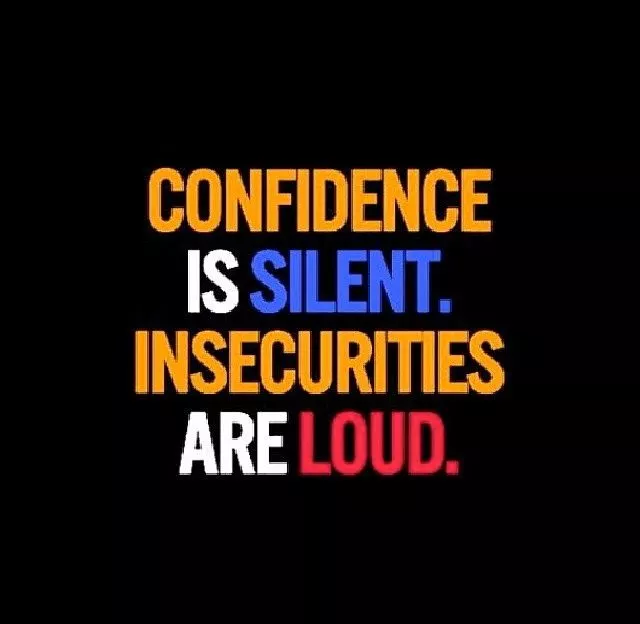
Genuine confidence doesn’t need to get angry because there is no part that fears being wrong or that others aren’t believing them. Another reason a person may develop artificial confidence is because they are insecure.

An insecure person may not truly believe in their theory or themselves, so they feel if they can convince others that they are absolutely the right one, they can at the same time convince themselves.

This is often done in an aggressive manner, because they are attached to the outcome of people believing them. Again, the fear behind not achieving the outcome they desire is causing them to act in a rude or aggressive manner. Genuine confidence can remain quiet, kind and humble because there is no underlying fear that needs other people to believe exactly what they are saying.

Genuine confidence is humble. It kind of realizes that most people are operating from their own level of understanding, and trying to convince them that they are “stupid” or “wrong” usually won’t work anyway. The humble part of them realizes that LIVING and BEING their truth is always more effective than incessant talking or convincing ever will be.

Also, humble confidence isn’t attached to being right. In fact, it happily welcomes new ideas and beliefs because it knows that only when it opens itself up to seeing things from all perspectives is it able to perhaps learn something new.

“The time which people spend in convincing others, even half of this time if they spend on themselves, then they can achieve a lot in life.” ~ Arvind Katoch

In order to maintain humble confidence about our beliefs, we must do two things. One is to question ourselves….constantly. You may ask yourself, “Do I know absolutely without a doubt that this belief is true?” Meaning, “Did I see it with my own eyes”- normally the answer to this will be no.

So not to say that you won’t have some beliefs about things that involve situations that you weren’t physically there, but it just means that you always maintain a healthy sense of doubt about your beliefs.

This doesn’t mean that you’re unsure of yourself, it means you are wise, because it means you are open to hearing new evidence. Or you can ask yourself, “Is it possible that I am so attached to this belief that it has become a part of who I think I am?” Or even, “Does it matter if the person I am telling about my belief believes me or not? In this present moment, does the fact that they are convinced or not convinced change anything in this exact moment in time?”

humble-confidence

You may find that most of the time, the answer to that is “no.” The other thing a person can do in order to remain humbly confident in their beliefs is to realize that every person they come in contact with can only understand things from their own level of understanding. Which means they are only operating from their own personal programming, which may or may not be completely different from yours.

So yes, there may be times when you tell someone something, and you enlighten them to something that they hadn’t thought of before, but there will also be times when any effort to convince will fall on deaf ears.

When you are unattached to the outcome, you will be fine with either without getting frustrated or angered. Once we realize that our “truth” may not be someone else’s “truth” we can completely relax into interpersonal relationships and take every interaction with a human being as a potential learning experience, which will allow us to always be learning and growing as a person.

Image Source

Humble Confidence
Quote
Silent and Confidence

A Perfect Beginner’s Lesson in Yoga

1

“Words fail to express the total value of yoga. It has to be experienced.” ~ B.K.S. Iyenger

A ballad with eternal music and perennial flow, yoga is an art form which requires commitment to the self, for the self & through the self. Practicing yoga regularly requires dedication, inclination and aptitude. It is an experience to be lived and felt.

beginner's lesson in yogaBut yoga is never love at first sight or in this case in the first class. Just like a relationship, it needs regularity, communication, patience and loyalty. From third or fourth class, it would grow on you and after 10th class, yoga will consume you.

A committed relationship is what I would say, starts to build. However, in order to reach to the 10th class, we have to start with the first.

Here is a list of 8 asanas (body postures) for freshers to ignite the yogic passion, enjoy this beginner’s lesson in yoga ~

1) Palm tree pose:

A grounding pose, Palm tree posture or Tadasana forms the foundation for many advance postures to follow. Activating the nervous system, it helps in achieving better posture, opening the lungs and strengthening the whole body.

Palm-Tree-Pose-Tadasana2
Palm Tree Pose or Tadasana

How to: Stand with the feet shoulder width apart and raise the arms above your head. Interlock the fingers with palms facing the ceiling. Now fix the gaze at one point, squeak the abdomen, lift the rib cage and heels up. Stay here for 5 breaths and slowly come down. Repeat 2-3 times in the beginning to prepare the body.

Contraindications: People suffering from head ache, low BP and insomnia should avoid this posture.

2) Hand to Foot pose:

Padahasthasana or standing forward bend pose, works deeply on the legs, it opens up the hamstrings, tones the abdomen, increases flow of the blood to the brain and face (inverted), stretches the spine etc. It is also repeated twice in each Surya Namaskar round.

Hand-Under-Foot-Pose- Padahasthasana
Hand Under Foot Pose or Padahasthasana

How to: A great beginner’s pose, start with bringing your feet together and arms on your side. Bring the back forward to 90 degrees, slowly try and touch the hands to the feet first (depends on your flexibility, go slow if you can’t do it initially).

Once the feet touches the ground, only then put the hands underneath the feet and go all the way down. Slowly try to bend the elbows 90 degrees outside. One can also micro bend their knees initially. This is a step-by-step process. Work on one level first and after a few days move towards the second.

Contraindications: People suffering from severe back pain, high BP, heart ailments & hernia should avoid this pose.

3) Plank pose:

Chaturanga Dandasana, is another beginner pose, essential in Ashtanga Yoga and also forms part of the sequence in Surya Namaskar. It is useful in toning the entire body including abdominal muscles and lower back, building arm strength, core strength, wrist flexibility and spinal balance.
chaturanga-asana-Plank-pose
How to: Starting with forward bend, gently take one leg back straight followed by the other. Now bring the shoulder just above the wrist. First with elbows straight, this is a high plank. Now, gently bend the elbows to 90 degrees and shoulder a little ahead to come in a low plank.

The hands should be firmly placed with fingers spread & body weight on the toes. The whole body will now be one straight line without dropping the belly. Hold for 10-30 seconds, and then lower your body all the way to the mat and rest.

Contraindications: People suffering from wrist, shoulder or elbow injuries and pregnant women should avoid this pose. If you do not have the strength to do the pose in proper alignment, practice Half Chaturanga where your knees touch the ground.

4) Downward Dog:

Adho mukha svasana is an integral posture in Sun salutations (Surya namaskars) and in Ashtanga Vinayasa. It’s named after the way dogs naturally stretch their entire body. A semi inverted pose, it strengthens the upper body, builds bone density, reduces stress, increases the flow of blood to the brain, boosts the immune system and reduces stiffness in back.

Regular practice of this pose can improve digestion, relieve back pain, and help prevent osteoporosis. It is also known to be therapeutic for sinusitis, asthma, flat feet, and for the symptoms of menopause.

downward-dog-pose-Adho-mukha-svasana
Downward dog pose or Adho mukha svasana

How to: Come in plank pose, as described above and now lift the hips up towards the ceiling. The body will make an inverted ‘V’. Bring the gaze on the navel centre and make sure the fingers are separate & pressed on the floor. This pose is all about upper body strength, so the shoulders are not to be scrunched towards the ears but relaxed.

Contraindications: People suffering from high BP, pregnant women (third trimester), shoulder, wrist & back injuries should not perform this posture.

5) Cobra pose:

Bhujangasana a back bend is a snake-shaped pose. It is useful in alleviating back pain, building arm strength, toning the upper body, reducing weight, improves blood circulation and reduces fatigue and stress.

Bhujangasana-cobra-pose
Bhujangasana or cobra pose

How to: Lie on your stomach with your toes flat on the floor and forehead resting on the ground. Bring your hands close to your body near the chest, with elbows sticking to the chest area. Spread the fingers, even out the weight, rotate the shoulders back and lift the torso up as you inhale. Remember, the elbows should bend in 90 degrees and stick to the chest. Stay here for 5 breaths, come down and relax, repeat.

Contraindications: People suffering from back, wrist & shoulder injury, pregnant women or recent abdominal operations should avoid this.

6) Warrior I:

Virabhadrasana-I, it lives up to its name. Just like a warrior has a strong, toned body, a broad chest with high lung capacity, shoulder strength and a confident personality. This posture bestows similar benefits – it strengthens the arms, shoulders, thighs and back muscles, all in one go.

Warrior Pose-I-Virabhadrasana
Warrior Pose I or Virabhadrasana I

How to: Beginning in a high lunge, bring one leg forward and bend the knee perpendicular to the floor. The bent knee should be in line with the toe and not ahead of it. The foot of the leg ahead should point straight, whereas the leg behind should be 45-60 degrees facing.

Right leg in line with the left, raise both hands above the head and make a Namaste mudra from the hands. Lastly, arch the back a little to create space in the chest & look up.

Contraindications: People suffering from high BP, heart ailments, hip, and ankle injury should avoid this pose. Also, students with neck injuries should not look up.

7) Cat pose:

Every animal has something to teach us in Yoga. Like Marjariasana, a deep back bend that incorporates the feline stretch in your yoga practice. Cat pose is responsible for making the spine flexible, strong and active. It reduces extra flesh from the abdomen and back, improves digestion, as well as blood circulation.

cat-pose-Marjariasana
Cat pose or Marjariasana

How to: Come into a table top format with hands perpendicular, underneath shoulders & in line with the legs. Also, the hip and legs should be in one line. Now, inhale deeply and look up while you create an arch in your back & raise the hips up. Hold here for 2-3 seconds. Exhale, scrunch the back looking down & bring the hip down.

Contraindications: People suffering from neck injuries should make sure that their head and torso is in one line.

8) Corpse pose:

Savasana, just like most asanas, justifies its name. It is a position of rest and relaxation, and is usually practiced towards the end of a yoga session to bring the body to a normal level. But unlike what we think it is, this is the hardest of all poses. A treasure bestowing a long range of benefits, calms the senses, reduces insomnia, blood pressure, increases concentration and great for meditation.

Savasana-Corpse-Pose
Savasana or Corpse Pose

How to: Simply lying down is not the way to do it. Lie down flat on your back, with legs and feet 3 to 4 feet apart and palms facing upward. Now bend your knees again, fill the space between floor & back, by sliding just the back a bit down.

No movement is appreciated, but in case of discomfort, one may move to get into the pose correctly. Keep your eyes closed and feel energised with each breath.

Contraindications: Pregnant women can use a pillow under their head. People suffering from back pain can bend their knees and keep a blanket under their lower back to fill the gap between the floor and their back.

Always work within your own range of limits and abilities. If you have any medical concerns, talk with your doctor before practicing yoga. Be steady and easy in a posture, yoga is not about performing it right; it is an art of acceptance.

By accepting the self, showing patience and dedication, this treasure can be utilized to harness immense power & benefits. Practice is the way to this wealth. So roll out the mat, begin today or should I say stop, drop and yoga? Find your inspiration and work towards those goals.

Image Source

Karmym art
Zaglar quote
Tadasana
Hand Under Foot
Chaturanga
Downward Dog
Cat Pose/Savasana

6 Signs You May be a Peaceful Warrior

11

“Keep me away from the wisdom which does not cry, the philosophy which does not laugh and the greatness which does not bow before children.” ~ Khalil Gibran

Peaceful warriors are honorable, courageous and compassionate human beings who make a difference by having lived and lived well.

Peaceful warriors are time-tested and pain-sharpened; having gone through hell in order to discover that heaven is within. Wisdom gained through tears.

Philosophy gained through laughter. Greatness gained through virtue. Strength gained through discipline. Peaceful warriors grab power by the throat and shake it into a state of humility, while also hugging the world in a mighty embrace of love and compassion.

They bring value to valueless systems while also adding value where it already thrives. Peaceful warriors are more than words can portray.

Nevertheless, here are six signs you may be a peaceful warrior.

1.) You speak truth to power and always question authority

“Few people are capable of expressing with equanimity opinions which differ from the prejudices of their social environment. Most people are even incapable of forming such opinions.” ~ Albert Einstein

speak-truth

You understand that the social environment can be an immensely suppressing thing. It can dictate more than most people imagine. And nowhere is it more dictatorial than in hierarchies of control.

As it stands, most modern day systems are hierarchies of control. In order not to become a victim of such hierarchies, you use your courage as a weapon against suppression. This courage can take on the form of bold audacity and fearless insouciance in the face of rigid rules and unbending regulations.

It can take on the form of confident questioning in the face of authority, which verges on impudence. It can take on the form of curious prying into the affairs of power, tantamount to interrogation. It can take on many forms, but it always challenges the powers-that-be to improve itself for the greater health and benefit of humankind.

As a peaceful warrior, you understand the need to persistently loosen the links that make up the chain of command. Not in order to bring it down, necessarily, but in order to strengthen the leadership withstanding, as well as to instill leadership notwithstanding.

You are not intent upon creating followers. You are fully intent upon creating leaders –top to bottom, bottom to top. And you always begin with yourself.

As a peaceful warrior you understand as Niels Bohr did that, “Every valuable human being must be a radical and a rebel, for what he must aim at is to make things better than they are.”

2.) You fight for the brothers and sisters next to you, not for the chain of command

“The greatest gift you can give someone is your own personal development. I used to say, ‘If you will take care of me I will take care of you.’ Now I say, ‘I will take care of me for you, if you will take care of you for me.’” ~ Jim Rohn

You understand that a true warrior does not fight for the chain of command, blindly following orders. A true warrior fights for the brother or sister next to him, challenging orders if need be.

In the movie Lone Survivor, starring Mark Wahlberg and portraying the courageous story of Marcus Latrell and Seal Team 10, there is a scene (see attached video) where Matthew “Axe” Axelson says, “I don’t care about the rules of engagement. I care about you, I care about you, and I care about you.”

Although his reasoning is off in this scene, his message is a powerful one: screw the chain of command. You’re my brother. I fight for you. As such, peaceful warriors keep themselves in the best possible shape –mind, body, and soul– in order to be capable of protecting and defending themselves and their fellow man when the proverbial shit hits the proverbial fan.

Peaceful warriors are not about following so called rules of engagement. They are about proactively engaging in order to improve upon existing rules. They don’t go on the offensive because they are told to.

They go on the defensive, proactively, because they are compelled to keep their fellow brothers and sisters free. The problem with this scene in particular is a moral one, and two of the greatest problems we face in the world today: militarism, and how some people’s lives are considered more important than others.

As it turns out, the true hero of this story was not the lone surviving Seal, who was militaristic in nature, but Mohammad Gulab, an Afghan villager and a true peaceful warrior who saved the life of Marcus Latrell (more than once), despite the deadly power of the Taliban constantly surrounding his village.

He rose to the challenge with a full heart, defending what he thought was right, despite the powers-that-be.

3.) You use systems of power to your advantage and then turn the tables

“When the people fear their government, there is tyranny; when the government fears the people, there is liberty.” ~ Thomas Jefferson

are you

Nowhere is it written that you cannot use things as a means to an end. And even if it were written somewhere, you would overcome it by adapting to it, rewriting it, and then using it to your own advantage. Good intention is the key.

Whether through school or through the military, you adapt and overcome with the intent of immersing into the systems of power that keep it all propped up, and with the full intent of absorbing as much knowledge as possible in order to eventually use such knowledge to change the system, fully understanding that such change will more than likely go against the existing power structure from which you originally received the knowledge.

As a peaceful warrior, you keep the horse in front of the cart through persistent discipline within particular systems of control in order to one day use the knowledge gained to improve the system for the better, this with the understanding that the system will more than likely not want to change. But you understand that it must change if people are to survive and evolve on a planet that is itself constantly changing and evolving.

Your perseverance will further instill bravery within the already courageous, while keeping the cowards in check despite themselves, and also teaching the powers-that-be a little humility. And it may even have the power to transform cowards into heroes.

Like Henry Wadsworth Longfellow said, “Perseverance is a great element of success. If you only knock long enough and loud enough at the gate, you are sure to wake up somebody.”

4.) You seek absolute vulnerability as opposed to secure invulnerability

“Only to the extent that we can expose ourselves over and over to annihilation can that which is destructible in us be found.” ~ Pema Chodron

You are adept at transforming mistakes into wisdom and fear into courage. You do so not to become a secure invulnerable tank, fearful and certain, but to revel in being an insecure vulnerable human being, courageous and uncertain within a fascinating but ultimately uncertain universe.

You understand that this means failing and failing often, but that the failure will make you stronger as long as you are consistently learning from your mistakes and adapting to and overcoming precarious environments.

Like Willa Cather said, “There are some things you learn best in calm, and some in storm.”

peaceful-warrior

As a peaceful warrior, you have the ability to learn from both the calm and the storm. As a seeker of absolute vulnerability, you are not paranoid, and hell bent on safety. Rather, you are a proponent of Pronoia (the positive counterpart of paranoia) and hell bent on adventure.

You understand that “safety” is usually a persistent cultural spell that must be broken by individuals who seek freedom from social control.

As such, your absolute vulnerability directly challenges and stretches comfort zones, both your own and the ones set in place to keep people suppressed and controlled, like the illusion of borders for example, or the law, or the myopic concept of nationality.

You challenge them all through your courage to be absolutely vulnerable in the face of the illusion of invulnerability.

5.) You are an advocate for nonviolence and civil disobedience

“Civil disobedience is a natural response to a world like ours; it means refusing to be a bystander to the apparent trajectory of the social order. We don’t think twice about the direct action of stopping traffic to protect a child who wandered into it unknowingly; we would practice civil disobedience any day in situations like that, never thinking of standing by or waiting for a majority vote.

The same is true in our movement. We know this system is broken, we know it doesn’t have to be this way and we know there is an alternative. So we stop traffic. The question is not whether we should use civil disobedience as part of our movement’s arsenal — but how, for what, and when.” ~ Yotam Marom

As a peaceful warrior you understand, as Noam Chomsky did, that, “States are not moral agents; people are.” As such, you are a moral agent (and sometimes even an amoral agent) on behalf of the people, and never on behalf of the state.

In a world where drones are creating more terrorists than they are killing, you understand that this makes us all terrorists by association.

But just because our governments have absolute power that has corrupted absolutely, doesn’t get us, as citizens thereby governed, off the hook for being irresponsible with our own power.

Like Howard Zinn wrote, “Civil disobedience is not our problem. Our problem is civil obedience.”

As a peaceful warrior, you understand that in order to be responsible with your own power you must be willing and able to use civil disobedience as a nonviolent tool toward ending the vicious cycle of war and violence.

Like Richard Seymour said, “The key question is neither violence nor non-violence, neither legality, nor illegality; it is disruption. Popular movements are engaged in civil disobedience whenever they recognize the society’s dependence on their co-operation, cease co-operating, and actively disrupt its smooth functioning. This moves politicians to spittle-lathered furor. It is the way in which progress is made.”

As a peaceful warrior, you are always proactively engaged in making healthy progress.

6.) You are an autonomous pioneer as opposed to an adjusted settler

“You can recognize a pioneer by the arrows in his back.” ~ Beverly Rubic

479159

You are a forerunner, constantly breaking ground and pushing to innovate where stagnation abounds. And although you are surrounded by adjusted settlers who are hell-bent on remaining stagnant within their creature comforts and secure domains, you persevere nonetheless, knowing that the ability to adapt and overcome is as much for their benefit as it is for yours.

Your autonomy affords you a flexible liberation that those who are dependent on the system simply cannot fathom. And so it is that you are able to withstand the occasional “arrow in the back.”

Like Jonathan Swift said, “When a true genius appears in the world, you may know him by this sign: that the dunces are all in confederacy against him.”

As an autonomous pioneer, you have taken on the duty of transforming this confederacy of dunces into a league of champions. And although you are in the minority of inner-directed pioneers, you are a catalyst (a Mover) who seeks to move the majority of settlers into a state of proactive citizenry.

You know that there is a tipping point that only requires ten-percent of the population to tip over into change, and you intend on making that change a healthy one through your own proactive engagement with the world, using the full range of your arsenal, your entire Soulcraftman’s Toolkit, to challenge the people of the world into changing and adapting to healthier ways of evolving in a universe that is constantly changing and evolving.

In the end, you are a pioneer of the tipping point, a tiny creature in a gigantic universe, both with the power and the responsibility to make an enormous difference in the way that universe plays out; because you understand, as only a peaceful warrior can, that you are the universe and the universe is you.

Image sources:

Banksy

Why Your Version of God is the Right One…for YOU

27

 “There are hundreds of paths up the mountain, all leading to the same place, so it doesn’t matter which path you take. The only person wasting time is the one who runs around the mountain telling everyone that her or his path is wrong.” ~ Hindu Proverb

Everything is God. God is all there is. Just let that sink in for a second. There is no other material or fabric to make anything in this universe out of other than the fabric of God. Every person, every leaf on a tree, every planet, it’s all God.

Nothing can exist independently of God since it would be impossible for something to exist that is not made from the only material there is to make anything out of. It has been said that God created us in his image and likeness.

So if we are made from the very fabric that God itself is made of and if we have the power to create just like God does, then technically we can choose to create our version of how we see and experience God. Not only this, but we must know that our perception and image of our God may not be the exact same as the next person’s and that’s ok.

There is no “right” way or “wrong” way to experience God. Even if a person chooses to exist in a reality where God does not exist, such as an atheist, this is not wrong either. They are just choosing to experience God in a “non-God” way.

god-is-all-there-isAnother person may choose to experience God in a way that their God punishes them for sinning and blesses them for resisting temptation, this is also not wrong. Another person may choose to call God “the universe” and experience God in a more metaphysical way as more of a frequency and not a “person” per se.

Again, this is neither wrong nor is it right. It simply is just one way to experience and perceive the “all that is”. Since there are over 7 billion people living on the planet, there is 7 billion different ways to experience God.

And even though there are groups of people that may experience or see their God in a similar fashion, no one person will experience God in the EXACT same way as the next person, because God is a completely personal experience. The problem arises when we see that our way to see God is the ONLY way.

Many people believe that their version of God is the absolute and ultimate true God and that they do not have a choice in how to experience God. So they waste precious time judging others or calling out other people because their beliefs may be different from theirs.

In actuality the ultimate “truth” is that there is no “ultimate truth” while at the same time everything that exists is its own ultimate truth. There is one thing that causes us suffering in this world, and that is the illusion that we are not made from God.

The illusion that God itself is a separate entity outside us that we must prove ourselves to, or we must seek and find him, when in actuality it is right there inside every single one of us.

“We are here to awaken from the illusion of our separateness.” ~ Thich Nhat Hanh

“The ultimate reality is that there is no separate self. If you believe that God is outside of yourself, then you are not embracing the absolute law, but an inferior teaching.” ~ Buddha

“The kingdom of heaven is within.” ~ Jesus

Create-God-in-YOUR-image-and-likenessIt doesn’t really matter which spiritual teacher we choose, but almost all say the same thing. God is within us. God is not separate from us. This isn’t something that we just can know and that’s it, but it is a level of consciousness that we must reach.

This is why so many of us can intellectually know this, but we still seem to get caught up in the trivialities of everyday life. We still get angry when someone cuts us off on the road, we still worry about getting our bills paid on time, and we still get slightly perturbed when someone tries to push their version of God on to us.

If we TRULY were existing at the level of consciousness that we KNEW we were God, things like traffic jams and bills and hearing other people’s views on religion probably wouldn’t have the power to upset us in the slightest way.

We would be able to see ourselves in all of it and realize that our perception of everything is creating our reality in 3d, but that our perception of things is not everyone’s perception of things.

However, the closer we get to seeing that oneness with all is the ultimate truth, the fewer things like this have power to take away our inner peace. We stop judging things as good and bad, but just see that everything just is… and that all is perfect.

Oneness allows for everyone and everything, while our illusion of separateness tells us that we are not yet perfect, or happy, or peaceful and that we must struggle and try to become what we believe we are not.

But that’s all ok, it’s all part of the fun of getting to experience God in our own way, and to navigate through life coming back to who we already are at our core.

Unlearning everything we thought we “knew” about who or what we are and breaking down old paradigms and beliefs down to the point where we can see that any belief system that has us believing that there is an unequivocal right and wrong way to perceive God is simply not possible. Not when God is all there is.

Create your God however you wish. You may call your God “Allah”, or maybe you call him “Jesus” or maybe you call your God “Steve”, the name doesn’t really matter. But just as sure as you are that your version of God is the best one, so does the next person think the same thing. And technically, you are both right.

God always manifests itself in the absolute perfect way for each individual person. So know that your way is perfect for you…. But also, so is mine perfect for me.

Image Source

Illusion
Nebula
Stardust