Home Blog Page 292

Expanding the Notion of our Senses

0

In this article we shall try to unravel the true nature of our senses and the relationship between them and our own self. To do this we shall take a closer look at the way they work – both biologically and psychologically.

Lets start with some considerations on what they are, how they interact with the mind and so on, and then look into each of the senses – there are more than five!


By touching on strange phenomena related to each senses such as illusions, sensory leakage and some tweaks that can be made through technology, we seek to present a detailed panorama on the wonderful world of senses.

Senses are complex structures belonging to the nervous system, whose job is to provide the much-needed data for perception.

Traditionally it is believed that there are five senses – smell, touch, taste, hearing and sight; while others list chronoperception (the perception and experience of the passage of time) and nocioperception (the perception of damage in our tissues that result in pain) as entirely valid senses.

perceiving-bananas

Our senses have physiological features that feed information to our brain, which in turn uses it to construct the image of our reality – the world we live in, our own self, and others.

The information provided by the senses is an important part, but it doesn’t include all the elements that take place in the construction of “reality”, other things like ideas, also play a crucial role as we shall see below.

Senses at the Border of the Two Realms: the Objective and the Subjective

Our perception of the world will always take place through some sort of sensory organ, that is sensitive to several types of stimuli. For example our eyesight works by capturing the light that bounces out of objects and our nose is sensitive to the chemical compounds floating in the air.

Medical-Diagram-Descartes-Vision-and-visual-perception-1024x811
Medical Diagram of Descartes Vision and Visual Perception

This means that the senses are transducers – converting signals from one type to another. This is true in two ways – first the senses convert the diverse signals into electrical impulses, and in the second way, the senses go from receiving electrical impulses to turning them into subjective experiences.

It is, thus, one of the few places where the gap between the objective and the subjective is bridged. Like consciousness that emerges from the brain in rather mysterious ways, the senses bring up subjective experiences in the canvas of consciousness, giving rise to qualia.

Qualia are specific instances of subjective and conscious experiences. It is the “what is it like” of our mental states. For example, what is it like to feel pain or what is it like to see the color purple are qualias, which are in turn the building blocks of our perception.

According to Daniel Dennett, they have the following properties:

  1. ineffable; that is, they cannot be communicated, or apprehended by any other means than direct experience
  2. intrinsic; they do not change depending on one’s experience relating to other things
  3. private; that is, all interpersonal comparisons of qualia are systematically impossible
  4. immediately apprehensible in consciousness; that is, to experience a qualia is also to know that it is

What we Perceive is the Phenomena and not the Thing in itself

consciousness2

It is important to understand that how we perceive the world is not as the world is, but rather, as it appears to us. The qualias that dwell in our perception are subjective representation of those things that are out there in the world, but they are, after all, representations.

Philosopher Kant made an incisive distinction in this field. He said what we experience is what is shown to us, and is therefore a phenomena, but the things as they are per se, will always be unknowable (the noumenon).

Think of it like this, when we put on sun glasses, things seem much more obscure; and when we put on glasses of a different color, we will see the world tinted of that color. In a similar way, our senses will always tint the perceived thing, making us impossible to access things in a “pure way”.

Our Senses give us just a Small Fraction of the Available Information

There is so much data that the world is “emitting” than what we are able to “capture” with our senses. What we perceive, is but a tiny fraction of the diverse types of energies that are out there.

The world emits a wide range of signals, but our system has evolved in such a way that it only captures some of the information, specially that which has made it fit for survival (from a Darwinian perspective).

For example, our hearing is the way in which we have come to utilize the vibrational signals, and our hearing range goes from about 30 oscillations per second to 18,000 thousand, but some animals such as dogs, can hear sounds that are three times above our hearing range; others, like bats can hear sounds that are twenty times above ours!

The same happens with other senses, like sight. dog_color_vision Our visible spectrum comprises colors of the rainbow, but frequencies that are above and below, are not perceivable by us. There are, however, some animals that can see more bands of the spectrum (like bees who can see ultraviolet light) and some that can see less (like dogs who can only see green and blue colours).

Other animals have completely different senses from ours. For example, pigeons can detect the magnetic fields of the Earth! It is a true challenge for the imagination to try to construct a “how it would be like” image of how the world is perceived with different senses.

The Senses give us Undifferentiated Information, its our Mind that Organizes it

The senses just feed information to our brain, it is the brain that organizes and interprets them. For example, when we are in a crowd, there can be several conversations happening around us, and all the conversations within our hearing range, are hitting our eardrum.

But if we do not pay attention to them, they might appear to us as undifferentiated voices. It is only when we pay attention to one conversation that it becomes clear. In a similar fashion there are millions of stimuli that our brain is receiving. It is from this raw material that the mind constructs objects, and ultimately the world.
spinning_lady
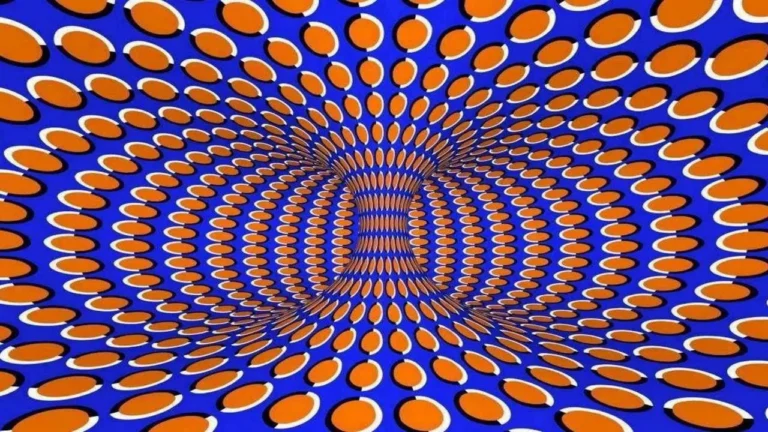
Take for example this following picture – note that it can be seen in two ways. The sense of sight is providing information of lines and some colors, but it is the mind that assembles this data and constructs, not only the shape, but also the motion.

For you, is it rotating towards the left or towards the right?

Shapes, colors, textures adorn our reality. Our human experience is, inherently, subjective experience; meaning that the world will always appear with some specific qualities that are dependent not only on the sensorial input we get from our senses, but also, the way our mind assembles them into objects.

Gestalt Psychology highlights that individuals perceive objects such as shapes, letters, pictures, etc., as being whole when they are not complete. Like the rabbit–duck illusion is an image that can be seen in two ways. It is possible for someone who hasn’t seen either a duck or a rabbit before, to not see it at all. Duck-Rabbit_illusion

The Relationship between the Senses and the Self

The true nature of our senses has been a subject of much pondering, especially in relation to our Self. If we take a look to what sensations are, they are always changing, but not, our essence.

Our self remains despite the information that our senses are delivering. Because of this, it has been thought that the senses do not influence what we are at a deep level; they might not touch the core.

People have developed thought experiments in order to separate one from another. For example, in the 9th century, Avicena, a prominent philosopher of the Islamic tradition, devised the experiment known as the “the floating man”, in order to affirm that humans are incapable of doubting their own consciousness even if they were isolated from all sensory input since birth.

Because it is conceivable that a person, suspended in air while cut off from sense experience, would still be capable of determining his own existence, the thought experiment points to the conclusions that the soul is a perfection, independent of the body, and an immaterial substance.

Probably, the closest thing that we can get to this hypothetical setting are the isolation tanks, also called sensory deprivation tank. They are lightless, soundproofed capsules where subjects lay in salt water at skin temperature. They have various usages and therapeutic effects, but also, hallucinations are frequent.

Others have stated that the information the body provides is essential for the way our mind is configured. Like in the case of ‘Phantom limbs,’ where people still feel an extremity despite loosing it, might shed some light on the way our brain is hardwired in relation to the way we are constructed, and also, in regards to the sensorial information that is always processing.

The senses are great!

Regardless of the complexity of the subject, our feelings towards our sensorial information should be nothing but of amazement. They add life and colours to each day and give us the ground for our actions and our thoughts and provide our gateway to the exterior. It is, in this tone, I believe that the following song is relevant.

Image Sources:
Senses

Why Spirituality is Your Only Way Out

24

“Everyone is on a spiritual path; Most people just don’t know it” ~ Marianne Williamson

When we think of being “spiritual”, there is most likely a hodgepodge of images that come up in our minds. Some may think of religious relics, some may think of Buddhist monks sitting in meditation, and some may think of a new-age hippie type surrounded by their crystals and burning incense.

Regardless of which type you think most fits the definition, there is undoubtedly a large part of society that runs from the label “spiritual” at all costs. The misconception or fear is that in order to bring spirituality into their life they are going to have to sell all of their belongings, quit their job, move to India and sit in meditation for the rest of their lives.

Or maybe they think they’re going to have to start memorizing Bible verses and stand on street corners with signs that say “Jesus loves you.” However, what most people don’t realize is that they’ve been on the spiritual path their entire lives, now whether they realized it or not, is the question.

There has never been one second in their waking existence that they were separate from their spirit or soul, in fact, it would be impossible to be separate from it, because we are it. With that being said, there are so many who have not only lost connection with their spirit, but they are trying to get in connection with pretty much anything but their spirit in order to find peace, happiness, or change in their lives.

These are the types that throw themselves into more activities, relationships, or obtaining more material possessions just to escape their anxiety or uneasiness. The thought of having to be spiritual either seems too weird, or too hard or too much effort that they don’t have time for.

For those who have taken the time to get in connection with their soul a realization emerges. The connection with our soul is not only the quickest way to find happiness and true lasting peace in our lives, but it is in fact the only way.

Yes, the only way out of sadness, anger, resentment, guilt, addiction, misery, and any other terrible circumstance you can think of, is to get back in connection with our spirit… to be spiritual. Now, the only question that remains is: what does it truly mean to be spiritual?

“The spiritual life does not remove us from the world but leads us deeper into it” ~ Henri J. M. Nouwen

Anyone can be spiritual. It doesn’t matter if you are a CEO of a huge company, homeless, in jail, a comedian, or an athlete, the connection with spirit can be brought into all of these. Not only can anyone be spiritual, but also anything and any activity can be spiritual.

Looking at the stars, learning about science, gardening, cooking, making art, even going to work and making money, being ambitious and setting goals can all be a spiritual experience if we allow it to be. It all comes down to one thing…presence (also called awareness, mindfulness, consciousness and probably a million other things).

How “present” a person is while performing their day to day activities will translate to the amount of love and passion they put into these things. When we are present, we are in the moment.

We are not in our heads, thinking about yesterday, or tomorrow, or what we’re going to have for dinner, we are literally doing whatever we are doing without building up a story in our heads about it or in thoughts of some distant past or future.

This presence leads us deeper into the world we experience. We see things more vividly, we taste things more richly, music brings us more joy, and even supposed “painful” experiences bring an element of joy because instead of listening to the mind chatter that is telling us how horrible an experience is, we can just sit in the feeling and it soon dissipates on its own.

After some time of practicing presence in our lives we start to automatically be in this place a majority of the time, which consequently begins to quiet our mind chatter.

Without the mind labeling every single situation as “good” or “bad” we are more easily able to go with the flow of our life experiences instead of resisting them because we believe it’s something we don’t want. When we replace the word presence for spirituality we realize that technically, anyone anywhere doing anything can be a “spiritual” experience.

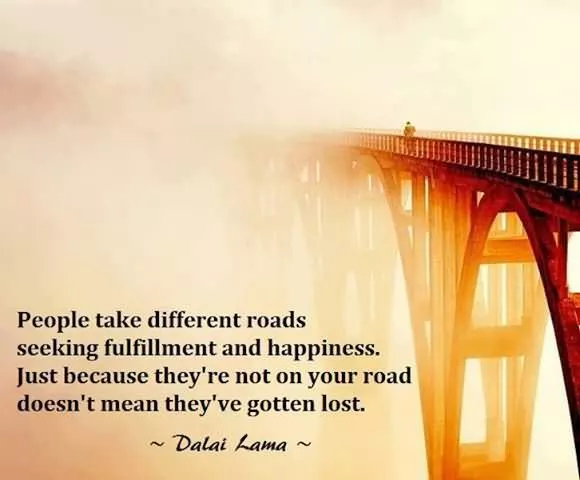
people-take-different-roads-seeking-fulfillment-and-happiness-17Now yes it is true, the more present a person becomes, they are more likely to steer away from unhealthy behaviors, habits, and activities, but in all technicality, presence can be brought into any situation.

“The great awareness comes slowly, piece by piece. The path of spiritual growth is a path of lifelong learning. The experience of spiritual power is basically a joyful one.” – M. Scott Peck

Whether or not we choose religion, meditation, reading self-help books, cultivating a hobby or passion, or maybe just starting a new healthy lifestyle, one thing is for sure… spirituality and finding our presence is a unique experience for every single person. It is probably one of the only things in life that includes everything yet is exclusive to nothing.

And even though there is technically no finish line to the spiritual journey, the sooner a person does get in connection with their own presence and consciousness, (whether they choose to label themselves as “spiritual” or not) the sooner they start seeing through the illusion of their unhappiness, stress and misery and start finding love, happiness, peace and passion…which is always a good thing.

Image Source

Spiritual

Four Balancing Acts that all Sacred Activists Should Learn

0

“All divine visions are hard to embody. They require hard work. You have to keep looking at your own shadow — and sacred activists have two shadows: they have the shadow of the mystic, longing to escape into the light and leave the world behind; and they have the shadow of the activist, which is full of denunciation and divisiveness and anger. But if you examine those two shadows long enough, something amazing happens: the mystic’s shadow gets purified by the activist’s, and vice versa.” ~ Andrew Harvey, The Hope: A Guide to Sacred Activismsacred-activism

The human condition is a multi-layered, multifaceted, superbly complicated, but infinitely fascinating phenomenon of nature. Sometimes even our shadows wear masks. Indeed, even our shadows can have shadows.

And, really, the more we know, the more shadows we create. This is one of the reasons why knowledge is pain and ignorance is bliss.

Like Clarissa Pinkola Estes wrote, “One of the least discussed issues of individuation is that as one shines light into the dark of the psyche as strongly as one can, the shadows, where the light is not, grow even darker.”

Knowledge is power, true, but with great power comes great responsibility. As such, we are just as much responsible for our powers of darkness as we are for our powers of light. Like I told one of my readers in the comment section of Splinter in the Mind, Part 1, “The only thing that makes me happier than being a beacon of light in the dark, is being a beacon of dark in the light.”

Here then are four balancing acts that all sacred activists should learn. power-responsibility

1) Balancing heart with mind

“Creativity is intelligence having fun.” ~ Albert Einstein

Imagine the heart and the mind as seeds. As with all seeds, they must be opened in order to grow. When the heart is open, love flows. When the mind is open, imagination flows. The task of all sacred activists is to balance these two powers.

As mystics, when we get the urge to escape, we can leverage our power by remembering that love requires an interconnected frequency. As activists, when we get the urge to be overbearing with our ideals, we can leverage our power by remembering that progress requires compassion.

Love nourishes imagination and imagination nourishes love. Beautiful art is created in such ways: paintings like Guernica by Picasso, novels like 1984 by Orwell, music like Bullet in the Head by Rage against the Machine. Balancing heart with mind creates a Zen-like experience of proactive meditation that is a force to be reckoned with.

2) Balancing soul with body

“You are imperfect, permanently and inevitably flawed. And you are beautiful.” ~ Amy Bloom

Imagine the ego is a caterpillar and the soul is a butterfly. One transforms into another. But never forget that the backbone of your soul will always be your ego, just as the butterfly’s makeup will always be the caterpillar. Our ego is our embodiment of self, our psyche-body interrelationship.

Our soul is our individuation of self, our self-realized interconnectedness to all things. When soul is balanced with body (ego), individuation occurs, and we liberate ourselves to become self-actualized.

As mystics, when we feel the urge to leave everything behind and become one with the cosmos, we can leverage our power by realizing that part of becoming one with the cosmos is being an individuated force of nature for the cosmos.

As Activists, when we have the urge to stick to our guns, forsaking all others, we can leverage our power by understanding and being tolerant of the fact that most people are still on the path toward liberation. Balancing soul with body creates a Zen-like experience of active, walking meditation, where both the ego and the soul become powerful tools for transforming reality.

3) Balancing presence with action

“A little knowledge that acts is worth infinitely more than much knowledge that is idle.” ~ Khalil Gibran

Imagine an inactive Gandhi. Imagine an inactive Martin Luther King Jr. It wouldn’t even matter if they were present, individuated, self-actualized people if they weren’t proactive about it. Without action, their presence would have been limited to just themselves. We need more people whose presence has become active.

We are faced with a worldwide addiction to money and power, and a worldwide existential depression that is affecting everything on the planet.

Like Terence McKenna said, “Western civilization is a loaded gun pointed at the head of this planet.”

coelho-quoteThe only way to break these two spells of addiction and depression is through individuals who are both present and active, who are both aware of things and a force of nature to be reckoned with. It will require a wakeup call of global proportions, and sacred activists will be the ones carrying the bullhorns.

Like Andrew Harvey wrote, “For people to come together, they must first be broken by what is happening. When people allow the horror and pain and sorrow of this time to go through their heart like a spear, the thought of hiding away in their private devotions becomes repulsive. They need to turn their love into action.”

4) Balancing transcendence with immanence

“Wisdom ceases to be wisdom when it becomes too proud to weep, too grave to laugh, and too selfish to seek other than itself.” ~ Khalil Gibran

There is no outside without inside. There is no infinity without finitude. There can neither be internal nor external without middle. We are the middle. We are the sacred balance. We are the paradoxical crux of the cosmos, the pinpoint upon which the entire universe hangs in the balance.

We, each of us, are a sacred spark in an otherwise mundane fire, impossibly perceiving beginnings and endings, love and angst, hunger and satiation, life and death.
You need to understand both science and spirituality
It is our duty as spiritual activists to be the walking personification of the Middle Way, poised between the sacred and the profane.

Like Loius G. Herman wrote, “Self-mastery, maturity, and wisdom are defined by our ability to hold the tension between opposites.”

Transcendence is a state of tranquility discovered through the perception of outer limitlessness and its permeation of all things. Immanence is a state of tranquility obtained through the perception of inner limitlessness and its permeation of all things.

Both states require an observer, a middle ground, a sacred impermanence to perceive the paradoxical interconnectedness of all things.

When transcendence and immanence are balanced, both the mystic and the activist inside us are humbled, and true loving compassion, tolerance, and forgiveness becomes a possibility. Forgiveness is the liberation of the soul. We need to forgive all things, not because all things are worthy of our forgiveness, but because we are worthy of peace.

Like Lao Tzu said, “If a person seems wicked, do not cast him away. Awaken him with your words. Elevate him with your deeds. Repay his injury with your kindness. Do not cast him away; cast away his wickedness.”

When we allow ourselves to be worthy of peace, we liberate the peace within others, which allows for the propagation of more and more peace, like an irresistible domino effect toward a healthier planet for us all.

Image source:

Shadows
Paulo Coelho quote
Agape Satori quote

4 Ways to Unlock the Power of your Subconscious Mind

33

“Whatever we plant in our subconscious mind and nourish with repetition and emotion will one day become a reality.” ~ Earl Nightingale

The subconscious mind is the store room with an unlimited capacity; all your memories, experiences, the deepest beliefs, everything that has ever happened to you is permanently stored.

In simple terms, the subconscious is a part of you that is outside your conscious awareness, that creates automatic programs to make functioning easier in life, without having to pay attention to everything you are doing.

subconscious-and-conscious-mind
The tip of the iceberg represents the conscious mind and the part underwater represents our unconscious

Like driving a car, a beginner who is still learning to drive would be completely focused on driving, without engaging in a conversation with anybody in the car. But after few weeks or months of practice, that person would be at ease while driving, since it’s become a habit and is registered in the subconscious mind.

The subconscious is active all day and night, whether you act upon it or not. Controlling all functions of your body like breathing, heart beat and even our nervous system.

Neuroscience has recognized that the subconscious controls 95 percent of our lives. The first six years of your life is when the subconscious mind is programmed, and it is much more powerful than your conscious mind.

Its job is to ensure that you respond exactly the way you are programmed. Your subconscious mind makes everything you say and do fit a pattern consistent with your self-concept, your “master program.” That’s why it’s important that you filter what is embedded in it.

If the subconscious mind is so powerful, how does one reprogram our conditioned thinking to make positive changes in one’s life? Your thoughts have the power to create your reality.

Here are 4 Ways to Unlock the Power of your Subconscious Mind

Breaking Down Neural Pathways using Positive Affirmations

einstein-problems-quote

To change our lives, we need to do more than just change our thoughts, we have to go deeper than that and change our programming.

To program your subconscious mind, with the present “conscious” understanding that you’ve gained, takes time, because it involves bringing down the old neural pathways and creating new connections in your brain.

But the good thing is that the subconscious learns through repetition, that’s how it picked up the negative patterns or bad habits in the first place. By spending time each day affirming your new beliefs/programming or thought pattern, you can effectively change your life and reality.

Take time every day, sowing the seeds of your new programming. Repeating mantras or positive affirmations have the power to raise your vibrations and make a lasting impression in your subconscious mind.

According to Paramahansa Yogananda, “Loud or silent repetition of inspiring words has been found effective in various systems of psychotherapy; the secret lies in stepping up the mind’s vibratory rate.”

Affirmations to consider –

-“I love and respect myself.”
– “I am filled with peace, harmony and joy.”
– “I attract good things into my life.”
– “My positive thoughts produce positive things.”

It’s not just repeating the same thing again and again, you have to break the barrier that prevents certain thoughts from entering the subconscious mind. If you feed positive thoughts to your brain continuously, it will enter your subconscious mind.

Feed only what you desire and not what you don’t want. In the process if you experience negative thoughts, sadness, anxiety, frustration etc., don’t try to resist those thoughts but acknowledge them and accept them in your conscious mind, and it will eventually fade away.

Meditation

react-same-old-way-deepak-chopra

Meditation takes you to deeper realms of consciousness, that allows you to access your subconscious mind. In normal waking consciousness, our brain is functioning in ‘beta’ pattern. This state is associated with alertness, but also with stress, anger and anxiety. In meditation, your brain patterns slow down and move first to alpha and then to theta and, in deep meditation, delta patterns.

It sounds difficult at first, but with regular practice, you will become an observer of your thoughts, instead of getting distracted by it. Allow your thoughts to flow and not react to them. This is when you begin to reap the benefits of accessing your subconscious mind through meditation.

Get Creative

Let your creative juices flow, take up artistic expressions like painting, drawing, cooking, decorating, sculpting, pottery and so on. Nurturing your creativity can help you be more authentic and in closer touch with your subconscious self.

Follow your Instincts

“Your visions will become clear only when you can look into your own heart. Who looks outside, dreams; who looks inside, awakes.” ~ C.G. Jung

Intuition is the connecting path between the subconscious and conscious mind. Your subconscious mind, applicably, converses with the conscious mind all the time. This is the inner voice, or “gut feeling”, which you must listen to. Positive people have been reported to have a stronger sense of intuition.

There are other ways to unlock the power of the subconscious mind – clinical hypnotherapy, energy psychology and even brainwave entertainment – is effective. Once you start living in harmony with your inner self and your subconscious state, your life will transform!

Image Source and References –

Mind programming
Programming Subconscious Mind
Healing
Subconscious

Four Universally Powerful Gestures

10

“The first language humans had was gestures. There was nothing primitive about this language that flowed from people’s hands, nothing we say now that could not be said in the endless array of movements possible with the fine bones of the fingers and wrists. The gestures were complex and subtle, involving a delicacy of motion that has since been lost completely.” ~ Nicole Krauss

Gesture is a non-verbal form of communication using hands, face or other parts of the body. Psychologically, a gesture is the gateway to understanding one’s state of mind, as individuals can communicate a variety of feelings and thoughts using gestures – affection, love, hostility or anger.

Scientifically, indulging in a few gestures on a regular basis has proved beneficial. The most powerful one of all is the act of smiling genuinely. Research proves the fact that every single time you have a Duchenne smile on your face, there is an outburst of positive hormones in your body. Even exchanging a smile is a universally acceptable gesture.

There are a few gestures, originating from different cultures, that have spiritual and scientific significance.

In this article we will talk about four such hand gestures used to express kindness, love, compassion, empathy and peace.

namaste
1) Namaskar (Namaste)

“Namaste,” the common Indian greeting each other, is not merely a way of saying ‘hello,’ but holds a deeper spiritual significance. The act of respectfully joining the palms in front of the chest or the Heart chakra and bowing down of the head, increases the flow of Divine love and reduces one’s ego in the presence of another.

Namaste is a way of saying that the divine in me respects the divine in you. Acknowledging this oneness with the meeting of the palms, we honor the god in the person we meet.

It inculcates the attitude of showing gratitude and reverence for one another. Namaste is also an important mudra in Yoga that helps in staying grounded and humble.

2) Shaka Sign

shaka

Shaka sign demonstrates the exuberance of Aloha spirit in Hawaiian culture. Aloha means that everything is a fragment of you and you are a fragment of everything. This learning of Aloha helps us in coordinating our mind and soul with everyone around you. Shaka is a gesture to acknowledge the beauty of Aloha spirit with kindness, compassion and love.

It is the gesture that teaches us to spread positive feelings among our fellow beings; separation is just an illusion. It can be used as a positive reinforcement.

If somebody did something good or righteous, you can give them a shaka as a sign of approval or praise. The gesture involves extending the thumb and small finger while keeping the three middle fingers curled up and lightly shaking your hand. In popular culture, Shaka is equivalent to “Hakuna Matata” or “No worries”.

3) Bowing in Japan

Female_bowing_to_whale
Any form of greeting isn’t limited to humans. Life force in animals deserve to be greeted too.

Bowing in Japan is a custom of greeting people. Two people stand facing each other and bow from the waist at a certain angle, the back is straight and hands are supposed to be clasped on the sides for men and held in front for women, with the eyes down.

This gesture gives people involved in greeting courage to communicate and work in good spirit. When two people bow to greet each other, a sheath of universal energy is formed around them.

This release of good energy helps in cutting down the negative aura, creating a deep sense of respect for fellow beings and reducing the ego. Generally, the longer and deeper the bow, the stronger the emotion and respect expressed.

4) Hongi

Home Page Gallery All images3 e1535015262395

Hongi is a traditional greeting of Maoris, the indigenous people of New Zealand. The deeply spiritual Maoris believe that all living beings on Earth are spiritually linked; and no one on Earth is a visitor, we all carry the same universal energy within us. It is done by pressing one’s nose and forehead (at the same time) to another person at an encounter. The ‘hongi’ literally means ‘sharing of breath,’ and by performing this gesture one acknowledges the life force of another being.

“A gesture cannot be regarded as the expression of an individual, as his creation (because no individual is capable of creating a fully original gesture, belonging to nobody else), nor can it even be regarded as that person’s instrument; on the contrary, it is gestures that use us as their instruments, as their bearers and incarnations” ~ Milan Kundera

Image Source

Love gesture
Namaste Karmym
Shaka sign
Hongi