Home Blog Page 215

How to Nurture your Child’s Higher Consciousness

“Every day, in a 100 small ways, our children ask, ‘Do you hear me? Do you see me? Do I matter?’ Their behavior often reflects our response.” ~ L.R. Knost

Often, we hear parents tell their child, “say thank you” or “say sorry,” and the child will parrot the words back, but if they don’t understand the emotions behind the words, it loses its meaning and doesn’t take hold.

How can we teach gratitude and sympathy to children, instead of having them parrot meaningless words back to us or others?

One way to teach children (and in my opinion, the most effective way), is to engage them in conversations that will get them thinking on their own. Parroting will produce a child who may hit, and then knows to say sorry; but teaching children about the reasons and emotions behind these words will nurture your child’s higher consciousness, rather than a dictionary of words to use as instant responses.

nurture childs higher consciousness

Another way to teach children about these important things is to show them the world outside your door, and be ready to answer the many questions that will surely come.

Again, this gives your child a chance to explore reasons and emotions behind things, and also shows them the many kinds of people that inhabit the world with them. In order to teach your child acceptance and sympathy for others you must be able to show them this attitude in an environment that is outside their immediate world.

And lastly, to make a lasting impression, you must be ready to be the role model for them, This does not mean you are perfect around your children, as no one is, but to be ready to live these attitudes in a real and authentic way.

Here are some practical ways to nurture your child’s higher consciousness:

Give them a chance to think

– Have you ever asked a child what they are grateful for? Parents often tell children what they should be grateful for, but rarely ask the child what they feel about it. Ask your child what blessings they would put on their “count your blessings” list.

– Have a conversation with them about “thank you” and “I’m sorry.” Questions like “What makes you feel better when you’ve been hurt?” or, “What words make you feel good?” show children that their small words have an impact on others.

– Instead of teaching them the words they should use, teach them about the emotions behind the words, and they will pick up on the words on their own. Children will very often go past the empty words and also learn that hugging, supportive words, and treating people with respect, are just as important as “please” and “thank you.”

– The same way it is helpful for us to wake up and express gratefulness for our everyday miracles, so it is for children as well. Start up a conversation about gratefulness at breakfast in the morning, and see what your children express.

Give your children the language to express the things that they are happy about, and then later what they are grateful for.

Give them the opportunity to experience and question different environment

nurture your child's higher consciousness

– Another way to help children think about gratefulness and sympathy is to give them the opportunity to be involved in community and charity work. This gives children the chance to see the world past their own four walls, and also have a sense of helping others.

This shows children the benefits of being selfless and connected to others. When presented in the right way, this can be a very important experience for children to ask questions about other people’s lives, and what it means to be there for other people.

– Don’t avoid your child’s curious questions when you are out in the world together.

Questions such as: “What’s that lady doing?”, “Why does that person look different than me?”, “Why are those two men holding hands?,” or “Why does than boy have so many tattoos?”, are all opportunities to talk honestly with your child about the many kind of people and lifestyles. This opens them up to acceptance for others.

Lead by example

– If you follow a prayer ritual, give your children the chance to join in or ask questions about your personal experience. Instead of saying “I’m praying” or “I’m doing yoga,” explain to them that you are expressing thanks for the blessings in your life, or treating your body with love because you are grateful to have a beautiful, functioning body.

The same is true for any other rituals that you follow. Do not force them on your children, but be there to explain the beauty behind yours and other’s rituals.

– Make sure to express to your children the same attitude you are expecting from them. Learn to say sorry to your children if you have done something wrong, and thankful when they have done something good for you.

Children follow by example, so make sure that you are not above these important words when it comes to interactions with your children, as these are the biggest learning experiences they will have.

– Avoid gossip or judgmental talk around your children. The things you say around your children are immediately soaked up by their molding minds.

– Practice speaking an enlightened language. Whether you say “I am so blessed,” or thank the sun and trees for their warmth and shade, your children learn a beautiful language that will later permeate their own speech.

I hope this gives you much insight, and sparks many interesting learning experiences for you and your loved ones.

Image source

Child
Gratitude

Child cutting nails

Five Reasons Why Art is Vital for Human Flourishing

3

“We have art lest we perish of the truth.” ~ Nietzsche

Shakespeare said that art is a mirror held up to nature. And so it is. When it comes down to it the universe is really just another artist. It created the giraffe, the platypus, and the cat’s eye.

It miraculously created the mind of mankind, which it uses like a paint brush of meaning dipped in Time and painted upon an infinite canvas of otherwise meaningless space.

arty1

More importantly, it has creatively evolved conscious awareness, a vast network of perception that has the audacity to imagine what art is, and what art could be in the future. In order to attain a full engagement with our humanity, we must involve ourselves with art that transcends our current knowledge of things.

Art that launches our souls into heightened states of awareness. Art that networks, bridges gaps, and connects dots in a mighty cosmos otherwise devoid.

As Novalis said, “The seat of the soul is there where the inner and outer worlds meet.” One could convincingly argue that the seat of the soul resides within art.

1) Art keeps us thoughtful

“Everything is blooming most recklessly; if it were voices instead of colors, there would be an unbelievable shrieking into the heart of the night.” ~ Rainer Maria Rilke

Art has a way of keeping our minds on red alert like no other domain. It engages our minds mentally, psychologically, emotionally and spiritually. Whether through music, poetry, painting, or photography, all art re-familiarizes our minds with the unfamiliar. It causes us to think strategically, despite ourselves.

When we engage with art, whether by creating it or by witnessing it, we provoke our tendency toward comfort, security, and complacency and cause a controlled state of discomfort, insecurity, and anxiety that, at least temporarily, stretches our comfort zone.

Art is like a magician, where instead of pulling a rabbit out of a hat, it pulls our minds out of its preconditioned box. Poetry shreds the box and inverts it with rhythm and rhyme. Painting flattens the box into a canvas and watercolors it into further revealing itself. Music implodes the box and transcends it with treble and bass.

Photography captures the box and puts it into another box, giving it a taste of its own medicine. Indeed, art goads world-weariness into worldliness, where we have no choice but to be on the edge of our seats, thoughtful and full of hope, for the next artistic revelation.

2) Art is therapeutic and cathartic

“It is better to make mistakes than to do nothing.” ~ George Bernard Shaw

arty2 Almost any psychological hang-up, anxiety, neurosis, or stress can be absolved through the artistic process. Looking and listening to art will only get you so far, but creating it, that’s where the real medicine is.

Whether it’s losing yourself in flow states writing poetry, gelling musically with others playing jazz, or moving meditatively through dance or martial arts, art drowns our anxiety and stress in proactive creativity.

Time speeds up. Time slows down. There’s no time to balk while in the throes of artistic metanoia. Or, there’s all the time in the world in order to put it all in perspective.

Art guides us. Art consoles us. Art helps us better understand our complex lives, and our even more complex selves. Art is psychic therapy used to exorcize the shadow content of the psyche, and introduce it to the conscious mind. The exorcism is the artistic act itself. It’s in the throes of creativity where the shadow content is revealed and then used as a medium.

The finished artwork is the conscious revelation. And lo, poison is transformed into medicine. It’s not magic, but it is magical. And the best part about it? We’re having fun. We’re happy. We’re caught up in the magical transformation from stagnating victim to flourishing cosmic hero, and it’s beyond wonderful.

3) Art helps us with loneliness

“Art and love are the same thing: It’s the process of seeing yourself in things that are not you.” ~ Chuck Klosterman

Art makes you feel. Good art makes you feel deeply. Creating good art makes you feel infinite. And when you feel infinite, loneliness gets put into proper perspective. You come to realize that you’re never truly alone. How could you be?

The interdependent dance simply won’t allow for it. And yet, there it is, loneliness, crippling us into independent agents unable to feel what another person is feeling. Unable to be anyone but ourselves. Locked in our own skin. Forced to see the world through the limitation of our own senses.

But art can help us even with this kind of deep loneliness. In fact, some of the best art was made out of the fodder of such loneliness. Art brings creative meaning into existence that could not have otherwise existed.arty3

One must have been an independent agent, tapping into interdependence, in order to have created a piece of art that dwarfs the loneliness that compelled it.

Art takes the deep loneliness, the existential angst, the great suffering at the heart of being an individual in an interdependent cosmos, and magnifies it into a heightened state of creative detachment. It’s absolutely godlike. And yet terribly, painfully human.

As Alain de Botton said in Art as Therapy, “One of the unexpectedly important things that art can do for us is to teach us how to suffer more successfully.”

4) Art helps us appreciate both ordinary and extraordinary experiences

“For aren’t you and I gods? Let all of life be an unfettered howl. Release life’s rapture. Everything is blooming. Everything is flying. Everything is screaming. Laughing. Running.” ~ Vladimir Nabokov

Sometimes art seems to scream at us: “Stop letting routine dull your aliveness. Don’t allow the tyranny of habit to undermine your vivacity.” Sometimes we manage to listen, but most of the time we don’t.

Art helps us slow down time and be present. It has a way of bringing us into the here and now. Whether we’re viewing art or creating it, the freedom of the moment is absolute, and we’re able to appreciate the vitality of the ordinary while viewing the extraordinary. We come to the revelation that there are no ordinary moments.

Like Nabokov said, “everything is blooming.” Indeed, everything is caught in the ecstatic throes of being everything. It’s a veritable cosmic jouissance. And we’re the godlike creatures with animal hearts caught in absolute awe of the mysterious slow dance of it all.

But it’s within the flow of the creative act, in the throes of the artistic process, where the extraordinary becomes the superordinary, or even metaordinary. The anarchy inherent within the creative act liberates us from the tyranny of our habits, and gradually the Great Mystery coalesces with our burgeoning soul and we’re howling, laughing, flying, and completely unfettered.

5) Art rebalances The Force (Qi, Mana, Prana, Pneuma)

“Aren’t we talking about mercy and its dark twin? Isn’t that what is pummeling history in the side as I write this? Isn’t it the thorn and the taser? Isn’t it the chokehold and the gold arm of vengeance?
arty4
I say it from my mouth and when it spills forth it lands on the ground in a pool of light reflecting back at me the one true blasphemy: Love and love and love and love is crowding the street and needs only air and it lives, over there, in the distance, burning.” ~ Tina Chang, Fury

Art is numinous. Art is provident. Art is a counterintuitive, alchemically binding force. Especially while in the creative process. Art is an energy that binds the mind-body-spirit into soulcraft. With such soulcraft we become world-builders.

With Prana in one hand and Pneuma in the other, we become cosmic expanders, connecting the dots of this mythology with the dots of that mythology. With Mana in our heart and Qi in our soul, we creatively realign Cosmos with Psyche, and Nature with the human spirit.

It is through art that we existentially stabilize and spiritually equalize. It is through art where the past meets the future within the almighty present. It is through art that we’re born, live, die, and are reborn again. Art is the ultimate leveling mechanism, used since time immemorial for keeping our social and political animal-like natures in proper balance.

Art is vital for human happiness, the keystone that unlocks the heartstone of Eudaimonia and the cornerstone of a life well lived.

Image source:

Ace of hearts
Man tree
Butterfly head
Eclipse

10 Poems for the Rebellious Soul

2

“Poetry
Forgive me for having helped you understand
You’re not made of words alone.” ~ Roque Dalton

Rebellious poetry is cosmic blood spilling from the pen as though a razor had slit open the wrist of the universe. Rebel poets have dared the fates since time immemorial, thus becoming the very fate they once dared.

The following ten poems, written with metaphorical blood, speak to the rebel in us all. They honor what Nietzsche once powerfully said: “Of all writings I love only that which is written with blood. Write with blood: and you will discover that blood is spirit.”

Here are 10 poems for the rebellious soul

1) Sonnet XIX ~ by William Shakespeare

Devouring Time, blunt thou the lion’s paws,
And make the earth devour her own sweet brood;
Pluck the keen teeth from the fierce tiger’s jaws,
And burn the long-lived phoenix in her blood;
Make glad and sorry seasons as thou fleets,
And do whate’er thou wilt, swift-footed Time,
To the wide world and all her fading sweets;
But I forbid thee one most heinous crime:
O, carve not with thy hours my love’s fair brow,
Nor draw no lines there with thine antique pen;
Him in thy course untainted do allow
For beauty’s pattern to succeeding men.

Yet, do thy worst, old Time: despite thy wrong,
My love shall in my verse ever live young.

2) Crow Blacker Than Ever ~ by Ted Hughes

poems for the rebellious soul

When God, disgusted with man,
Turned towards heaven,
And man, disgusted with God,
Turned towards Eve,
Things looked like falling apart.

But Crow
Crow nailed them together,
Nailing heaven and earth together-

So man cried, but with God’s voice.
And God bled, but with man’s blood.

Then heaven and earth creaked at the joint
Which became gangrenous and stank-A horror beyond redemption.

The agony did not diminish.

Man could not be man nor God God.

The agony
Grew.
Crow
Grinned
Crying: “This is my Creation,” Flying the black flag of himself.

3) Fury ~ by Tina Chang

My son rubs his skin and names it brown,
his expression gleeful as I rub a damp cloth
over his face this morning. Last night,
there were reports that panthers were charging
through the streets. I watched from my seat
in front of the television, a safe vista.
I see the savannah. Sometimes, though,
my son wakes to a kind of nightmare.
He envisions words on the wall and cannot
shake them. He tries to scratch them away
or runs out of the room but the words
follow him. None of it makes any sense
but it’s the ghost of his fear that I fear.

What is a safe distance from the thoughts
that pursue us and what if the threat persists
despite our howling? Buildings collapse,
a woman falls down the stairs and lands
on her back with only one eye open, half
awake to her living damage. I think
my son senses what is happening
on the street, his heart fiercely tethered
to mine. I know the world will find him
and tell him the history of his skin.
Harm will come searching for him
and pour into him its scorching mercury,
its nails, its bitter breath against his boyhood
skin still smelling of milk and wonder.

Somewhere, the panthers are running
starting fires fueled by a distinct hunger.
Somewhere there is a larger fire, a pyre
stoked by the fury of all that we have come
to understand, all that we could have done
but did not. Its flames lick the underside
of the earth. It propagates needing
only a frenzy of air to fan it to inferno.
I’ll call that the Forest. The deep woods
are ahead and if the panthers could just reach it.
If I told you that all of this happens at night,
you wouldn’t believe me. If I told you
all of this happens in the future, always
the Future you would continue following
the scent you could only describe as smoke.
I’ll call that Justice.

But aren’t we talking about mercy and its dark
twin? Isn’t that what is pummeling history
in the side as I write this? Isn’t it the thorn
and the taser? Isn’t it the chokehold
and the gold arm of vengeance? I say it
from my mouth and when it spills forth
it lands on the ground in a pool of light
reflecting back at me the one true blasphemy:
Love and love and love and love and
love and love and love and love and love
and love and love and love and love and
love and love and love and love and love
and love and love and love and love and
love is crowding the street and needs only air
and it lives, over there, in the distance burning.

blood2

4) Daddy ~by Sylvia Plath

You do not do, you do not do
Any more, black shoe
In which I have lived like a foot
For thirty years, poor and white,
Barely daring to breathe or Achoo.

Daddy, I have had to kill you.
You died before I had time——
Marble-heavy, a bag full of God,
Ghastly statue with one gray toe
Big as a Frisco seal

And a head in the freakish Atlantic
Where it pours bean green over blue
In the waters off beautiful Nauset.
I used to pray to recover you.
Ach, du.

In the German tongue, in the Polish town
Scraped flat by the roller
Of wars, wars, wars.
But the name of the town is common.
My Polack friend

Says there are a dozen or two.
So I never could tell where you
Put your foot, your root,
I never could talk to you.
The tongue stuck in my jaw.

It stuck in a barb wire snare.
Ich, ich, ich, ich,
I could hardly speak.
I thought every German was you.
And the language obscene

An engine, an engine
Chuffing me off like a Jew.
A Jew to Dachau, Auschwitz, Belsen.
I began to talk like a Jew.
I think I may well be a Jew.

The snows of the Tyrol, the clear beer of Vienna
Are not very pure or true.
With my gipsy ancestress and my weird luck
And my Taroc pack and my Taroc pack
I may be a bit of a Jew.

I have always been scared of you,
With your Luftwaffe, your gobbledygoo.
And your neat mustache
And your Aryan eye, bright blue.
Panzer-man, panzer-man, O You——

Not God but a swastika
So black no sky could squeak through.
Every woman adores a Fascist,
The boot in the face, the brute
Brute heart of a brute like you.

You stand at the blackboard, daddy,
In the picture I have of you,
A cleft in your chin instead of your foot
But no less a devil for that, no not
Any less the black man who

Bit my pretty red heart in two.
I was ten when they buried you.
At twenty I tried to die
And get back, back, back to you.
I thought even the bones would do.

But they pulled me out of the sack,
And they stuck me together with glue.
And then I knew what to do.
I made a model of you,
A man in black with a Meinkampf look

And a love of the rack and the screw.
And I said I do, I do.
So daddy, I’m finally through.
The black telephone’s off at the root,
The voices just can’t worm through.

If I’ve killed one man, I’ve killed two——
The vampire who said he was you
And drank my blood for a year,
Seven years, if you want to know.
Daddy, you can lie back now.

There’s a stake in your fat black heart
And the villagers never liked you.
They are dancing and stamping on you.
They always knew it was you.
Daddy, daddy, you bastard, I’m through.

5) Shoveling Snow With Buddha ~ by Billy Collins

In the usual iconography of the temple or the local Wok
you would never see him doing such a thing,
tossing the dry snow over a mountain
of his bare, round shoulder,
his hair tied in a knot,
a model of concentration.

Sitting is more his speed, if that is the word
for what he does, or does not do.

Even the season is wrong for him.
In all his manifestations, is it not warm or slightly humid?
Is this not implied by his serene expression,
that smile so wide it wraps itself around the waist of the universe?

But here we are, working our way down the driveway,
one shovelful at a time.
We toss the light powder into the clear air.
We feel the cold mist on our faces.
And with every heave we disappear
and become lost to each other
in these sudden clouds of our own making,
these fountain-bursts of snow.

This is so much better than a sermon in church,
I say out loud, but Buddha keeps on shoveling.
This is the true religion, the religion of snow,
and sunlight and winter geese barking in the sky,
I say, but he is too busy to hear me.

He has thrown himself into shoveling snow
as if it were the purpose of existence,
as if the sign of a perfect life were a clear driveway
you could back the car down easily
and drive off into the vanities of the world
with a broken heater fan and a song on the radio.

All morning long we work side by side,
me with my commentary
and he inside his generous pocket of silence,
until the hour is nearly noon
and the snow is piled high all around us;
then, I hear him speak.

After this, he asks,
can we go inside and play cards?

Certainly, I reply, and I will heat some milk
and bring cups of hot chocolate to the table
while you shuffle the deck.
and our boots stand dripping by the door.

Aaah, says the Buddha, lifting his eyes
and leaning for a moment on his shovel
before he drives the thin blade again
deep into the glittering white snow.

6) Phenomenal Woman ~ by Maya Angelou

blood3

Pretty women wonder where my secret lies.
I’m not cute or built to suit a fashion model’s size
But when I start to tell them,
They think I’m telling lies.
I say,
It’s in the reach of my arms
The span of my hips,
The stride of my step,
The curl of my lips.
I’m a woman
Phenomenally.
Phenomenal woman,
That’s me.

I walk into a room
Just as cool as you please,
And to a man,
The fellows stand or
Fall down on their knees.
Then they swarm around me,
A hive of honey bees.
I say,
It’s the fire in my eyes,
And the flash of my teeth,
The swing in my waist,
And the joy in my feet.
I’m a woman
Phenomenally.
Phenomenal woman,
That’s me.

Men themselves have wondered
What they see in me.
They try so much
But they can’t touch
My inner mystery.
When I try to show them
They say they still can’t see.
I say,
It’s in the arch of my back,
The sun of my smile,
The ride of my breasts,
The grace of my style.
I’m a woman

Phenomenally.
Phenomenal woman,
That’s me.

Now you understand
Just why my head’s not bowed.
I don’t shout or jump about
Or have to talk real loud.
When you see me passing
It ought to make you proud.
I say,
It’s in the click of my heels,
The bend of my hair,
the palm of my hand,
The need of my care,
‘Cause I’m a woman
Phenomenally.
Phenomenal woman,
That’s me.

7) Where the Sidewalk Ends ~ by Shel Silverstein

There is a place where the sidewalk ends
And before the street begins,
And there the grass grows soft and white,
And there the sun burns crimson bright,
And there the moon-bird rests from his flight
To cool in the peppermint wind.

Let us leave this place where the smoke blows black
And the dark street winds and bends.

Past the pits where the asphalt flowers grow
We shall walk with a walk that is measured and slow,
And watch where the chalk-white arrows go
To the place where the sidewalk ends.

Yes we’ll walk with a walk that is measured and slow,
And we’ll go where the chalk-white arrows go,
For the children, they mark, and the children, they know
The place where the sidewalk ends.

8) Who am I? ~ by Carl Sandburg

My head knocks against the stars.

My feet are on the hilltops.

My finger-tips are in the valleys and shores of
universal life.

Down in the sounding foam of primal things I
reach my hands and play with pebbles of destiny.

I have been to hell and back many times.

I know all about heaven, for I have talked with God.

I dabble in the blood and guts of the terrible.

I know the passionate seizure of beauty
And the marvelous rebellion of man at all signs
reading “Keep Off.”

My name is Truth and I am the most elusive captive
in the universe.

blood4

9) Courage ~ by Anne Sexton

It is in the small things we see it.

The child’s first step,
as awesome as an earthquake.

The first time you rode a bike,
wallowing up the sidewalk.

The first spanking when your heart
went on a journey all alone.

When they called you crybaby
or poor or fatty or crazy
and made you into an alien,
you drank their acid
and concealed it.

Later,
if you faced the death of bombs and bullets
you did not do it with a banner,
you did it with only a hat to
comver your heart.

You did not fondle the weakness inside you
though it was there.

Your courage was a small coal
that you kept swallowing.

If your buddy saved you
and died himself in so doing,
then his courage was not courage,
it was love; love as simple as shaving soap.

Later,
if you have endured a great despair,
then you did it alone,
getting a transfusion from the fire,
picking the scabs off your heart,
then wringing it out like a sock.

Next, my kinsman, you powdered your sorrow,
you gave it a back rub
and then you covered it with a blanket
and after it had slept a while
it woke to the wings of the roses
and was transformed.

Later,
when you face old age and its natural conclusion
your courage will still be shown in the little ways,
each spring will be a sword you’ll sharpen,
those you love will live in a fever of love,
and you’ll bargain with the calendar
and at the last moment
when death opens the back door
you’ll put on your carpet slippers
and stride out.

10) The Disobedience of the Mad Poet ~ by Gary Z McGee

I’m through with regret.
If disobedience is my destiny, so be it.

If it’s my mission to break mental paradigms,
let them break. My heart is a red herring.

I reap the future while they sow the past.
My spine is a flagpole usurping all summits.

When I laugh at funerals, I honor the dead.
When I cringe at weddings, I honor the living.

“Obey” they told me, and I disobeyed.
And while they ignored nature, I turned to her and obeyed.

“Bow” they told me, and I flipped the throne a bird.
And while they bleated, I bowed to the sun & moon.

When they said, “It is hot,” I told them it was cold,
and shivered like a new-born baby in my bear robe.

When they said, “It is cold,” I told them it was hot,
and stripped naked in a blizzard just long enough to untie their knots.

When Death came, I drug him kicking and screaming through the abyss.
Turned the tables into a glorious rebirth, and trumped the scythe.

I’ve entered exits, and exited entrances.
Transformed the ineffable into the effable.

My head-feather is a beacon of contrariness.
My fore-finger is a spear whittling would into could.

When they said, “God is good,” I told them, “God is dead!”
And when they told me “God doesn’t exist,” I told them,

“The heart with which I feel God,
is the same heart with which God feels me.”

And when they asked, baffled, “Why do you go against the laws of men?”
I said to them, “Your swords will never be as sharp as my pen.”

Image source:

Carl Sandburg quote
Bukowski quote
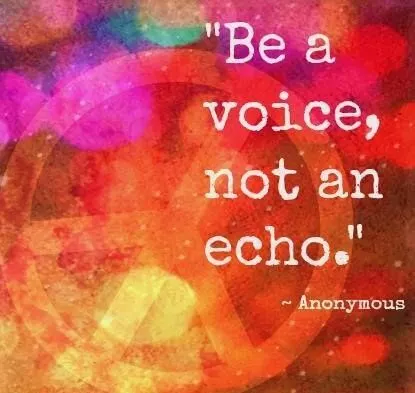
Be a voice

Understanding the Five Love Languages

5

The 5 Love Languages is a medium through which everyone expresses their love. This means that we also receive love in a certain way.

Sometimes in relationships, we receive love from our partner, but if it’s not expressed in our language, then we may not appreciate it, or possibly even feel loved. The best love that can be shown is the language of the receiver.

Think about our actual languages. If you try explaining something to someone who speaks a foreign language, you will not get very far once you’ve exhausted all universal gestures.

The same is true with love languages; to understand each other, you must understand what language each of you is speaking.

Look at the 5 different love languages and find out what you, or your loved one needs to feel loved. (Keeping in mind that it’s a spectrum, with all languages being appreciated, but one or two more important than the others in order to feel loved.)

The 5 different love languages

Words of Affirmation

love languages

If your love language is words of affirmation, then you will give and receive love through words. You want to hear your loved ones say “I love you,” and “I appreciate you”, etc.

Nothing is more satisfying than when you do something of value and someone notices. A simple “thank you” when you’ve done something for someone is the most rewarding.

If your partner seems to be rejuvenated by the words that you give them, then their love language may be words of affirmation. Tell them how you feel about them. Write them a love letter. Don’t be scarce, because each word means the world to them.

Acts of Service

If your main love language is acts of service, then you will appreciate it most when a person shows you their love by doing things for you; such as helping you clean, making you a meal, or anticipating your needs by asking you what you need.

The best act of love for you is if you come home and your partner has made the bed or set up dinner. If your partner’s love language is acts of service you can surprise them with any of these things that take the pressure or work load off their plate, or just put it out there that you would like to help, with a simple “what can I do/ get for you?”

It may seem a little awkward to ask at first, but your loved one will surely feel loved and cared for when you extend your hand to help.

Quality Time

If your main love language is quality time, you simply want to spend time with your loved one. Talking and finding out more about your partner is what makes you feel loved and more connected.

As a person whose love language is quality time, the best is when I can spend time with my loved ones uninterrupted, just sitting, talking without phones; maybe sprinkle in some eye contact and undivided attention and I’m in heaven. A good outing with your partner can also give you the loved feeling of spending quality time.

If your partner likes to spend quality time with you, set aside some time for them where you are not busy with anything else. Little things like stopping what you’re doing when they’re talking, or setting a date for you two, can go a long way.

Those with a quality time love language are usually great listeners and want to feel the same in return.

Physical Touch

love

If your love language is physical touch you will feel most cared for with a hug, a kiss, or hand holding.

You will find that you feel closer with people who extend a hug toward you, and you show other people you care by a hug, or a touch on the shoulder etc.

You may have been told that you are very touchy, but it’s because this is how you show your love. Where others may say “I love you,” you will extend a tender touch to say the same thing.

If your partner’s language is physical touch, know that every touch for them is the equivalent of saying “I care about you,” so don’t put up physical boundaries, and give them lots of hugs, kisses, and cuddles. Make sure you have a solid chunk of time for intimacy, or just time to hold them and trace each other’s bodies.

Gifts

If your love language is gifts, you will love receiving gifts and surprises as much as the next person, but it will probably hold some more sentimentality to you than other things. A trip to the store will include thoughts such as “Oh, Sarah loves these, I should surprise her and get her some.”

And cleaning out your closet will induce such phrases as “But it was a gift from my aunt, I can’t possibly throw that out.” It will also mean that a gift or a surprise from a loved one will get you right in the heart.

If your loved one’s language is gifts make sure to surprise them with little tokens, whether it’s as simple as a rose, or a gift that shows you know what they like; they will get the message “He/she was thinking of me and stopped their day to get me this. They must really care about me.”

I hope that knowing your love language and that of your loved ones, helps you give and receive love in the best way possible.

Reference
Love languages

Image source
Android Jones
John Burden

Five Ways to Use Your Anger More Effectively

“And God said “love your enemy,” and I obeyed him and loved myself.” ~ Khalil Gibran

We all get angry from time to time. Even the most enlightened of us would be lying if they said they didn’t. Anger is often a natural response to horrific situations. For example: the only moral response to innocent people getting bombed, whether by military action or terrorist action, is anger.

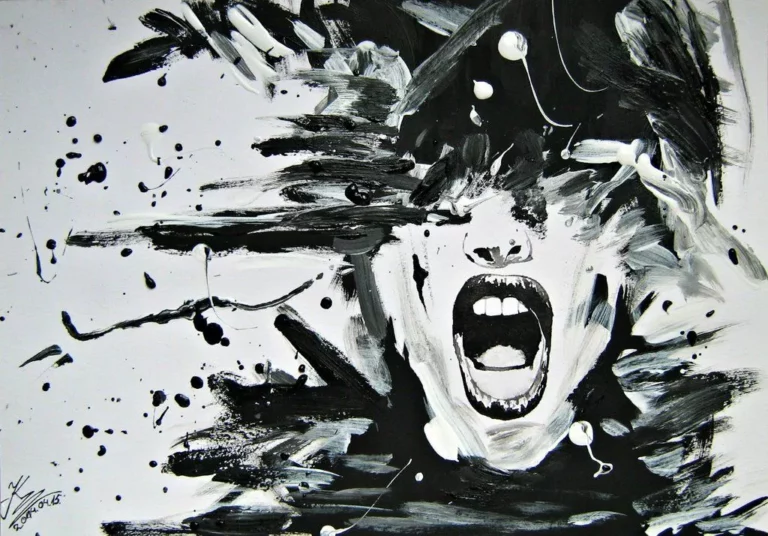
anger

The question is this: is your anger controlling you (lizard brain), or are you controlling it (evolved mind)? Are you merely a puppet to the emotion of your anger, or are you able to turn the tables and become the puppeteer? Are you a victim of your emotions or a hero with emotional intelligence?

Most of us act the way we feel. But this doesn’t necessarily have to be the case. We do have a choice. With enough discipline we can feel the way we act.

For example: we can “feel” afraid but “act” courageously. Similarly, we can “feel” road rage but “act” calmly. With enough practice we can eventually feel the way we act, even in response to something as extreme as terrorism.

Through such emotional alchemy, transforming anger into a higher emotion really is a choice. The key (as with the following five ways) is practice, discipline, and making emotional intelligence a habit.

As Aristotle said, “We are what we repeatedly do. Excellence, then, is not an act, but a habit.”

1) Transform anger into strength

“In almost every bad situation, there is the possibility of a transformation by which the undesirable may be changed into the desirable.” ~ Nyanaponika Thera

Anger can give you profound strength: in mind, body, and soul. It’s your responsibility to focus your anger enough to harness this strength. Focused anger becomes sacred anger. But this first requires honoring the anger for what it is, and for where it stems.

We too often suppress our anger, or avoid it, or pretend we’re not mad. But such suppression festers and all too often leads to a blowup farther down the road. In order to avoid such a blowup it behooves you to put your anger into focus.

Put it under the microscope of your emotional intelligence. Analyze it. There is passion in anger. And where there is passion, there is love. And where there is love, there is strength.

So when it comes to anger, choose furious dancing over uncomfortable depression, or even comfortable suppression. Negotiate with your anger in order to transform the passion at its center into strength. Embrace it. Accept it. Wrestle with it, gently. Dance with the fire. Then waltz it into something worthwhile. If it burns you up, rise like a phoenix from the ashes.

Life is too short to live it second-guessing your passion. Be fierce. Dance furiously despite the anger that seeks to burn you. There’s almost always strength hidden there.

Like Deepak Chopra said, “The secrets of alchemy exist to transform mortals from a state of suffering and ignorance to a state of enlightenment and bliss.”

2) Transform anger into exercise

“Anger is an acid that can do more harm to the vessel in which it is stored than to anything on which it is poured.” ~ Mark Twain

That passion at the center of anger can also be transformed into powerful energy: Qi, Prana, Pneuma, Mana. Use it in the park, in the arena, in the field of play. Twain said anger is an acid? So be it.

Transform that acid into fuel. Use that fuel for the fire of becoming a better version of yourself. Use it in your kung fu. Use it in the gym. Use it playing sports. Burn it out of you so that it doesn’t burn you out.

Whatever you do, don’t keep the acid of your anger bottled up. You are a sacred vessel and acid erodes even sacred vessels. Put it in your vessel’s fuel tank instead, and then burn baby burn!

Spar with it. Shadow box it out. Better yet, shadow box with your inner shadow. Now that is some meta-catharsis, right there.

3) Transform anger into art

Facit indignatio versus: My anger creates my verses.” ~ Latin poet, Quintilianus

Again, the key to alchemizing anger, is harnessing the passion at its center. This most definitely applies to transforming anger into art. Anybody who has ever read poetry by Sylvia Plath can attest to that. Or almost any philosophy written by Friedrich Nietzsche, for that matter.

Or just gaze upon Picasso’s Guernica and tell me he didn’t paint that with a focused rage against the ignorance of war. Or take Banksy’s political art for example, charged with righteous anger against tyrannical oppression.

Transforming anger into art is a kind of rage enlightenment: a self-actualized creativity discovered through the channelling of anger into a heightened state of awareness, where rage becomes a fire that cooks things rather than burns them.

With just the right amount of focus, at just the right temperature, the passion at the center of anger can, and often does, get turned into some amazing art. And there’s absolutely no reason why you cannot do the same. Forget talent. Forget genius or giftedness or skill.

So what if others can do it better? Nobody even has to see it. Create art with all of your passion. Channel your deepest anger into art, and watch in amazement as it alchemizes into soulful poetry.

Like Nietzsche powerfully said, “Of all writings I love only that which is written with blood. Write with blood: and you will discover that blood is spirit.”

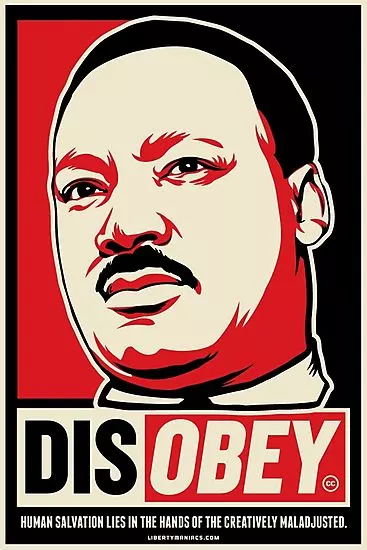
4) Transform anger into civil disobedience

“Love does not imply pacifism.” ~ Derrick Jensen

anger3Use your focused anger like a surgeon’s scalpel slicing open the Achilles Heel of the violent and immoral system that has been propped up over you without your consideration. Use your focused anger like Jesus flogging bankers in the New Testament.

Jesus saw an immoral system unfolding before him, so he dug deep, tapped into his righteous anger, and practiced civil disobedience despite the orthodoxy of the time. There’s no reason why you cannot do the same.

As Howard Zinn said, “Civil disobedience is not our problem. Our problem is civil obedience.”

Deep, focused anger can be a boon of sacred energy if we learn to use it wisely and courageously. This kind of sacred anger lifts us up and compels us to empower the powerless despite the powers that be, or to inspire the poor despite the overindulgent rich.

The type of focused anger that would rather live a life of uncomfortable freedom than a life of comfortable slavery. Such anger is sacred precisely because it instils in us an unstoppable courage.

The kind of courage that declares to the overreaching powers that be, “I will not stand idly by while you decide who lives and who dies. I am unstoppable; another world is possible. And I will do everything in my power to build it, whether you approve of it or not.”

5) Transform anger into a good sense of humor

“Smile though your heart is aching.” ~ Charlie Chaplain

When it comes down to it, anger is a silly emotion. It’s a base emotion, like jealousy, fear, or sadness. In the grand scheme of things, anger is petty. It’s crude and primitive. Unless, of course, we are able to use it as a tool for our more advanced mind.

And the best way to achieve an emotional state malleable and flexible enough to be able to use anger as a transformative tool, is to practice and to cultivate a good sense of humor.

A good sense of humor flips all scripts. It transforms “the jokes on me” into “so what, it’s funny.” Powerful stuff. In fact, a good sense of humor is so powerful that it is the only thing more powerful than power itself. I mean, a good sense of humor is immune to power constructs. It subsumes them.

It transcends power precisely because it is able to laugh at power and not take things too seriously. A good sense of humor takes nothing too seriously, especially not power. And when the passion at the heart of anger is effectively transformed into a good sense of humor, the person cultivating it is truly a force to be reckoned with.

No power in existence can stand in the way of a person with a good sense of humor. No authority. No king. No queen. No government. No army. No God. Not even death. Because a good sense of humor laughs it all away. It’s all water off a ducks back, and you’re the duck! Such sacred laughter puts all things into proper perspective. It’s all an illusion. It’s all a game.

But, and here’s the rub, it’s a sacred illusion. It’s a sacred game. And you are the infinite player interdependently playing it all out. The cosmic joke becomes self-actualized. You’re no longer the butt-end, nor will you ever be again, for you have attained the almighty rank of The One Who Laughs.

Like Alan Watts said, “Life is a matter of oscillation. Life is vibration. The question is: how are you going to interpret that. Is it tremble, tremble, tremble; or is it laugh, laugh, laugh?”

Image source:

Shadow boxer
MLK disobey
Anger face