
Today, let us try to smile a little more and worry a little less. Let our paths be guided by compassion and not judgment. May we be more blessed and less stressed. Let us be open to receiving and giving more love and less hate.
The Gift of No – Saying No Without Guilt

I used to have a tough time saying no, especially since I’m also part of the hospitality industry. For example, we get these random requests like can we have a BBQ in the monsoon season. The place where we host has a crazy amount of rain, so it becomes difficult to really offer these features, plus our main BBQ is outdoor. I would still go the extra mile to do a temporary setup to accommodate requests where I can just say no.
Going out of my way to say yes, really puts a lot of strain on myself, managing a BnB which is nearly 5* on Airbnb requires a lot of effort in itself and then to push myself even more to accommodate requests was really taking the energy that I have reserved for family and self-care.
Saying no without guilt can be a difficult thing, not just for me, but for many people. This is especially true for somebody who feels like they need to be “selfless” or “giving” or “helpful”. But, being helpful doesn’t mean putting others first! While it’s important to sort of help others and give your best, it’s also important to perform self-care and look out for yourself.
Have you ever felt guilty when you said “No” to someone, or have you tried to think of a polite way to avoid saying no without having guilt feelings? If this resonates, then this article is just for you.
The Word “No”
The word “no” can be a powerful tool. It can also be an uncomfortable one, and that’s why many people find it difficult to say “no” to others, no matter how much they may want to.
What if you could find freedom in the place where most of us feel guilt? What if you were fully empowered to live your life on your terms — without the guilt that usually accompanies “No”.
As Pamela Slim says in her book, Escape from Cubicle Nation, “Learning how to say “No” frees us from trying to be all things to all people so that we can be who we are meant to be.”
Learn to say no to the second helping of pie. Say no to that late-night trip to the vending machine. Say no to pushing yourself so hard that you collapse in exhaustion on the couch every night. Saying no can be hard because, you don’t want to disappoint people, or miss out on something fun, or let yourself down by giving up on a goal.
But sometimes you have to put a stop to things that are harmful or unproductive, and doing so is among the most powerful tools for self-improvement you can acquire.
Also, the idea of saying no can be daunting as it’s easy for people to interpret “no” as “you’re not important,” or “I’m better than you,” or “I don’t care about your feelings.” But saying no doesn’t have to be rude, and it’s often an important part of maintaining healthy relationships
You don’t have to feel guilty about saying no to things that don’t fill you up. We have a lot of conflicting expectations in our society. On the one hand, we’re supposed to be busy, ambitious and active. On the other hand, we’re supposed to be loving and giving to people and always available to help others.
The conflict between these expectations can create a lot of guilt when you say no. When you’re stretched thin, but someone asks for your help, you may feel like you’re failing them by saying no — but then you’ll probably also feel resentful if you say yes.
It’s hard saying no without guilt. But it’s possible. Here are 4 techniques that can help:
Be honest and straightforward without being cruel. I used to say yes all the time because I felt like I had to offer an excuse when I said no, but that just made it harder on both of us. Now I’m learning to just say no directly. Sometimes it’s uncomfortable for me to say no, but that’s part of growing as a person, and people are usually much more understanding than I expect them to be.
When people ask me if I’m afraid of missing out when I say no to an event or activity, I remind myself that I’m afraid of missing out on myself. I’m afraid of missing out on the life that I want, the life that works best for my family.
I don’t have time to stop and wonder if someone might be feeling bad about how I said no or why I said no because there is so much more going on in my life that brings me joy and fills me with love.
Saying no without guilt to others gives you the freedom to say yes to other things.
“When you say no to the wrong people, it opens up the space for the right people to come in.” ~ Joe Calloway

The ability to say no is a gift. It gives you the freedom to say yes to other things. You’re not for everyone, so you’re going to have to give yourself permission to be selective about what you do and who you spend your time with.
Make a list of the things that are important to you such as, having dinner with the family, exercising, volunteering and then compare that list with your calendar. If your calendar doesn’t match the things on the list, then it’s time to start saying no.
You don’t have to live an either-or life all the time, we all have obligations and commitments, but when possible you have to give yourself options and choices in your life. Your “no” will become more powerful as you realize how much freedom it can bring.
Saying no to yourself makes you stronger and more resilient than ever.
“In order for us to practice self-control, we must have a goal. We must have something we are saying “yes” to, which necessarily comes with things that we must say “no” to. We use self-control to maneuver ourselves toward this “yes.” This goal must be entirely our own. The minute another person is choosing and managing our goals for us, we have left self-control behind.” ~ Danny Silk
We’re all familiar with the advice of saying no to others. But far fewer people are familiar with the idea of saying no to yourself. And that’s a shame because when you say no to yourself, it becomes easier to say yes to what matters most in life.
Saying no makes you stronger and more resilient than ever. You can face the world with confidence, knowing that you are in control of your life and that you are making decisions based on your own values and needs. A world without “no” is one where other people’s demands, rules and expectations take precedence over your own needs.
Learn to say no to yourself as well. Saying no to your inner critic helps you silence the negative thoughts that hold you back from doing what matters most to you. Saying no to toxic people helps keep them out of your life, saying no to guilt trips helps build healthy boundaries with others, and saying no when it comes to spending money helps you save for the future or invest in things that are important to you.
Don’t feel bad about saying no to yourself. Remember, saying no to yourself makes you stronger and more resilient than ever.
Learn to recognize your limits to enable you to say no
“Love yourself enough to set boundaries. Your time and energy are precious. You get to choose how you use it. You teach people how to treat you by deciding what you will and won’t accept.” ~ Anna Taylor
The first step to being able to say no is knowing your limits. Learn to recognize when your schedule is full, and taking up another commitment would make things unmanageable. By learning what your limits are, you’ll be better equipped to know when it’s time to say no.
To begin with, your first limit is the same as everyone’s time. The workday is only so long, and there are only so many hours in the day and weeks in a year. You probably have commitments outside of work as well. There is only so much time you can devote to work projects before you start sacrificing your personal life or causing your health to suffer.
While the second limit is the energy you have. We all go through phases where we’re highly motivated and then times when we’d rather watch TV or game.
So ensure that when you say yes, you either have surplus time or energy to commit to the obligation or favor you are committing yourself to.
People pleasing
Most of us are taught to be nice, helpful, kind, and considerate. But the price we pay for being “nice” is high — it can lead to exhaustion, resentment, burnout, and illness. Learning to say no is vital to your own well-being and personal growth.
So many people have become conditioned to say yes to everything that is asked of them, without thinking whether they actually have the time or inclination. If this rings true for you, stop and think about why you say yes so often. It’s important to recognize your limits, both physical and emotional. It’s easy to over-commit yourself, which can lead to feelings of resentment towards others.
Saying no clearly and assertively means removing the stress of trying to meet other people’s expectations and allows you to live your life on your terms. Saying yes all the time will eventually leave you feeling exhausted and resentful towards others. If you’re constantly being pulled in different directions by other people’s demands, learn how to say no more often – it will be empowering!
The Art of Saying No

I personally love the concept of No being a protective shield in the above video, also learning to trust your inner voice is something that I have a constant issue with. Sometimes that voice is screaming, and I feel like I have plugged my ears at times. I really have to harness the ability of tuning into my intuition again.
I do hope this article has helped you work with some of your difficulties with saying no, doing this one really lets me see the value of my time much more and prioritize what’s important for me!
Image Source:
Featured Image
Going Supernatural ~ Unlocking your True Human Potential ~ Part 2
In Part 1 of Going Supernatural we saw that our capabilities are limited by our beliefs and that we can unlock far more than what we imagine we’re capable of. Bhavika had interviewed Bruce Lipton who gave us the Biology of Belief, you should read the interview to get another perspective of what we’re going to cover today.
There are two things that I’m going to cover in this part, one is how to shift your focus on manifesting a more abundant life and the second which is very dear to me is self-healing.
If you happen to read the article I wrote on Understanding the Cyclic Patterns of Our Existence According to Rudolf Steiner, you would find that disease steps in when we’re not aligned with our purpose, or when we ignore our spiritual calling and this pattern repeats throughout our lives until we respond to this call or address the issue.
My journey with self-healing
Coming back to why I hold self-healing dear to me. Here’s one of the stories that changed me. My friends and I were chilling, and we decided to shift base, I got on my motorcycle and started it and while riding I realized that my left hand to press the break was not really responding, I could hardly press the break when I tried.
When we stopped, I told my friends I’m going home, something’s wrong with me. They were like what, just come. So we had to jump across a 2-foot wall and I just couldn’t lift my leg up and that made me change my mind. I got on the bike and reached home, which was 10 minutes away.
While riding, I realized I could no longer press the break, and when I reached home I could hardly climb up the stairs, we stayed on the third floor and I literally dragged my self up. When I reached home, just told my folks that I’m not feeling good, and I went off to sleep in an instant. When I woke up the next day, and tried to get off the bed I couldn’t, I just couldn’t get up.
I pulled myself out and when I tried to walk, only my right leg was responding, my left leg had to be dragged, my left hand was clenched into a fist and none of the fingers responded, I couldn’t even move my hand much. My right hand was better, I could hold a thing, but it was not what it used to be.
Don't let this stop you, show us some love and subscribe to continue reading!
If you're already a member, please login.
Image Source
Why Do I Keep Meeting the Same type of Man or Woman?
Many people who come for my therapy sessions often ask me, “why do I keep meeting the same type of men or women? I only attract this type of relations that do not serve me in any way.” My initial response is that this is the masculine/feminine energy you are vibrating with and therefore manifesting it in your life.
Everything in the universe is about vibrations – our thoughts, words and actions, and that attracts the people and situations in our life.
Regardless of the gender, everyone has both masculine and feminine energy within themselves. There are many ancient cultures like Taoism, Tantra, ancient mythology from Egypt, as well as esoteric traditions that emphasize on balancing these energies, which means having our physical body and emotional health in sync.
The left side of the brain is connected to the masculine qualities: action, focus, logic. The right side of the brain is connected to the feminine ones: intuition, empathy, creativity.
“But if you pay close attention, you will see that the most masculine man has a feminine soul, and the most feminine woman has a masculine soul.” ~ Carl Jung, Liber Novus
Carl Jung referred to these energies as the Anima and Animus. Becoming whole and embracing both our masculine and feminine energies is what he called the Individuation process.
Derived from Latin, Anima means soul, spirit, life, breath, air, refers to the unconscious female dimension of a male. This feminine energy, Yin, is related to intuition, creativity, nurturing, compassion, tenderness. This means that for a man to be whole, he needs to cultivate his feminine energy.
Animus, on the other hand, is translated as mind, heart, willing, intellect, soul as thinking. This is the unconscious male dimension of a female. The masculine energy, Yang, is connected to logic, rational thinking, strength, assertiveness, action. For a woman to be whole as an individual, she needs to cultivate her masculine energy too.
Identify the Masculine and Feminine energies within us
“If any human being is to reach full maturity both the masculine and the feminine sides of the personality must be brought up into consciousness.” ~ Mary Esther Harding
First, we need to identify those energies within us. In Taoism, this is explained as the Yin Yang; although those are not only the masculine and feminine energies, but life on Earth exists with its dual nature: darkness and light, cold and warm, positive and negative…
In the Yin Yang symbol, you can identify the white dot in the black part and vice versa, which shows both sides are needed in order to be whole. For example, you need the white background on paper in order to read the black writing, similarly, we need to know darkness in order to recognize light; one is not better than the other, they are both necessary.
Applying this to the energies within us: a man without a developed feminine side is not whole and probably will have issues in relationships with women, and the same applies to a woman who has not embraced her masculine side. This applies also to homosexual relationships because it is about energy and vibrational body, regardless of the sexual inclination.
Disconnected from inner energies
In ancient times, before monotheistic religions started to spread, our ancestors lived connected to the cycles of the Earth and to nature, so those energies naturally grew in them. There were women who were hunters and men were painters, there were also male and female shamans, according to recent anthropologic studies (see books like The great Cosmic Mother by Sjöömor, and its bibliography).
The fixed vision of the male-hunter and woman-mother is no longer valid, as more and more evidence tells us of a different paradigm. They organized themselves as it was the best for their tribe and the common good. The modern western society is driven by emphasis on masculinity, for both men and women. We focus on competition, logical mind, destruction of the environment and profit-making.
This is an example of an imbalanced masculine energy in the collective unconscious. As a result of this, many women suffer from a negative animus within themselves, as they have not accepted their natural female side. These imbalances would lead to controlling tendencies towards others, criticisms, destructiveness and insensitivity.
Whereas, males disconnected from their feminine side tend to show aggression, dictatorial behavior, coldness, and pure rational view of life, without any spiritual purpose.
Ways of cultivating the feminine energy
“What is the most beautiful in virile men is something feminine; what is most beautiful in feminine women is something masculine.” ~ Susan Sontag
- Practising some creative exercises like painting, drawing, cooking etc.
- Meditating with movement like gentle dancing, without any style in particular.
- Spending time in nature, listening and connecting more to sounds, smells, appreciating the beauty of flowers and other elements.
- Allowing yourself to rest and not get obsessed with profits.
Ways of cultivating the masculine energy
- Playing sports like running and physical exercises for strength.
- Learning to set healthy boundaries (we tend to feel guilty for saying ‘no’).
- Connecting to male warrior movements like New Zealand’s ancient Haka dance.
- Working on your weekly schedule and tasks, trying to put goals for your work and achieve them as much as you can without getting distracted.
“The shadow can be realized only through a relation to a partner, and anima and animus only through a relation to a partner of the opposite sex, because only in such a relation do their projections become operative.” ~ Carl Gustav Jung
If we want to live a fully rewarding life, we should learn first how to live in balance within our inner world in order to be in balance in relationships, in society and also with the environment and nature. Cultivating both sides of our inner nature is so important during our lifetime, to feel happier and to find more meaningful partners and friends- and finally to live in coherence with our home planet Earth.
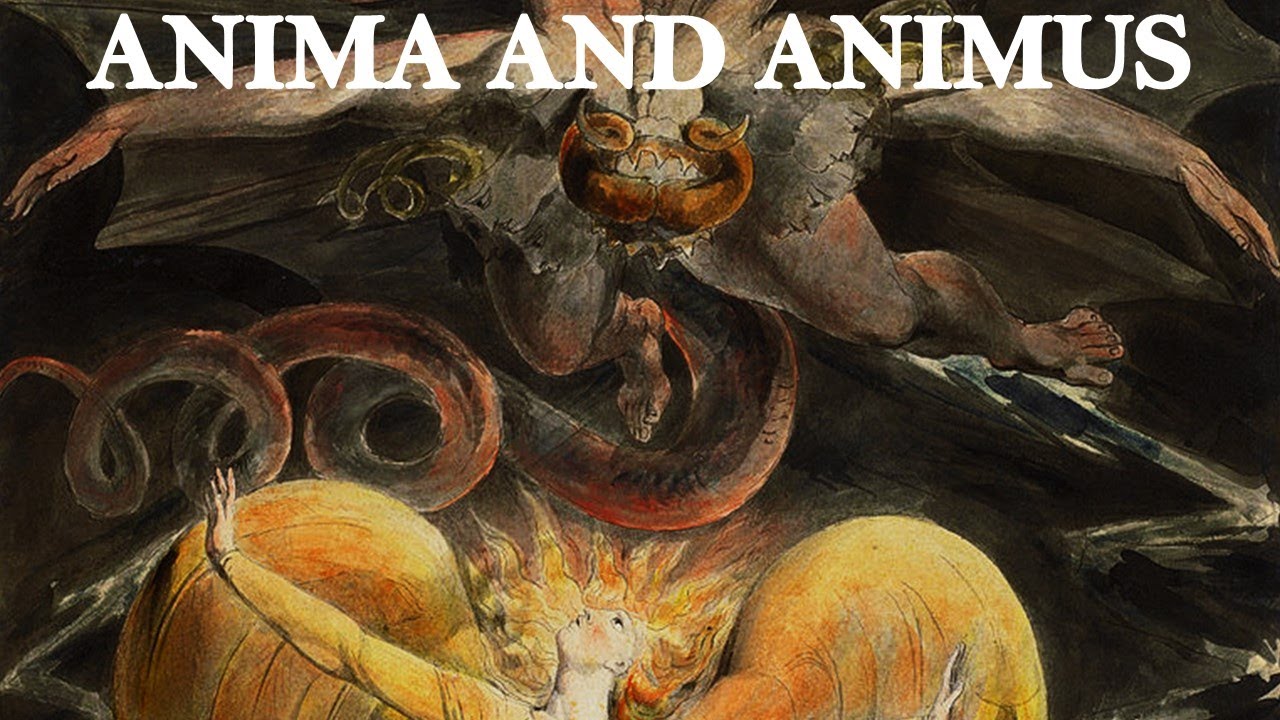
Anima and Animus ~ Eternal Partners from the Unconscious
3 Ways to Recalibrate Your Inner Compass

“It’s better to figure out that your map is inaccurate than it is to get lost.” ~ Jordan Peterson
The compass is both an object used for direction and a metaphor for direction. But what happens when you are given a compass that doesn’t work? What happens when you are raised in a sick society, and you are given “direction” by that sick society?
Raised as we all were in profoundly sick societies, we have all been given faulty compasses from the jump. We’ve been conditioned to follow their faulty direction all our lives. We’ve been indoctrinated into believing that they work. We’ve been brainwashed into thinking that they would properly guide us in the right direction.
But what happens when we discover that our compass is faulty? How do we reorient ourselves when our very basis for orientation has been found wanting? How do we recalibrate something that should have been calibrated in our favor but wasn’t? Where do we go? Who can we turn to when authority itself believes in the faulty compass?
The answer is that we must somehow realign ourselves with universal laws. We must discover balance. We must shine a fierce black light into the blinding light of our sick culture. We must unveil the truth and admit that we were wrong. We must pull the curtain aside and reveal that the wizard is us, and it is our responsibility to admit that we have deceived ourselves.
Here are three ways how you can recalibrate your inner compass ~
Destroy your beliefs:
“A philosopher who is warlike challenges problems to duels.” ~ Nietzsche
First things first, destroy the faulty compass forced upon you by a sick society. Smash it into a million little pieces on the hard ground of Truth. Murder your expectations. Kill the ideal. Be the outlier. Destroy the cultural compass that led you into ill-health, disorientation, and misalignment with universal laws.
The sooner you destroy the ideal, the sooner you can claim self-authenticity. This might mean the need to metaphorically destroy yourself—what’s known as ego death. You kill your ego’s attachment (belief/certainty) so that your detached soul can be born (mindfulness/curiosity).
The art of healthy ego-annihilation is threefold: question yourself, destroy yourself, rebirth yourself.
Why is destroying and rebirthing necessary to recalibrate your compass? Because you must destroy your codependent self (which is clinging to the faulty compass) so that your independent self (which has the capacity to question the faulty compass) can emerge with the courage to become an interdependent force of nature (which can recalibrate your inner compass).
Sometimes the only way to discover that the “door to your jail cell has always been open” is to lose the mindset that conditioned you into thinking that you were in jail. The trapped mindset is also the fear-based mindset. It’s the indoctrinated mindset. In short: it’s your codependent self. And the codependent self is so attached to the faulty compass, so utterly inured, that it will blindly cling to its false belief that it somehow works. This is the height of cognitive dissonance.
So it is incumbent upon you to make the initial leap of courage. You must dig down deep for that inner wildness, that primal hunger, that vital curiosity. You must rise up out of the muck and mire of ill-health, disorientation, and misalignment and kill the belief that has you stuck in that vicious cycle.
Kill it as soon as possible. Learn from it. Then absorb it into your muscle memory. “Bury” it in the backyard of your psyche. Plant it like a seed from which a new, healthier, oriented, and aligned self might emerge carrying a compass that actually works.
Reclaim your instincts (rebirth yourself):
“You have to keep breaking your heart until it opens.” ~ Rumi
The difficult part is done. Now the extraordinarily difficult part begins—reorientation. There are no guideposts here. There is no authority to tell you what to do. There is no soft presence to mollycoddle you along and hold your hand through the pain. No. This is rebirth! This is terrible growth. This is uncomfortable fruition. This is absolute vulnerability.
The thing with rebirth is that you feel both the growing pains and the labor pains. You are intermittently mother and baby experiencing an alien flavor of pain. You are all at once cosmos and psyche torn apart, but re-emerging into a new way of being human in the world.
As you emerge from your “cocoon” you see the world in a new light. Plato’s Cave is a broken shell behind you. The faulty compass is shattered and collecting dust in the shadows. Your codependent self is coiled like snakeskin in the corner. Your newly discovered interdependent self steps forth.
On wobbly legs you stand up tall, chest out, with your new compass pointing you True North. You are fascinated by it. The vital pulse. The primal energy. The absolute orientation. It’s like no other compass, unique to you alone. It is your heart, beating true, broken but antifragile in your chest. It resonates at a frequency in sacred alignment with universal laws.
Your new compass reverberates outward from within you like a beacon blasting a language older than words into the world. You’ve become a fountainhead, a walking, talking Flow-state. You feel how everything is connected to everything else. You feel how your fate has been transformed into destiny.
Curiosity swells up inside you near to bursting. It fills you with such fascination and awe that you are inspired to inquire, to question further, deeper, beyond. All your past certainties, beliefs and ideologies fall away from you like false armor. You toss them into the cave.
You face the horizon and realize how silly you were to ever have imagined that it was a boundary. With your heart beating true and your instincts reclaimed, you wear your curiosity on your sleeve, letting it shine its glorious light into the vainglorious world.
Guard against relapse (overcome yourself):
“Unless you are constantly practicing it, this dying and being reborn, you are only a guest on this dark planet earth.” ~ Goethe
This may seem like the end, but it’s actually the beginning. Now that you have rebirthed yourself, now that you’ve reoriented yourself, now that you have recalibrated your compass, you must forever be on guard against relapse and regression. Backsliding is all too common, but it is also avoidable.
You guard against relapsing back into the Cave by keeping your compass tuned. You keep it tuned by keeping curiosity ahead of certainty and humor ahead of hubris.
When you cling to certainty and hubris, you reject the amorphous nature of truth. You stop learning. You put up walls to universal laws. You disconnect yourself from realizing everything is connected. You lose the underlying essence. You become delusional.
When you reject curiosity for certainty and humor for hubris, you reject yourself as a conduit to cosmos. You cut off the fountainhead. Your compass suddenly becomes faulty, disorienting, and misaligned. And you find yourself back where you started, fumbling dumbly through a sick society with a broken compass.
Don’t let this happen. Always remain curious, especially at the expense of certainty. Always remain humorous, especially at the expense of hubris. Curiosity will keep your compass open, hungry, and vulnerable to truth. Humor will keep your compass sharp, playful, and light-hearted on the unforgiving path of sacred alignment. And both of them together will make you a force of unconquerable nature against the profoundly sick society that outflanks you.


