“Phrases such as “I’m beside myself,” “I was frightened to pieces,” “I feel lost,” “I feel like part of me is missing,” originated from a sense of soul loss.” ~ S. Kelley Harrell, Teen Spirit Guide to Modern Shamanism
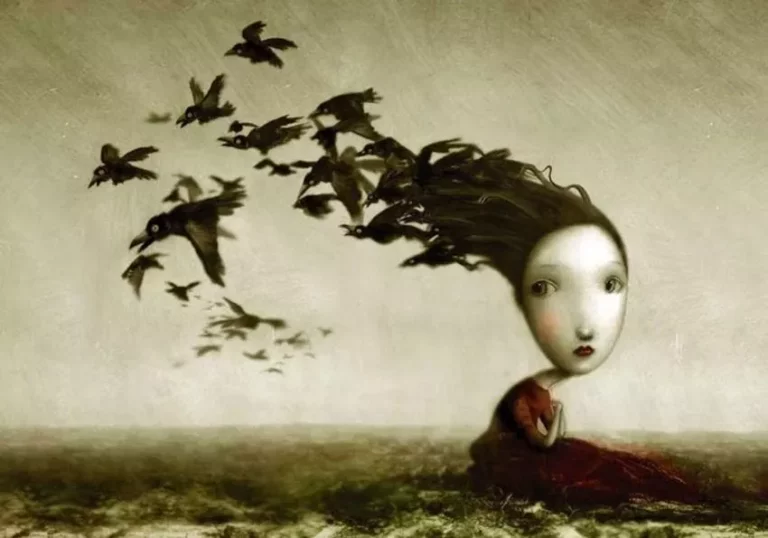
Your soul represents a sensitive space in which everything that you are, gracefully unfolds. Heart-break, grief and other severe incidents that haven’t been properly integrated affect your soul’s wholeness. Thus, the process of soul fragmentation occurs.
Your soul is just trying to protect itself – yourself, from pain. This is similar to the coping mechanism that the mind designs in order to keep things apparently under control, when you are going through hardship.
When soul loss happens, the fragments of the soul that have been damaged by an unattended long-term (emotional or physical) or sudden trauma, or spiritual circumstance, contract or hide away, until they are brought back into the light through aware action, such as the soul retrieval therapy.
Soul loss is an energetic relapse; the good news is that no vibrational illness can remain unhealed. Indeed, some spiritual conditions can take longer than others to remedy, but knowing that you have a deficiency in some area of your being is the first step towards completion.
The conditions of the soul are harder to identify than a disharmony in the auric field, for example, but once you start looking into your soul for answers, you will have reached your origin.
Here are 7 signs that you are going through soul loss:
1) There is a deep sadness within yourself
This profound grief may not affect your daily routine, and this is why even the closest people in your life can, most of the times, overlook it. You have learned how to function with this weight on your shoulders, and it may even feel normal.
The reality is, this sadness can eat you from inside out and cause symptoms that you would easily associate with something else, such as severe physical pain.
2) You feel disconnected
Soul loss prevents you from bonding with what’s essential. Therefore, your life feels like a limbo. There is something familiar and apparently comfortable about your life, but an essential piece seems to be missing.
3) You have a hard time maintaining your intention
Because your will molds the world, what you envision, ultimately comes into existence. But when your soul is affected, the power of your intention decreases, because your soul is the command center for your life’s purpose.
4) You feel lost
Soul fragments cannot vanish, but we may lose the ability to access them. When this happens, we experience an unsettling feeling, something we cannot grasp with the mind.
5) You feel misunderstood
Soul loss reduces our natural tendency to navigate towards others and life. We become lonesome, and we get used to it.
But this voluntary withdrawal is not healthy; it just represents a coping mechanism in a situation we cannot comprehend and if we cannot understand what’s going on with us, how can we expect other people to recognize what we are going through?
This takes us to the next sign of soul fragmenting.
6) You isolate yourself
You purposely create a prison that feels comfortable, as interacting with others triggers inner turbulence. You keep your loved ones at arm’s length because you feel you cannot be seen and heard.
7) It becomes harder and harder to access your inner resources
Your soul is an infinite reservoir of knowledge and insight. As it becomes compartmentalized through soul loss, you are faced with exhaustion, apathy, self-cloudiness.
The cure to soul fragmentation is soul retrieval. This process allows you to access the parts of yourself that have been blocked off by pain. By unifying your soul, you become whole again.
“The success of Yoga does not lie in the ability to perform postures but in how it positively changes the way we live our life and our relationships.” ~ T.K.V. Desikachar
When I tell people I teach yoga, there’s only a handful of different responses I generally get. Most commonly, it’s some version of “Oh, I could never do yoga. I’m not flexible enough/don’t have enough balance/I’m too stressed out.”
The yoga communities on Instagram have been a wonderful resource for connecting and inspiring people. Unfortunately, the prevalence of perfect poses against beautiful sunsets by women dressed in name brand gear can also have the effect of intimidating people who have no experience with yoga. It creates this environment where people who can’t pop up into crow feel like they can’t even start on the journey.
Deglamorizing Yoga
I admit, handstands are impressive. The full expression of king dancer is gorgeous. But these flashy poses—and the accompanying exotic backdrops — are not yoga. You don’t have to be able to tuck your foot behind your head to practice. You don’t even have to be able to touch your toes.
Yoga, in Sanskrit, roughly translates to “yoke,” or a joining of two or more thing. It is a system designed to bring together the body, mind, and spirit into one, integrated whole.
“The meaning of our self is not to be found in its separateness from God and others, but in the ceaseless realization of yoga, of union.” ~ Rabindranath Tagore
The asanas, all those pretty poses, are only a small part of the whole, and not even the most important part. The physical practice of asanas is to prepare the body for long periods of meditation. When one is strong, and flexible, it becomes easier to sit still for longer periods of time without experiencing undue discomfort.
In order to get to that place, however, you have to start from where you are. There is no other option, by definition. A disturbingly high number of people in current Western cultures find themselves overworked, over scheduled, and undernourished.
It is from this place of frazzled anxiety that transformation begins, not from the top of a mountain, or tucked away in an ashram. Taking one small step — a single yoga class, five minutes of meditation — is the only way to start down a path that could, eventually, lead to a perfectly executed scorpion.
More importantly, with dedication that step leads toward self-awareness, self-love, and a greater sense of compassion for the world at large. Arm balances are optional.
No one is ‘good’ at yoga when they begin. There are people who, due to a background in gymnastics, Pilates, or martial arts, can immediately get into challenging poses. However, the internal workings, such as breath and focus, come only with time and practice, and they are far more important.
A student who stays in child’s pose, but is continually connected with the ebb and flow of breath and has developed a strong internal focus, is far better off than the student who flies through sun salutations without breathing, all the while worrying about work or the grocery list.
It is possible to use yoga asanas as a purely physical exercise, and there will certainly be a physical benefit reaped. Without practicing the other seven limbs of yoga — pranayama (breath work), the yamas and niyamas (ethical practices and self-discipline), etc. — a student severely limits the level of inner transformation available to them. And yet, if the initial attraction to yoga comes from a place of wanting to look great in a bikini, I think it should be encouraged.
“Penetration of our mind is our goal, but in the beginning to set things in motion, there is no substitute for sweat.” ~ B.K.S. Iyengar
When I first started practicing, ten years ago, I came to yoga because it was a better option for me than weightlifting or endless, boring hours on the treadmill. It took seven years, a divorce, and the loss of a dream before the deeper benefits of yoga began to take hold. Because I already had some background in the physical practice, the foundation for my spiritual growth was in place.
Yoga isn’t about starting out as a bendy, tranquil embodiment of peace and love. It’s about learning to love yourself, one small—sometimes painful—step at a time.
“If your thoughts cannot touch my soul, then do not bother to reach for my flesh.” ~ Julie Moon
Sexuality is the essence of being human. Out of all the animals in the animal kingdom, no animal is more sexually creative than the human animal. And as the most intelligent animal on the planet, no other animal has the capacity to be sapiosexual: Sexually attracted to intelligence.
We’d all like to think we’re sapiosexual, but when it comes down to it, there must be a direct correlation between our own intelligence and our capacity to recognize it in others. And so it would seem to apply to being sapiosexual as well.
There are many forms of intelligence;Howard Gardner’s Multiple Intelligences for example. But, without getting too much into Intelligence Quotients (IQ) and Emotional Quotients (EQ), suffice it to say that our capacity to be sapiosexual falls on a wide frequency of intelligence.
We may find ourselves at different levels on this frequency, but here are five signs you may be a sapiosexual.
1.) You understand that the brain is the most important sex organ:
“The energy of the mind is the essence of life.” ~ Aristotle
Your sexuality isn’t limited to mere orgasmic pleasure and physical release. Although these things are important, they are secondary to intellectual arousal. When a lover can paint seductive images into your mind precoitus, even pre-foreplay, it makes the foreplay and coitus still to come, that much more intense and pleasurable.
It matters little what intellectual method your lover uses: poetry, music, singing, dancing, mathematics, theoretical physics – the list goes on. What matters is the intellectual effort, the deep thought, the brain-hacks that go into making it more than just a base, physical experience.
Having a lover who can pleasure your brain is having an artist who can double down on pleasuring you elsewhere, taking sexual experience to a whole other level.
2.) You’re more likely to meet someone at a bookstore than at a bar:
“I love you, because the entire universe conspired to help me find you.” ~ Paulo Coelho
When it comes to meeting potential lovers, you’re thinking – full stop. And since you are a thinker, you’re more likely to frequent bookstores, parks, college campuses, and coffee shops, than clubs or bars. It’s not that you’re against these latter establishments, necessarily, but you realize that you are less likely to get your sapiosexual juices flowing there.
When you meet that guy at Barnes & Noble with the stack of Greek philosophy books, or that girl in the poetry section relishing Ted Hughe’s “Crow” or that hot teacher (girl or guy) waxing philosophic about quantum theory with a twinkle in their eye, you can’t help but get all twitterpated, your sapiosexual fire stoked, wondering, “what else can this hot piece of smartness do?”
Sure, you could go to the club and yell over the music trying desperately to hear if they have the intellectual magnetism to attract you, or you might get lucky at the bar and the girl who’s three sheets to the wind could be an intellectual rockstar, but you know the probability is low, so you’ll stick to your sapiosexual guns and frequent the bookstore when it comes to seeking potential lovers.
3.) Intellectual beauty is primary; physical beauty secondary:
“Mankind is poised midway between the gods and the beasts.” ~ Plotinus
You understand that we are feral creatures, hungry animals with mortal coils, insatiable beasts with impossible reach. But you are also able to intellectualize this creaturely essence. You’re a thinking animal looking for another thinking animal to share your deep thoughts with, and have some fun.
And though your sapiosexual juices need to get flowing to really enjoy sex to the max, you still greatly respect the ways of the flesh. The mind and the body are connected, after all.
And so, poised between your godly (intellectual) essence and your beastly (carnal) essence, as a sapiosexual being, you are able to imaginatively bridge the gap. Your love blooms through your mind’s melting with your lover’s mind.
Your pleasure blossoms through your physical entanglement, ignited by your lovers creative spark. You and your lover are God and Goddess infinitely entwined; wolf and she-wolf howling, ecstatically connected for all time; Every-man melting into Every-woman in orgasmic union, forever joined in an eternal Now.
4.) You’re able to gaze into your lover’s third eye:
“Wisdom begins in wonder.” ~ Socrates
For you, and for other sapiosexuals, beauty isn’t just in the eye of the beholder. Beauty itself is beholden through the other. Love is the eternal golden braid binding all things together, which cannot be seen or sensed through the other four physical senses.
It can only be felt through a sixth sense, seen through the third eye, experienced through sensual meditation and deep mindfulness. Though it is anchored by the five physical senses it is not limited by them, it is leveraged by them.
As a sapiosexual you know how to leverage love through your five senses in order to experience ecstatic union with your lover through a mutual opening of your third eye.
Love seen through the third eye of your lover becomes capital-L-Love; the kind of love that subsumes the flesh and trumps the self, launching you and your lover into a soul-caliber infusion, a union of opposites that rises above the pettiness of the ego and which transcends time.
5.) Your sexual experiences tend to be extremely spiritual:
“For small creatures such as we, the vastness is bearable only through love.” ~ Carl Sagan
You are often told by your lovers that making love to you is a spiritual experience. You understand that this is because you don’t only feel egoicly through the flesh, but mindfully through deep mindfulness. For you, love-making is a soul-centric experience rather than merely an ego-centric one.
And so your lovers are left gasping, having tasted the sacred oxygen of Infinite Love: love with no strings, no ownership, no attachment; it’s roots deep in the womb of no-mind, free and forever overcoming itself ecstatically through all time.
It cannot be contained. It cannot be grasped at. It cannot be clung to. It can only be felt on a deep interconnected level where soul filters through soul; where love gives into love; where Her mind and His-mind become Interdepent-Mind in a deep ocean of giving.
The only way to survive it, is to let go, allow it, and then let it go, over and over again. It is existential. It is transcendent. It is deeply spiritual. And it all began with your deep intellectual mindfulness regarding the art of making love – your sapiosexual disposition.
“The ability to observe without evaluating is the highest form of intelligence.” ~ Jiddu Krishnamurti
Criticism is a form of self-denial that, in extreme cases, can lead to self-abandonment. Criticism is based on disapproval of the self, and its seed is planted very early in our childhood. Children that have been raised by authoritarian caregivers, or by perfectionist parents, tend to develop into overly-judgemental adults.
The critic’s problem is not with others, even if it may seem that way, his conflict is within himself. But because it is easier to deflect than to observe and notice, the faultfinder always sees what’s wrong with the world. In his view, if everyone would just change their behavior to match his own vision, he would finally be at ease, and the world would be a better place.
When you start doing the work for a balanced body, mind, and spirit, things become clearer, and you get in contact with the inner critic. You then notice how its voice seems to be ongoing. What your inner commentator talks about is never the real solution to your problems, but the same sad story of you not being good enough.
The inner critic underlines only the aspects of yourself that you haven’t accepted yet. By doing this, it weakens your self-worth and keeps you in a continuous state of displeasure. As you believe what your inner critic is saying, you become more irritable and bitter.
If you have struggled for a while with self-judgement, here are five ways to silence your inner critic:
Doubt your thoughts
“When you doubt your power, you give power to your doubt.” ~ Honore de Balzac
Whenever you cannot refrain from thinking fault-finding thoughts, ask yourself if what comes to your mind is indeed true. Remember that how you perceive life and how the world is, are two different things. Your point of view is always subjective and unique.
Self-criticism is like wearing distorting glasses. You lose contact with the authentic self by desperately disapproving of the things you see, feel and do.
Take a step back
Self-judgement is a thinking pattern that affects the majority of us. As long as you are completely identified with the image of yourself that your mind has created, you will have a hard time breaking out of the program you have conditioned yourself to believe.
Detachment is the key to your mental freedom. You can liberate yourself by simply observing your thoughts without getting caught up in your personal story.
Practice self-love
“Love is the great miracle cure. Loving ourselves works miracles in our lives.” ~ Louise L. Hay
Criticism is the opposite of self-love. This being said, self-judgment has nothing to do with personal and spiritual growth, but it has everything to do with putting yourself down on a regular basis and surrendering to the inner saboteur. By loving yourself fully, you unify yourself.
Love naturally transforms you from within and harmonizes the aspects of the self that need care.
Validate yourself
“When you do not seek or need approval, you are at your most powerful.” ~ Caroline Myss
Most of us live in societies that promote separation and invisibility, improper communication and dishonesty. Establishments like these put individuals in boxes and thrive on emotional oppression.
The norm in modern societies is to look away from what you are feeling and to become what other people expect you to be. By not committing to yourself, you become empty on the inside; you become disconnected from your inner compass.
The cure is validation. What you are going through belongs only to you, can be seen and integrated only by you, and it needs your unconditional attention. Focus inward and make space for your thoughts and emotions.
Look at them, receive the message they are sending, and mindfully choose what to do with this new information.
Stop competing with others
“Why compare yourself with others? No one in the entire world can do a better job of being you than you.” ~ Unknown
The term self-development explains itself. You work with yourself to become the best version you can be today. As we were raised to see ourselves in relation to others, we always strive to be better than the fellow next to us.
Competitiveness is a toxic pattern that steals our peace of mind and amplifies the lack of self-worth. Focus on yourself more and respect the processes of the people around you. No one can walk a mile in your shoes, and you cannot completely comprehend the path of another.
Learning to silence your inner critic takes time and requires you to invest your energy in the process. As you bond with yourself more, the judgmental voice starts to fade away. It may never be totally gone, but you will learn how to listen to and gracefully handle it.
“You don’t have a right to the cards you believe you should have been dealt. You have an obligation to play the hell out of the one’s you’re holding.” ~ Cheryl Strayed
The definition of vicissitude is changeability; a sudden or unexpected change in someone’s life. We all experience vicissitudes in life. Some more sudden and unexpected than others, but it’s still an aspect of the human condition that we all must go through in some form or another. The question is how well we’re able to adapt to the change. And the key to adaptation is having a sound emotional strategy, a healthy disposition based on hope and preparation: Hoping for the best, but being prepared for the worst.
Let’s face it, in the poker game of life we are sometimes dealt bad hands-like, going to jail for example. Getting locked up, especially when you’re the unwitting victim of an overreaching state with monopoly on violence, using petty laws to enforce a “legal” extortion racket on it’s citizens.
Outdated statist-versus-progressive-anarchist talk aside, getting dealt such a hand, one has an existential duty to play the hell out of it. Self-pity is poison to someone seeking to become stronger than their former self. Like Charles Bukowski said, “What matters most is how well you walk through the fire.”
Adaptation and Affirmation
“The ultimate measure of a man is not where he stands in moments of comfort and convenience, but where he stands at times of challenge and controversy.” ~ Martin Luther King Jr.
Adaptibility is one of the keys to facing challenging unexpected changes, and one of the keys to adaptability is being able to motivate ourselves through healthy self-affirmations. Take the example of losing a loved one, like a mother or a child.
Once we’ve reconciled the pain, adapting to the new reality is made less challenging through positive self-affirmations. In short we’re empowering ourselves. We’re using affirmation to become stronger versions of ourselves in order to adapt to a scary new reality where our loved ones are no longer with us.
Take the jail analogy again: adapting to a drastically different and dangerous environment requires a healthy mode of self-talk, such as positive self affirmations that can motivate us to remain calm or maintain a good sense of humor in the face of adversity. Adaptability is more of an emotional balancing act than it is a physical one, and so in order to bolster positive emotions, despite despair, is to recognize the despair for what it is and then turn the tables through healthy self-affirmation.
Positive self affirmation can bring hope in dark times. It’s like an invisible cape that drags us through the darkness toward the “light”. The courage behind the affirmation doesn’t have to be “real” – hence the dragging. It just needs to be there to keep us stable during unstable times.
We may “feel” scared but our self-affirmation helps us to “act” courageously, or calmly, humorously, despite. Again, this isn’t done to mask our weaker emotions, it is done so that our weaker emotions don’t turn us into a puppet. It’s a strategy of healthy self-empowerment which can lead us from the ability to adapt to the ability to overcome.
Self-Overcoming
“There is nothing noble in being superior to your fellow man: true nobility is being superior to your former self.” ~ Ernest Hemingway
Self-overcoming is the flexible backbone of dealing with the vicissitudes of life. It’s like having an existential double-jointedness. Our former self is like an old skin that we shed, snake-like, except it’s not discarded. Rather, it is subsumed by the newer more flexible self.
The problem is that most people are not aware of this process, and so they tend to cling to previous selves, usually at the detriment of their current self. Add to the mix, unexpected changes like going to jail or losing a mother, and an individual clinging to the former self is going to have a lot of difficulty adapting to the new reality.
Like Einstein said, “We cannot solve our problems with the same thinking we used when we created them.” Clinging to yesterday’s self, that was free, won’t help the current self, that is now in jail. Likewise, clinging to the previous self, that was able to hug Mom, won’t help the current self adapt to the new reality where it cannot.
The clinging is the thing that must be let go. Absorb the old self into the new self by letting go of the need to cling so that you’re clear enough to adapt to, and overcome, the new reality.
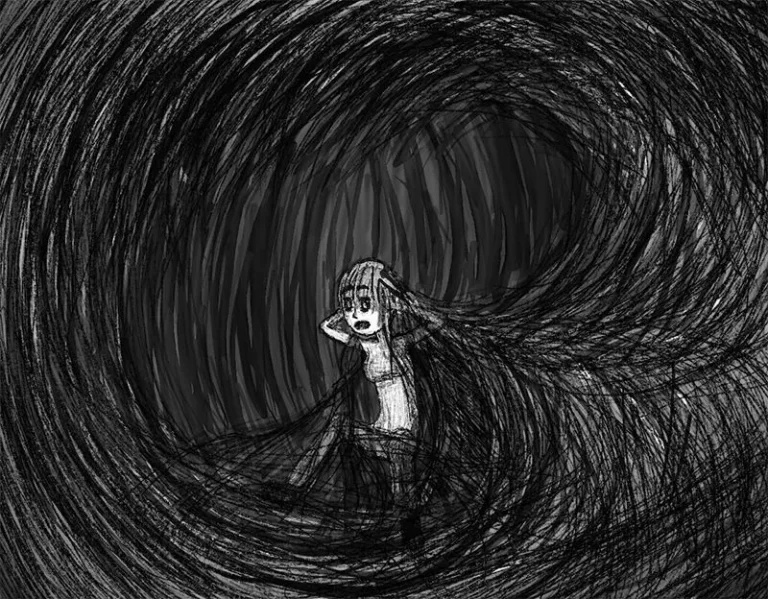
The vicissitudes of life can really take us for a ride. Sometimes, usually, they will take us through a dark night of the soul, which can be a soul-shattering and heart-crushing experience. But there are strategies we can use amidst the scattered heart debris and shards of soul. Such strategies as self-affirmation and self-overcoming act like stepping stones, or “ropes to God”, that can help us ascend the dark night of the soul and compel us to transcend our seemingly limited conditions.
Unexpected change forces us into a new reality, usually painfully, but there’s no reason why we cannot build our character in the new reality, using the pain, if need be, to rise above despair and grab hold of life as it is, despite twists of fate, or bad luck or a shitty hand of poker. Like Maria Robinson wisely said, “Nobody can go back and start a new beginning, but anyone can start today and make a new ending.”








 Outdated statist-versus-progressive-anarchist talk aside, getting dealt such a hand, one has an existential duty to play the hell out of it. Self-pity is poison to someone seeking to become stronger than their former self. Like Charles Bukowski said, “What matters most is how well you walk through the fire.”
 Self-overcoming

