Home Blog Page 182

5 Ways How Gratitude Can Heal You

0

Gratitude can heal you in several ways. If you are wallowing in self-pity, self-hatred, or even an inflated sense of self-love, gratitude can be the first wrung of the ladder on your way towards exit.

The addictions that circulate the soupy mire of victimhood; drama, narcissism and low vibration may have one saving grace; the grace of gratitude.

piglet_gratitude_can_heal_winnie_the_pooh

Loneliness often wears the guise of arrogance and belligerence, and so we must tread carefully when we approach someone who, on the surface anyway, can be very difficult. For someone who is suffering – deeply and painfully – the smallest of steps are all that is bearable for them.

Make that first step gratitude. And if you’re someone who has been lucky enough to learn that lesson already, then here are five habits of the highly grateful person you may already be exhibiting:

You have shifted the story in your head from; ‘I have to’, to, ‘I get to.’

mycuprunnethoverwaterDifficulties are no longer terrifying, but instead present an exciting challenge. A challenge, you have come to understand, is one to be taken head on and with an attitude of trust in yourself and the forces around you.

This wouldn’t be happening if it didn’t teach you something. And so, not needing to fully comprehend the hows and whys, you eagerly take it on.

You have replaced the victim’s way of looking at the world with that of gratitude, and you now tell yourself throughout the day that you get to, rather than have to. And really, how lucky and fortunate are we?!

We can never truly measure ourselves against other people, (not truly and accurately ever knowing what they are going through), so why bother? In fact, you’ve practised this so much you know that all you really need is what’s right in front of you.

I get to wake up in the morning, I get to walk myself to the bus stop, I get to have a computer and eat three square meals a day. Traveling and keeping your interactions as broad as possible (do all the people you know come from the same walks of life?) helps remind yourself that not everyone gets to do that, but still they are grateful for what they have.

Maybe you don’t have a car or a partner or the exact career you want, but you get to unfold the future you want to live and every moment there is the catalyst for potential change in the things you don’t like about your life. The way that you change it is by having gratitude for what you do have.

As Eckhart Tolle points out; “There are no problems in this moment.”

And if there is something you need to attend to, then you either do it, or you leave it alone. You no longer feel the need to turn things over again and again, instead granting yourself inner peace and letting it go.

Traumas and sadness are experienced and honored, but then sent to the dust heap. Even in the midst of chaos and misunderstanding, you let it flow over you and don’t ask too many questions. You know you are loved, and that’s all that matters.

Despite past and future events, you are grateful for this moment

“When you practice gratefulness, there is a sense of respect towards others.” ~ Dalai Lama

namaste

You know you’ve come a long way, and you’re not completely sure where you’re going, but you know that this moment is good. You have everything you need in this moment.

Not only that, but you have increased your awareness and are less unconscious and more mindful. You know that it is in this moment that you create your reality and nowhere else.

Although you may still be very much attached to the past and future, you’re gradually turning a mirror on yourself and can now notice when you are invested in the story of your life.

You can notice when it is not as it should be, or told in a way that makes you feel hopeless or down, and you’re beginning to change it.

You are aware that you have a choice, and can choose to become lost in that story or lift yourself up and rewrite it. You know that no one else is going to rewrite it for you, and although that feels harsh, it’s also comforting because you now know that the power lies within you.

Be grateful for being you

You did choose to inhabit this body. You did choose this identity and can now own that choice. You are beginning to be grateful for being you.

As Ian Wallace said; “Why are you trying so hard to fit in when you were born to stand out?”

You don’t feel the need to stand out. Yet just the very act of giving gratitude, whilst lowering you most deliciously into the collective consciousness, also elevates you up to where you wanted to be.

“The happiness of the drop is to die in the river” as the Sufi poet writes. You have realized that once you become one with the whole, through feeling a deep gratitude for where you are and seeing that it is neither better nor worse than anyone else’s, and out of that acceptance comes your uniqueness.

You are special and what you find difficult in this life is to inform your future. You now have the knowledge of how to let go of knowing anything – let the universe take over! You’re not here to understand the design, just take part in it. Yet you are grateful to be You.

You are able to walk in another’s shoes, whether they’re human, or not!

mother_nature_artwork_by_zonagirl

You inwardly bow or give thanks to everyone, regardless of the reaction they trigger in you. If that reaction is to stir up your anger or jealousy, then you appreciate them for doing that and don’t hate or condemn them for it.

You recognize your entire existence as a mirror, and your reaction the void with which you fill your world.

You are able to put yourself in another person’s shoes and have realized that it’s not all about you, that they are not just here to serve your purpose. Similarly, you’re able to recognize the life in the forests, the rivers, all plant and animal ‘selves’ you encounter through your day.

You can imagine how you must look to them, and, as well as be grateful for the self you see through their eyes, also better appreciate their experience, and deepen your reverence for all life.

Whether these points begin you on your journey towards gratitude, or simply further your journey towards the heart of it, you are beginning to merge with the whole. Namaste.

In this video, Robert Emmons explains how gratitude can heal, energize, and change our lives.

Image Source

Gratitude
Mother nature – Zonagirl
Gratitude

Four Steps Toward Surviving a Dark Night of the Soul

In Seven Signs You May Be Experiencing a Dark Night of the Soul, we went into how we might know if we’re in the throes of this particularly daunting existential crisis. In this article, we’ll delve into four strategies toward surviving it.

If we’re lucky (unlucky) enough to have had worldviews fall apart all around us, like a comfort zone snapping, or a mental paradigm shattering, or a box flattening, despite us, then we’ve probably been lucky (unlucky) enough to have discovered the seed of transformation hidden within that can lead to a dark night of the soul.

Don't let this stop you, show us some love and subscribe to continue reading!

If you're already a member, please login.

How Negative Thoughts and Complaining Affect Your Brain

1

“Every time we have a thought we make a chemical. If we have good, elevated thoughts or happy thoughts we make chemicals that make us feel good or happy. And if we have negative thoughts or bad thoughts or insecure thoughts we make chemicals that make us feel exactly the way we are thinking. So every chemical that is released in the brain is literally a message that feeds the physical body. Now the body begins to feel the way we are thinking.” ~ Joe Dispenza

All it takes is one look at any consumer review site to notice that people are much more likely to notice a bad experience than a good one. Often after having a negative experience at a restaurant, or with a customer service representative at a business, a person is more apt to get online and write a terrible review.

Whereas, a pleasant experience is talked about much less frequently. And even in our personal lives, most people, while having a thousand things going ‘well’ for them, will still talk about the one or two things not going their way when talking with a friend or close confidant.

It seems that our brains are still very much trained to focus on what is going ‘wrong’ in our lives rather than focusing on the proof that things are going ‘right.’

But why is this? And what effect will all this complaining have on our bodies and brains over time? Is it possible to re-wire our brains to begin to actually focus on the good in our lives rather than the bad?

Are you always looking for potential problems?

complaining affect your brain

In his book, “Buddha Brain – The Practical Neuroscience of Happiness, Love and Wisdom”, Rick Hanson, stated, “your brain has a built-in negative bias, it generates an unpleasant background of anxiety, which for some people can be quite intense; anxiety makes it harder to bring attention inward for self-awareness or contemplative practice, since the brain keeps scanning to make sure there is no problem.”

For most people and especially for those living completely unconsciously, the scanning for alleged difficulties is happening on such a subtle level that we most likely have no idea that it’s even happening.

The subconscious mind lives each moment, and faces new people, places and things by first reviewing them for any potential threats. On a conscious level, this may manifest as not allowing ourselves to get too excited about things or setting ourselves up for the worst so that if or when it does happen, we can be prepared for the painful feelings that will inevitably occur.

Our present day ‘predators’ have become the painful emotions we try to resist, distract ourselves from or deny at all costs.

Things such as having our heart broken, getting criticized, losing money or the loss of our loved ones are all examples of things that we may mentally get ourselves prepared to experience way before the actual situation even occurs.

We are also very much hard-wired to approach life from a state of lack rather than abundance. The threat of ‘not enough’ is what drives many of us into addictions, compulsive shopping, over-eating, etc. By using things like meditation, deep breathing exercises and mindfulness in our day-to-day lives we will be able to see what our particular modern day ‘predators’ are.

Paying special attention to which thoughts, situations or beliefs prompt our ‘fight or flight’ response, or trigger the onset of the negative-based thought patterns that replay themselves on loop in our brain throughout the day will create an opportunity to go within and re-wire our thought patterns.

Re-Wiring the Brain For Positive Thinking

“Neurons that fire together wire together.” ~ Donald Hebb, neuropsychologist

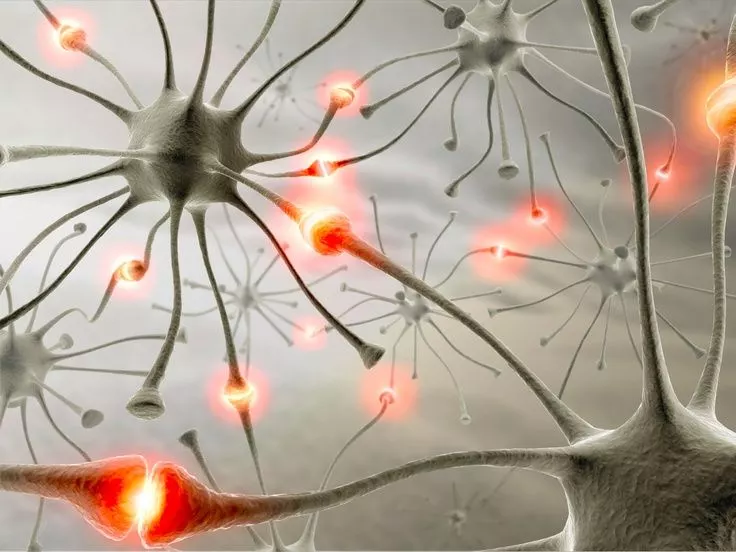
Every thought, feeling, experience, physical sensation we go through forms a network of neurons in our brain.

The experiences that we repeat most will often begin to trigger the thoughts and emotions that we associate with that particular experience, regardless of the present moment.

For instance, we may have woken up almost every day dreading the fact that we have to go in to work that day.

complaining affect your brain

Soon, the dread of going to work begins to make us think about getting off work and all of the things we have to do before we can go home. This causes us to feel overwhelmed and stressed. So the initial thought about our job leads to even more negative thoughts, and having these same emotions every day creates a neural network over time.

Left unchecked, one small negative thought or emotion can trigger an endless cycle of negative thought patterns playing on loop in our brain throughout the day.

By using mindfulness to really create some space between our awareness and the thoughts themselves, we can press the ‘pause’ button before the thoughts begin to take on a life of their own. Once we have created some awareness around our thought patterns, we must respond with a vibration that is much higher than the thoughts themselves.

Energetically speaking, the most powerful tools we have to use in response to complaints are love and gratitude. Both of these emotions are of a higher frequency than worry and fear. As silly as it may sound, telling each negative thought, ‘thank you,’ and ‘I love you,’ as soon as they arise begins to shift us into a place where each thought has nowhere to fester and must dissipate.

However, we must know why we are feeling thankful and loving towards each thought. To say these things without the belief that this is true renders this tactic essentially powerless.

By imagining our selves as a being of light that is here to unconditionally love all emotions, thoughts, behaviors etc. we begin to approach each one of these as another part of our inner child that has never been embraced before.

Imagine fear as a child that was constantly shushed or told to go away, sadness as a child that was never paid attention to, or anger as a child that was told his opinion is not valid.

The light of our being is the liberator of each emotion by offering it our loving attention and support. Soon painful emotions are no longer feared, but embraced. We also begin to re-write our subconscious to look for even more things each day to be grateful for.

New neural networks are created based on positive emotions and gratitude. Life then begins to reflect back to us our new found happiness and loving disposition.

Image sources:
Negative thoughts into positive ones

Article Sources:
Neurons fire together mean
Taking in the good

The Zen of Opposites: Why a Big Ego Can Help Us Awaken

0

“What you resist, persists.” ~ Carl Jung

We may all be familiar with the above quote, but ever so much more familiar with the idea that the ego is there to be overcome. It’s the whole point to our spiritual journey.

We want to get rid of the ego, and it must be confronted, fought with, dissolved, and ultimately dragged bloody to the top of the mountain called enlightenment, where we might slay our final dragon and become egoless.

But what if we’ve got it all wrong? The Zen of opposites, the Tao describes, ‘What is and what is not create each other’ (Tao Te Ching). So, from this again we know, that without the high there would be no low; as with our breath, the deeper the in breath the longer the out and so on and so forth.

The Zen of Opposites

If we are to move towards a place of non-duality and integration then we must first accept our darker shadowy selves, and the path of resistance will only lead us deeper into the labyrinth.

On a micro-scale, this can be seen across the span of our lives. We become less enchanted by the grip of darkness and suffering in the world as we grow older and get more proficient at filtering out that which does not serve us, or will drag us down into unnecessary analysis and self prophesising or deceit.

But what if this also serves us on a macro-scale too? In the case of reincarnation we see a number of reoccurring life patterns emerging, ones that are entirely familiar to us and that we use to create meaning and stories across the media, in modern psychological theory, literary and aesthetic analysis and our own, inner worlds. That of archetypes.

“My views about the ‘archaic remnants’, which I call ‘archetypes’ or ‘primordial images,’ have been constantly criticized by people who lack a sufficient knowledge of the psychology of dreams and of mythology” ~ Jung.

The archetype reflects the epitome of a life experience as – let’s face it – we’ve probably all filled most shoes at one time or another.

The life experience or archetypes we relate to most now, in this lifetime may offer some clue (and solution) to our complexes and shadow selves.

Some from the spiritual community may feel the study of archetypes encourage the ego, but as any discipline usually advises, we must not only practise presence and mindfulness in order to detach from the ego and its pettiness (and ultimate entwinement in our painful life experiences; after all it’s there to help us survive), but further our questioning and self study from all angles.

500full

For those who are struggling with trauma and more complexities than most of us can even dream of, the idea that we are living out a more challenging role than others – and that we have chosen to do so – can be a way out of the murk.

The nature of trauma pushes our ego – or fight or flight mode – to maximum so that the imprint left may be one of irrational panic.

This irrational panic has been caused by situations beyond our control which have forced out a balanced view of reality and plunged us headfirst into the ego and into survival mode. What shouldn’t appear threatening, now is incredibly threatening!

And no matter how many grounding techniques it may take to lessen that threat, the occurrence in itself can leave many of us feeling ashamed and questioning why it happened to us.

The bigger the ego the higher the purpose can offer a clue. The path of some archetype is simply greater than others, precisely because there’s more at stake.

The orphan archetype, the revolutionary, the divine child… that is why the storybooks are littered with these, because the inflated ego – though less amicable or clean from the outside – has the greater potential.

And we all have this waiting for us on our path. Just as the more sensitive we may be the greater potential we have as healers or to have a compassionate heart.

310881_182947321859093_1390812450_n

Just as Buddha or Christ suffered greatly, the saviour archetype (often mixed with the teacher or divine mentor) is one such example of the Zen of opposites. To know great beauty and divine love we first need to come to understand hatred and deceit from the other.

To study these themes (loosely! Let’s remember that they are there as a guide not an absolute truth) alongside increasing awareness and living mindfully can help us through trauma and difficulty.

Living in presence and noting those darker reaches and bubbling strengths simultaneously has us both in our true potential and what we have survived.

Detaching and taking on a maternal or paternal role as our higher selves as we nurture and console the orphan or wounded child within us leads to deep healing and a cleansing of the past.

Sometimes dropping the past takes much time and patience, and healing with the breath or other alternative therapies can help us. And perhaps we do need to keep one hand in our suffering in order to do what we came here to do. It is our treasure, our grit in the oyster.

Image Sources

Healing from Trauma

Using Reiki to Tap into the Energy of the Universe

“Reiki literally wakes up our Divine essence so we can see our spirit behind the veils.” ~ Colleen Benelli.

Reiki is a holistic healing method that works on the mind, body and soul. It is a Japanese word made up of two syllables – “Rei” meaning universal, abundant, or boundless and “Ki” meaning life force and vital energy. Thus Reiki literally means universal life force.

reiki-healing

The whole universe moves with this life force or cosmic energy. Each one of us experiences this energy all the


time, but we are unable to make use of it. With Reiki we learn to tap into the universal energy that dwells within us in the form of our vital force and use it for the benefit of others and ourselves.

How does Reiki work?

It works on the principle that each of us has the power of healing within us. This is why when we are physically or emotionally hurt, the touch of a loved one makes us feel better. Before practicing, one has to be initiated by a Reiki master.

He/she douses the practitioners with a strong beam of energy that dissolves all the blockages in the etheric body, and aligns us with the universal life force. Once this process is done, the practitioner’s vital force reconnects with the source energy and we can accept more energy from the cosmos.

giving reiki

We all know the law of conservation of energy, “energy can neither be created nor be destroyed, but can change form.”

When healing, we tap into this universal energy and transmit it to the intended person with positive thoughts and intentions.

The energy is abundant and can never run out. When we heal someone, the etheric patches start dissolving and the physical illness resolves along with its cause. It can be given either by direct contact at specific hand positions or from a distance.

“Healing may not be so much about getting better, as about letting go of everything that isn’t you- all of the expectations, all of the beliefs- and becoming who you are.” ~ Rachel Naomi Remen.

Why I Practice Reiki

My first experience with Reiki was when I asked a friend who was learning this art to to relieve my strained eyes. She asked me to lie down, said a prayer silently, rubbed her palms together, and gently placed it on my eyes.

Her palms were soothingly warm and tears started seeping through my closed eyelids due to the relief I felt. She kept healing for 10 minutes, and the pressure and strain in my eyes had disappeared. This incident got me interested in this alternative healing method.

After completing the 1st level of Reiki, all students are required to perform a 21 day self-healing which is mandatory. reiki-healing-power-energy-transfer

This process helps a new Reiki healer to fulfill his/her own energy before healing others. At the end of it, I felt like there was a light inside me that sparked positive feelings and made me completely aware of each moment.

Reiki is another form of meditation and the more we practice it, the more we charge our own batteries, and only when we are full up to the brim, can we transmit it to others. Anyone can be given Reiki as long as they are willing to receive it.

The Healing power of Reiki

It can be used for a wide range of conditions – to relieve acute pain, help fasten wound healing, and is effective in emotional and psychological conditions like stress, anxiety, insomnia, depression etc.

On the pathological level, it should not be used as a substitute for medicine, but it has been observed that Reiki healing decreases the duration of treatment and the dose of medicine. It can also help in affirmation and goal manifestation, in healing past traumas and dissolving bad karma.

Reiki promotes positivity and gives a gentle nudge towards fulfilling goals which are in sync with nature’s wisdom and brings us closer to our authentic self.

Research
Reiki, scientific study
Reiki and ailments
Effect of Reiki on Depression and Anxiety

Image source
Energy therapy